ADAD
ADAD
Updating your news feed...
NEWS EXPRESS is Nigeria’s leading online newspaper. Published by Africa’s international award-winning journalist, Mr. Isaac Umunna, NEWS EXPRESS is Nigeria’s first truly professional online daily newspaper. It is published from Lagos, Nigeria’s economic and media hub, and has a provision for occasional special print editions. Thanks to our vast network of sources and dedicated team of professional journalists and contributors spread across Nigeria and overseas, NEWS EXPRESS has become synonymous with newsbreaks and exclusive stories from around the world.



Loading banners
Loading banners...

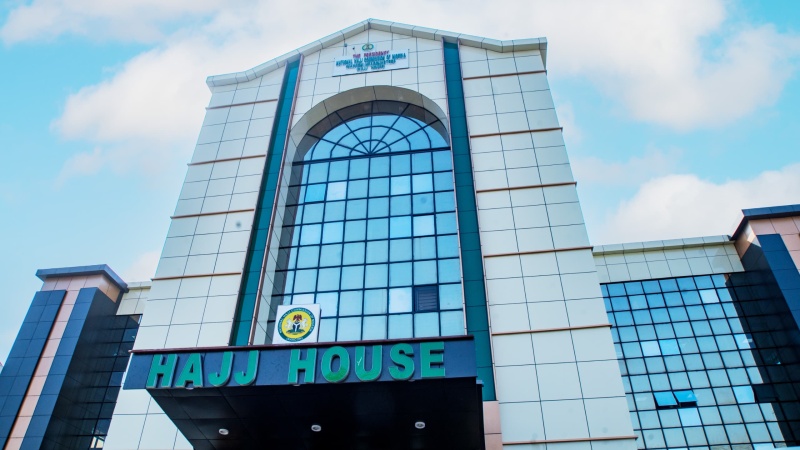
Since President Bola Tinubu took over power on May 29, 2023, he has appointed three chairmen for the National Hajj Commission of Nigeria (NAHCON), an agency established to regulate, supervise, and coordinate Hajj (pilgrimage) and Umrah activities for Nigerian Muslims. The commission also has the mandate to ensure safe, organized, and efficient pilgrimages.
However, since the exit of Zikrullah Kunle Hassan, who was appointed by the late President Muhammadu Buhari in 2019, the longest tenure of any other chairman has been 14 months. Before the downard turn at the agency, its founding Chairman, Malam Mohamed Musa Bello, spent nine years in office. Appointed in 2006, Bello remained in that position until 2015 when he was named Minister of the Federal Capital Territory (FCT).
Analysts argue that the first crop of NAHCON leaders performed better than the latter. Although early years were not without challenges, they were not as overwhelming as those the commission appears to face today. Since leadership crisis hit the agency, there has been a pattern of instability—silent but powerful political pressures, internal board conflicts, administrative restructuring as well as alleged abuse of office that eventually culminated in the exit of the agency’s head.
Mukhtar’s Tenure
The tenure of the pioneer chairman represented a reformative testing phase. During his tenure, Abdullahi Mukhtar Muhammed pushed for significant reforms in the hajj processes, including removal of middlemen and streamlining of key services such as tour operations, accommodation and feeding. One of the major objectives was to make Hajj administration more independently funded.
Several entrenched irregularities within Hajj operations were reportedly curtailed under him, according to records. However, Mukhtar’s tenure was not without challenges. At one point the House of Representatives mandated its committee on public petitions to probe Mukhtar over allegations of misconduct during the 2016 pilgrimage. He was accused of running the commission like a private enterprise. Despite these controversies, his administration is credited with laying down foundations for more efficient airlift, addressing the problem of overstaying pilgrims, and improving proximity of accommodation to the Haram.
Zikrullah’s tenure
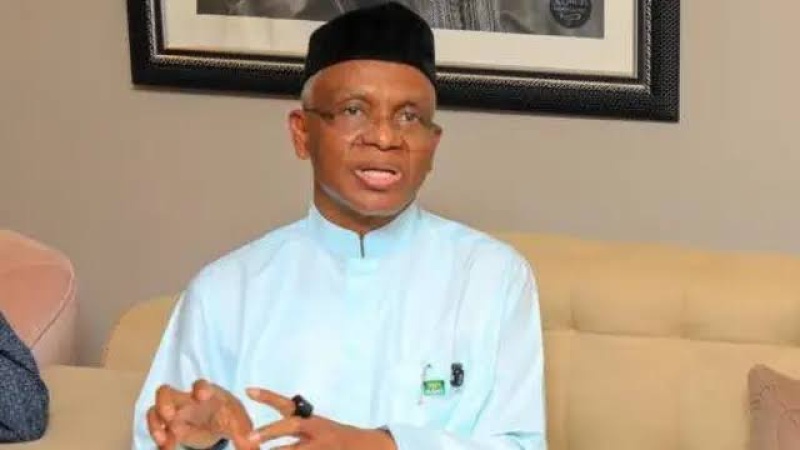
A former Chairman/Amir Hajj, Osun State Muslim Pilgrims Welfare Board, and Chairman, Forum of State Chairmen and Secretaries of Muslim Pilgrims Welfare Board Agency, Zikrullah Kunle Hassan, was appointed chairman of the agency in 2019. He served for four years before President Tinubu dissolved the Board of NAHCON, further reshaping the leadership structure.
Following his retirement on January, 2024, questions persisted about the circumstances surrounding his exit. Some reports alleged that he was questioned by the EFCC over an alleged fraud. Hassan has repeatedly denied wrongdoing, maintaining that EFCC officials merely examined the books of the commission when he was still in office.
N90bn hajj subsidy controversy
A former Legal Adviser to Secretary to the Government of the Federation (SGF), Deputy Director at Ministry of Defence and Permanent Secretary, State House, Jalal Arabia assumed duty at NAHCON in 2023 at a time the commission was grappling with internal challenges following the removal of his predecessor.
Given his extensive administrative experience as a retired permanent secretary, many observers expected Arabi to introduce structural reforms capable of stabilizing the commission.
However, within a year, NAHCON became embroiled in fresh controversies that again placed its leadership under scrutiny. Things got so bad that governors led the criticism against the agency over alleged poor management.
Governor Umar Bago vowed to lead a campaign for the dissolution of the agency, arguing that the federal body should act as a regulator rather than managing the entire Hajj.
“As a state governor, I want to lead a committee of the governors and the NGF to scrap NAHCON. NAHCON is not helping matters. The federal government is too big to be worried about Hajj problems. This is a local government issue, not a state one. State governments should be able to organise pilgrimages and engage agents from the private sector who can manage this more effectively, as other countries do. The government has no business in doing this,” he had said.
“Can you imagine governors of Nigeria, the Speaker of the Federal Republic of Nigeria, paying to NAHCON and having no place to sleep and being embarrassed? People will say it is because governors have been affected. Yes, they have been affected, but it is good that we are affected, and this is the time for us to change the narrative.”
Bago’s criticism stemmed from the shortage of space in the VIP section where he and others stayed in Muna during the 2024 pilgrimage
Bago further argued that there was need to decentralise Hajj operations and relieve NAHCON of some responsibilities.
“We have failed and continue to fail. NAHCON is supposed to be a regulator, not an operator, but it has continued to act as an operator and has, therefore, failed pilgrims. Can you imagine that feeding, accommodation in Medina, tents in Muna, transportation, and healthcare workers are all managed by NAHCON? No other country in the world does this,” the governor said, boasting that he would have done better managing the feeding of his state pilgrims.
“NAHCON has no business chartering flights; it is not their responsibility to feed the pilgrims. For example, I am from Niger State. If you allow me to feed pilgrims, I will be able to transport food that people are locally used to to Saudi Arabia to feed my own pilgrims.
“I will be able to get a kitchen that will prepare food familiar to my pilgrims, rather than giving them a slice of bread or a boiled egg, leaving them starving. We have different cultures; you cannot force Arabian cuisine on our people, and that is why they are falling ill,” he said.
However, NAHCON blamed the Saudi government for the “food crisis”, stating that it was due to the policy of the Saudi authorities.
Before Bago’s outburst, Governor Bala Mohammed of Bauchi State, had called for dissolution of the agency.
Arabi and some senior officials of the commission were subsequently investigated over alleged mismanagement linked to the 2024 hajj exercise.
The matter centred on about N90 billion the Federal Government released as support for the pilgrimage operations. The EFCC later arrested Arabi alongside the commission’s secretary, Abdullahi Kontagora.
An EFCC source had said a total of 314,098 Saudi Riyals was recovered from Arabi, claiming he overpaid himself and other officials for operational expenses related to the 2024 hajj exercise. the commissioners, secretary and directors for the 2024 hajj operational cost.
Like Arabi, Usman also faced corruption allegations
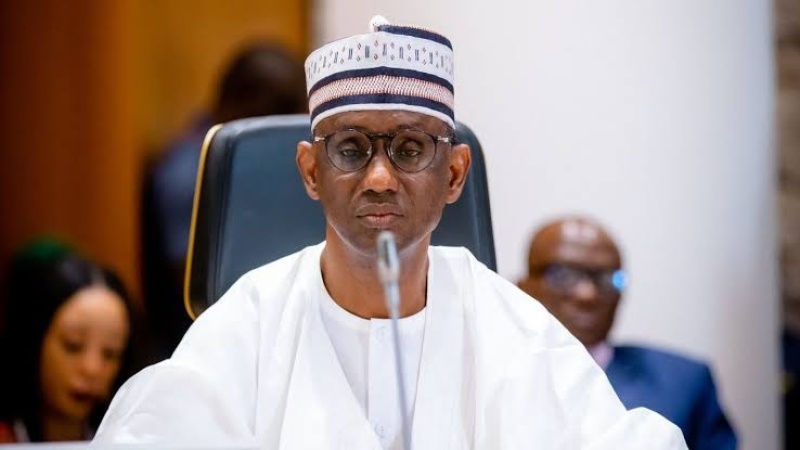
Professor Abdullahi Usman came into office in 2024 as NAHCON chairman at a time the commission was facing serious administrative and structural imbalance. Issues at the heart of the commission include poor feeding, increase in fares, deductions in the Basic Travel Allowance promised pilgrims, mismanagement and corruption.
A renowned scholar with qualifications from two Islamic centres of excellence, the University of Madinah and Peshawar University, Pakistan, Professor Usman faced more internal resistance than his recent predecessors.
Observers noted that entrenched institutional tensions and competing interests within the commission contributed to the difficulty that marked his tenure.
Long before his resignation, key members of NAHCON board rose up against him but he managed to survive. His opponents leveled allegations of financial indiscipline, lack of transparency and violations of established public financial regulations against him.
But the straw that broke the Camel’s back was the petition signed by all 11 board members and dated 19 January 2026. Titled ‘Vote of No Confidence in the Chairman of the National Hajj Commission of Nigeria (NAHCON),’ the petitioners asked the President to remove Usman.
They said the board’s decision followed prolonged internal observations and repeated efforts at corrective engagement, noting that persistent leadership failures had compromised the credibility, stability, and operational effectiveness of the commission.
The petition alleged financial indiscipline, lack of transparency, and repeated expenditure of funds and award of contracts without board approval, exceeding budgetary limits.
“These actions constitute grave breaches of financial governance and are compounded by the fact that the chairman is currently under investigation by the Economic and Financial Crimes Commission (EFCC),” the petition stated.
It further accused the chairman of awarding Hajj-related contracts in violation of the Bureau of Public Procurement (BPP) Act and due process, undermining transparency, fairness, and value for money, while exposing the commission to legal, financial, and reputational risks.
Further heightening the concerns were reports of the arrest of Prof Usman’s brother, Sirajo Usman, along with other key officials like Aliu Abdulrazak, the commission’s Commissioner of Policy, Personnel and Finance (PPMF) and Aminu Y. Muhammed, the agency’s Director of Finance and Accounts (DFA) under suspicion of a large-scale fraud involving N50 billion, further compounds the gravity of the situation.
The issue is confusing –Usman
In an interview he granted Daily Trust during one of the crisis which rocked his tenure, Usman said he was confused ”because this commission is almost uniquely staffed by Muslims, yet it has faced many crises. From what I have gathered, most complaints originated within the commission, often because someone felt bitter that others travelled to Saudi without them, or because someone complained that another person had received something and they did not. Out of envy, some decided to blackmail the commission. That is my understanding so far; the situation still surprises me.
“The authorities have told us that the evidence that led to EFCC’s involvement came from within the commission. Such internal allegations should have followed due process: the complainant should first lodge a complaint internally, and only if dissatisfied, proceed further. Till date, we have not received a single formal complaint within the commission.”
On the allegation of N50 billion fraud and nepotism, Usman said, ”This commission is the only major federal agency composed entirely of Muslims, yet we receive disproportionate scrutiny. NAHCON staff are relatively few, not up to 500, whereas other ministries, departments and agencies have thousands and yet do not attract this level of noise. I am investigating why this is happening, but from what I understand, it is driven by personal interests, envy or similar motives.
”Recall that last year, the federal government provided a N90 billion subsidy to ease the burden on pilgrims who paid early when the dollar rate rose sharply. The government covered balances so that each of the 95,000 pilgrims would receive N3.6 million in support to complete payments. Those who paid early and followed instructions had their balance covered; late payers paid the updated amount. Not a single pilgrim complained about not receiving the promised support. So where are these allegations coming from?
“Some people, when frustrated, fabricate stories. For example, current accusations mentioned five or six individuals, each allegedly involved in N50 billion fraud. Multiply that and the total makes no sense: if it refers to last year, the funds were spent on pilgrim services that were delivered; if it refers to this year, we haven’t collected a single kobo yet. These claims appear baseless and fabricated by outsiders.
”I am still investigating the root of these assertions. If someone publicises an accusation in the press, it is often taken as truth simply because I am associated with religion. But accusations must be properly investigated.”
Interference, mismanagement undermining NAHCON – Expert
A governance expert and the Executive Director Center for Organization Community and Civic Engagement (OCEAN), Comrade Abdurazak Alkali, identified external interference, lack of accountability and poor management as the major factors driving instability within NAHCON.
According to him, the commission operates a highly complex system annually, with numerous vested interests competing within Hajj operation, especially around logistics.
Alkali said recent leadership controversies were fueled by corruption allegations, though he noted such claims were yet to be substantiated. He added that a vote of no confidence passed by board members also signaled that the immediate past chairman did not begin his tenure on a stable footing.
He argued that external interference, especially from political power holders, seeking contracts through the commission is gradually weakening the institution.
He said, “Many of them complained that the leadership was too centralized and operating without the involvement of the board members. These are the kind of problems that have built up over the last two years.”
The expert listed delays in refund, rising Hajj costs, logistics challenges, lack of transparency and sidelining of board members as key issues confronting the commission, stressing that the board’s oversight must be respected.
“It’s normal to have this kind of crisis, but if it reaches this level where top management are resigning, or are forced to resign, it’s not good for our systems,” he added.
The way forward, for Alkali, is a return to institutional standards of transparency and accountability, insisting that those with oversight responsibilities must be allowed to perform their duties without obstruction.
He added, “Information about how operations are conducted should be made public. NAHCON already has standards; the solution is to return to those principles.”
Greed, lack of cognitive knowledge fueling instability in NAHCON – Analyst.
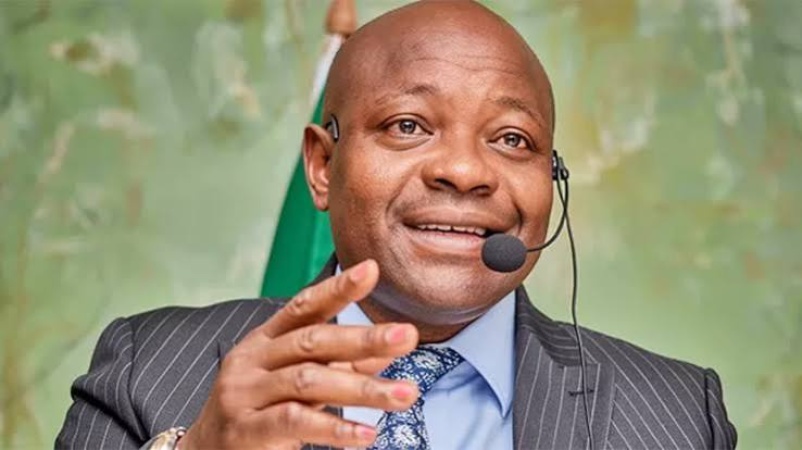
A public affairs analyst and Hajj expert, Nuruddeen Abdullahi, attributed the persisting instability at NAHCON to greed and inadequate administrative expertise.
He said NAHCON remained the apex regulatory body overseeing Hajj and Umrah operations in Nigeria, stressing that anyone appointed to lead the commission must possess strong competence in administration, logistics, planning and financial management.
Abdullah singled out Arabi for praise, describing him as a respected lawyer with vast bureaucratic experience.
“He earned enormous respect as a top bureaucrat. So, you can’t find him wanting in terms of administration and bureaucracy. He (Usman) should have compensated this by engaging technical experts familiar with the system and consulting experienced predecessors,” he said.
According to Abdullahi, NAHCON supervises billions annually from pilgrims from the 36 states of the federation and private operators, covering accommodation in Makkah and Medina, as well as logistics in Mina, Arafat, Mustalefa.
With such financial flow, he warned that any chairman driven by greed or lacking in accountability could easily mismanage the system.
He argued NAHCON’s mandate is primarily operational rather than clerical, saying pilgrimage education is handled by state boards and agencies.
To stabilize the commission, he urged the Federal Government to appoint individuals with proven experience in Hajj Administration and to conduct background checks on nominees.
He said, “Security agencies have to do their work properly to make sure that those to be appointed don’t have court or corruption cases.” (Daily Trust)