ADAD
ADAD
Updating your news feed...
NEWS EXPRESS is Nigeria’s leading online newspaper. Published by Africa’s international award-winning journalist, Mr. Isaac Umunna, NEWS EXPRESS is Nigeria’s first truly professional online daily newspaper. It is published from Lagos, Nigeria’s economic and media hub, and has a provision for occasional special print editions. Thanks to our vast network of sources and dedicated team of professional journalists and contributors spread across Nigeria and overseas, NEWS EXPRESS has become synonymous with newsbreaks and exclusive stories from around the world.






















Loading banners
Loading banners...


A new report from the Federal Reserve Bank of New York confirms what economists have long warned about: The burden of tariffs is borne almost entirely by the people living in the country that imposes them.
That simple fact — now learned experientially in 21st century America — is an Econ 101 lesson as foundational as supply and demand. ’Twas ever thus!
US businesses and consumers last year paid for nearly 90% of 2025’s import taxes, the Fed branch found. That’s hardly surprising: The National Bureau of Economic Research and the Congressional Budget Office recently found roughly the same thing.
And while the New York Fed report didn’t parse the split between businesses and consumers, the CBO report, published Wednesday, estimated businesses would continue shrinking their margins slightly to offset the extra costs, while passing on the bulk of the levies — 70% — to consumers. (As for those foreign exporters President Donald Trump has long claimed would foot the bill? They’re taking on about 5%, the CBO estimates.)
In real dollar terms, the tariffs amounted to an average tax increase of $1,000 per household in 2025, according to the non-partisan Tax Foundation.
Now, on one hand, these are just your standard academic mumbo-jumbo papers published by a bunch of nerds, for a bunch of nerds. The collective wisdom of economists has never much mattered to Trump when it comes to “the most beautiful word to me in the dictionary,” as he once described tariffs.
But the CBO and New York Fed reports landed just as tariff fatigue is hitting hard in DC.
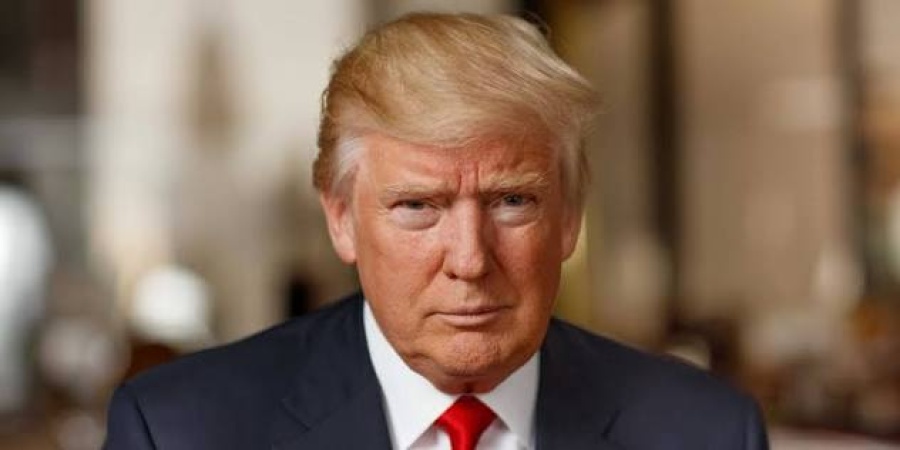
In a rare rebuke of Trump’s signature economic agenda, six House Republicans joined with Democrats on Wednesday in a vote that would effectively repeal his tariffs on Canada. The tariffs won’t get repealed, mind you, because even if it passed the Senate, Trump would just veto it. But the brushback from Trump’s own party members didn’t go over well in the West Wing, as one might have guessed. Shortly after the vote, Trump responded with a threat of “consequences” for “any Republican” in Congress who votes against tariffs.
Meanwhile, a Supreme Court ruling on the legality of Trump’s tariffs is due any day, potentially tossing his whole agenda into upheaval.
In a statement, White House spokesman Kush Desai defended the tariff agenda, noting inflation had cooled and corporate profits have gone up even as “America’s average tariff rate has increased nearly sevenfold.”
“The reality is that President Trump’s economic agenda of tax cuts, deregulation, tariffs, and energy abundance are reducing costs and accelerating economic growth,” he said.
Of course, all of that is happening as everyday Americans seethe over the cost of living and increasingly hold Trump and the Republicans responsible. Trump’s campaign message of lowering prices on “day one” simply hasn’t happened. (Except on a few items like eggs — we can give him the W on that one, largely because farmers worked really hard to snuff out the bird flu that was crimping egg supplies and driving up prices.)
On paper, the US economy is humming along nicely. That’s largely because the economy is measured in averages and aggregates.
Take, for example, the January jobs report released Wednesday. On the whole, it looked surprisingly strong, with 130,000 jobs added, nearly double what economists had expected. But if you zoom in, almost all of the gains came from one sector, health care. Zoom in a little more, and virtually every other sector showed either weak gains or losses. In fact, for all of 2025, health care and social assistance accounted for 97% of all the job growth.
That is a prime example of what economist Diane Swonk of KPMG has called the “one-legged stools” holding up the entire economy. Two other one-legged stools: Rich people doing shopping sprees, and giant tech companies shelling out hundreds of billions on AI infrastructure. (CNN)