Updating your news feed...
NEWS EXPRESS is Nigeria’s leading online newspaper. Published by Africa’s international award-winning journalist, Mr. Isaac Umunna, NEWS EXPRESS is Nigeria’s first truly professional online daily newspaper. It is published from Lagos, Nigeria’s economic and media hub, and has a provision for occasional special print editions. Thanks to our vast network of sources and dedicated team of professional journalists and contributors spread across Nigeria and overseas, NEWS EXPRESS has become synonymous with newsbreaks and exclusive stories from around the world.





















Loading banners
Loading banners...

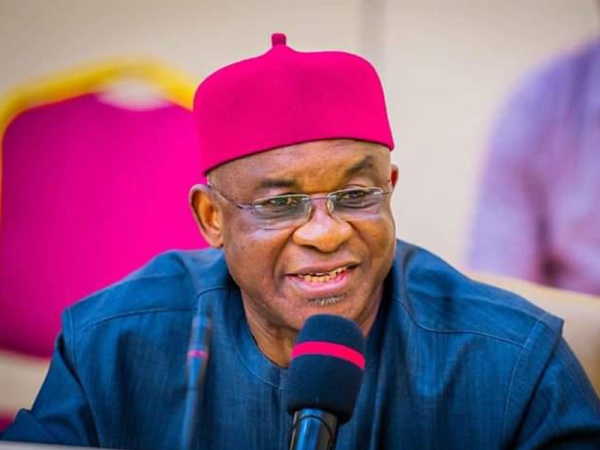
David Mark
David-Mark
By SEUN ADEUYI
Interim National Chairman of the African Democratic Congress (ADC), David Mark, has urged the National Assembly to pass the Electoral Act amendment bill and allow the Independent National Electoral Commission (INEC) to determine whether real-time electronic transmission of election results is feasible.
Mark spoke in Abuja while chairing the unveiling of a book titled “The Burden of Legislators in Nigeria”, authored by Senator Effiong Bob.
Addressing the controversy surrounding the proposed amendment to the Electoral Act, the former Senate President cautioned lawmakers against presuming the operational capacity of INEC, insisting that the responsibility of implementation rests with the electoral umpire.
“What the ADC is saying is pass the law. Let INEC decide whether they can do it (real-time electronic transmission) or not. Don’t speak for INEC,” he said.
“What the public demands is electronic transmission. If INEC cannot do it, it’s their own problem and not for you to speak for INEC. It’s as simple as that but that is just a by-the-way issue, it’s not a serious issue.”
His remarks came amid sustained public debate over the Senate’s handling of provisions relating to electronic transmission of election results.
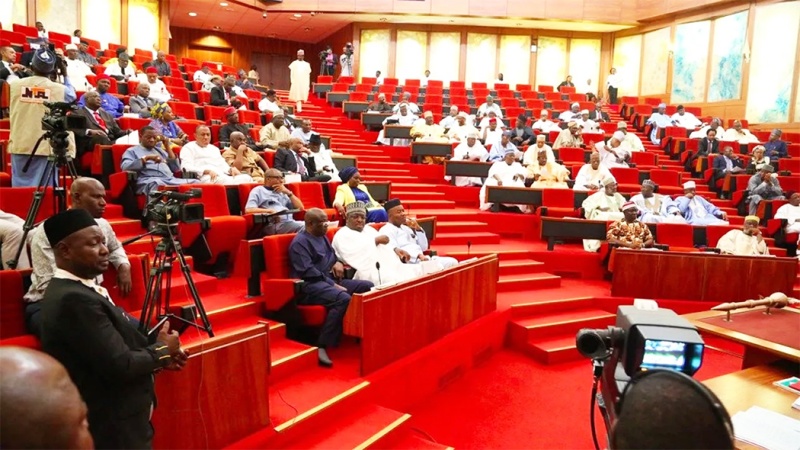
Also speaking at the event, Senate President Godswill Akpabio defended the Senate’s amendment process, describing criticisms as premature and based on a misunderstanding of parliamentary procedure.
“The Electoral Act amendment is incomplete. We have not completed it, but they are already on television. They don’t understand lawmaking.
“They don’t even know that what is in the Senate is not completed until we look at the Votes and Proceedings,” Akpabio said.
He explained that the Votes and Proceedings stage allows lawmakers to amend or clarify decisions taken on the floor before final passage.
“When we bring out the Votes and Proceedings, any senator has a right to rise and say, ‘On clause three, this was what we agreed upon.’ That is the only time you can
talk about what the Senate has done or not done,” he said.
Akpabio also rejected claims that the Senate removed electronic transmission of results, insisting that only the requirement for real-time transmission was questioned.
“I must state clearly, without ambiguity, that the Senate has not removed any means of transmission. If you want to use a bicycle to carry your votes from one polling unit to the ward centre, do so. If you want to use your phone to transmit, do so. If you want to use your iPad, do so,” he said.
According to him, mandating real-time transmission could expose elections to legal challenges in the event of network or power failures.
“All we said was that we should remove the word ‘real time,’ because if you say real time and there is grid failure and the network is not working, when you go to court somebody will say it ought to have been real time,” Akpabio said.
He warned that poor connectivity and insecurity in some parts of the country could invalidate results if real-time transmission were made compulsory.
“Real time means that in over nine states where networks are not working because of insecurity, there will be no election results. Nationally, if the national grid collapses and no network is working, no election results will be valid,” he said.
Akpabio further noted that the amendment bill had not completed the bicameral process and that a conference committee would harmonise differences between the Senate and House of Representatives versions before final passage.
“It is only when we have finished that that you will now say the National Assembly has passed any amendment to the Electoral Act,” he said. (Daily Trust)