


Loading banners


NEWS EXPRESS is Nigeria’s leading online newspaper. Published by Africa’s international award-winning journalist, Mr. Isaac Umunna, NEWS EXPRESS is Nigeria’s first truly professional online daily newspaper. It is published from Lagos, Nigeria’s economic and media hub, and has a provision for occasional special print editions. Thanks to our vast network of sources and dedicated team of professional journalists and contributors spread across Nigeria and overseas, NEWS EXPRESS has become synonymous with newsbreaks and exclusive stories from around the world.
…Experts link rising poverty to governors’ spending priorities
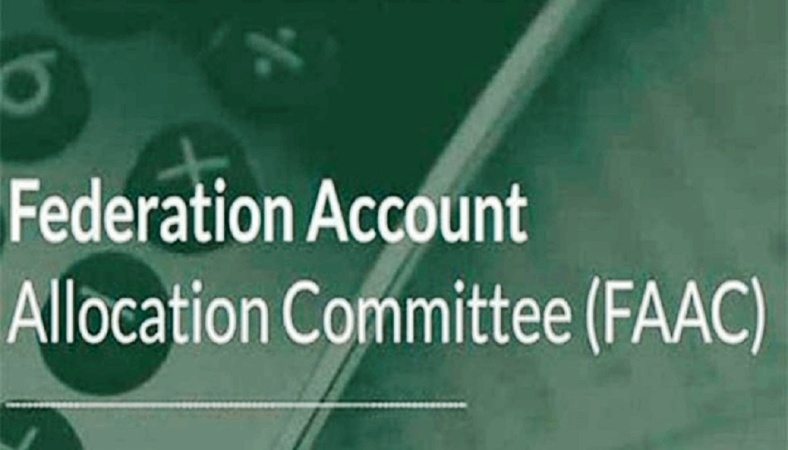
Despite receiving a record N33.27 trillion from the Federation Account Allocation Committee (FAAC) in the first eleven months (January-November) of 2025, state governors still poured resources into politically eye-catching but less impactful projects while citizens remained trapped in abject poverty.
In 2024, states received a total disbursement of N25.46 trillion, which could also have lifted millions out of multi-dimensional poverty estimated at 63 percent.
According to the FAAC disbursement report published by the National Bureau of Statistics (NBS), the total disbursement in the period was also higher than N28.6 trillion disbursed in the 2024 fiscal year.
BusinessDay’s analysis of the FAAC disbursement report published by the NBS shows that of the total amount, the federal government received N6.865 trillion, state governments got N6.713 trillion while local government allocations amounted to N4.905 trillion in the period. Cost of collection, transfers to non-oil excess account, North-East Development Commission accounted for the balance N14.787 trillion.
Delta State received N594 billion, followed by Rivers, Lagos and Akwa Ibom with N488 billion, N480 billion and N451 billion respectively. These were states with the highest allocation within the period.
On the other hand, states with the least allocations in the period included: Niger, Ekiti, Cross River, Gombe and Ebonyi with N113.903 billion, N119 billion, N120 billion N125 billion and N127 billion respectively.
Despite these historically high inflows, evidence suggests that many state governors are prioritising politically visible projects over investments in health, education and other human development initiatives, raising questions about whether the FAAC windfall is improving citizens’ welfare.
More money, less impact
Using BudgIT’s 2025 State of States report to assess how FAAC windfalls are being deployed, BusinessDay’s analysis shows that Nigerian states continue to under-prioritise human development, particularly healthcare, spending an average of just N3,483 per person on health in 2024 despite record revenues.
The report found that none of Nigeria’s states spent up to N10,000 per capita on healthcare, and only Lagos, Bayelsa, Edo, Abia, Kwara, Niger and Delta recorded per capita spending above N5,000.
An analysis of the report shows that across the federation, states budgeted a total of N1.32 trillion for health in 2024 fiscal year, but were only able to spend N816.64 billion. This represented an overall budget performance of 61.9 percent, signalling a persistent gap between health funding plans and actual implementation.
The report notes that, on average, state-level budget performance stood at 60.7 percent, with only seven states – Yobe, Gombe, Ekiti, Lagos, Edo, Delta and Bauchi – implementing more than 80 percent of their health budgets. Yobe State recorded the highest level of performance at 98.2 percent, but the report cautions that its total health expenditure was only N13.24 billion, ranking 24th among the states in absolute terms.
In education, the states had cumulatively budgeted N2.41trillion on education for the 2024 fiscal year. However, in total, they spent only N1.61 trillion, indicating a total implementation rate of 66.9 percent.
In education spending per capita, the states had an average of N6,981. The report showed that no state spent up to N20,000 per capita.
Only Edo, Delta and Katsina implemented over 100 percent of their education budgets. Rivers, Yobe, Ekiti, Bayelsa, Bauchi and Osun implemented over 80 percent of their education budgets in 2024.
States missing chance to build productive economy
Speaking with BusinessDay, Kabir Isah, Abuja-based public affairs analyst, said that by failing to invest in a healthy, educated workforce, states are missing the chance to build a productive economy that doesn’t rely solely on federal handouts.
He said It was inadequate for states to spend less than N4,000 on health, noting that this was fueling high out-of-pocket health spending by Nigerians and pushing more people into poverty.
Many governors prefer ribbon-cutting projects- roads, bridges, and flyovers – which are more politically visible than the long-term, invisible work of training teachers or stocking primary health centers with drugs.
“Human capital development (education and health) takes a decade to show results. Because governors operate on four-year cycles, they often lack the incentive to invest in reforms that will only benefit their successors.
“State governments often point fingers at the federal level when funds are tight, but the truth is, resources are available now. The issue isn’t a shortage of money, it is a choice of priorities” he said.
Also speaking to BusinessDay on the issue, Vahyala Kwaga, deputy country director for BudgIT, said state governments’ minimal spending on health and education is a direct result of poor political culture and weak accountability mechanisms.
According to Kwaga, elected officials tend to prefer high value capital expenditure that ensures they remain popular and provide jobs for friends and cronies, while citizens mostly think their governors should provide them with the capital expenditure projects that they can see being built before their eyes.
He said If governors spend right, “citizens will spend less of their own money on out-of-pocket health demands and generally enjoy better health as they have access to skilled medical professionals and equipment.”
“Unfortunately, citizens may not tie their improved health conditions to government health spending because they can’t see the causal link.
“Education is somewhat worse, as it is a very long-term investment that requires years to ‘show.’ How long would it take to see an investment in a child? After they finish primary 3? Or would it be if they pass Common Entrance? Or is it if they can read and write at an advanced level? Most citizens would not have the long-term orientation to follow this. Besides, governors think in four-year cycles and this can stretch for much longer than that,” he said.
Kwaga said that accountability mechanisms are few and generally ineffective at state levels. He, however, noted that the first and most important mechanism for accountability is the State House of Assembly.
For him, state legislatures are barely autonomous and cannot provide the needed check on the governance and policies of the executive. He added that in many ways, they are more symbolic as their key function has been relegated to mainly law-making while the indispensable act of keeping the executive on their toes is largely absent.
Auwal Musa Rafsanjani, executive director, Civil Society Legislative Advocacy Centre (CISLAC), blamed poor spending on critical infrastructure on weak accountability mechanisms in states.
According to Rafsanjani, there has been a prevalence of corruption in state governments, coupled with inefficiency and inability of relevant institutions to rise up and demand for accountability.
“The state assembly, the civil society, the media and the general public generally are not able to demand for accountability. Due to the inability of the state assembly, the civil society and the media to hold state governors to account, they do whatever they like and that’s very sad.”
He warned that weak investigative reporting and a largely inactive civil society have allowed poor accountability at the state level to persist, enabling wasteful spending and leakages to continue unchecked. (BusinessDay)