Updating your news feed...
NEWS EXPRESS is Nigeria’s leading online newspaper. Published by Africa’s international award-winning journalist, Mr. Isaac Umunna, NEWS EXPRESS is Nigeria’s first truly professional online daily newspaper. It is published from Lagos, Nigeria’s economic and media hub, and has a provision for occasional special print editions. Thanks to our vast network of sources and dedicated team of professional journalists and contributors spread across Nigeria and overseas, NEWS EXPRESS has become synonymous with newsbreaks and exclusive stories from around the world.























Loading banners
Loading banners...

By SANI IDRIS ABDULRAHMAN
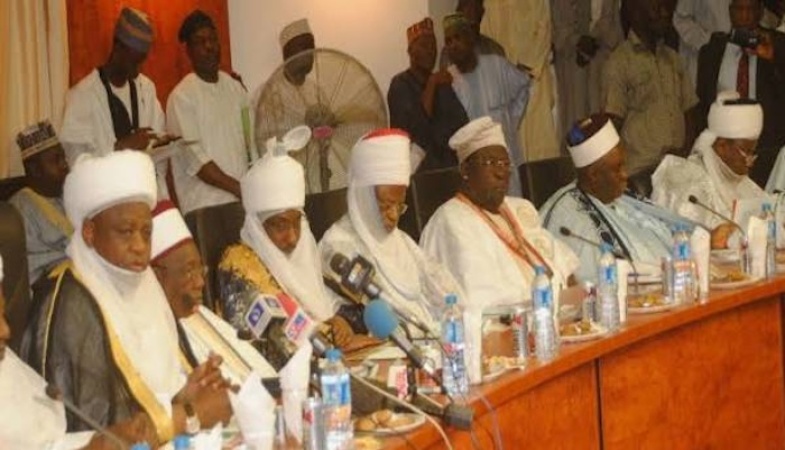
The Coalition of Funtua Community-Based Organisations has aligned with the Northern Elders Forum in challenging the proposed siting of the National Gold Refinery in Lagos over equity, federal balance and national interest.
This was contained in a statement issued to newsmen on Monday in Kaduna by Alhaji Rabi’u Dankoli, Chairman of the coalition, and its Secretary General, Prof Muhammad Garba.
They duo said Nigeria stood at a crossroads where policy choices exposed structural contradictions, stressing that the refinery controversy transcended administration and raised constitutional, economic and moral questions.
They added that locating the refinery thousands of kilometres from gold-producing regions undermined equity, inclusive development and balanced federal cooperation.
They explained that Nigeria’s gold deposits were concentrated in Zamfara, Kebbi, Kaduna, Katsina, Niger and parts of North-Central, making Northern locations economically logical for refining.
They, however, said that global best practice favoured value addition close to extraction points, warning that deviation was inefficient, economically regressive and socially destabilising.
They said transporting raw gold to Lagos imposes avoidable logistical, security and environmental costs, while increasing risks of theft, smuggling and illicit trade.
They added that distant refining denies host communities industrial ecosystems, skilled employment, infrastructure development, ancillary services and technological transfer.
They explained that section 14(3) of the 1999 Constitution mandated fairness and inclusiveness, while section 16 required equitable resource distribution and maximum public welfare.
They, however, argued that extracting resources from one region while concentrating value addition elsewhere deepens inequality and represents structural imbalance, not true federalism.
They said government claims of private sector leadership do not absolve responsibility, as policy incentives, approvals and strategic direction remain state-controlled.
They added that governments worldwide guide private investment to meet national development goals, stating that Nigeria already enforces local content in oil and gas.
They explained that Northern Nigeria was faced with banditry, environmental degradation, youth unemployment and displacement linked to unregulated mining.
They, however, said siting refineries closer to mining areas would formalise the sector, weaken criminal networks and provide lawful economic alternatives for young people.
They said that ignoring the opportunity constitutes both an economic error and a security risk capable of breeding resentment and instability.
They added that the position was not anti-Lagos, acknowledging its role as Nigeria’s commercial capital with vast financial and industrial assets.
They explained that the real question was whether every national asset should default to Lagos, regardless of logic, equity or regional balance.
They, therefore, said a united Nigeria allowed each region to leverage its strengths and benefit meaningfully from its resources.
They urged the Federal Government to pause and realign the project, guided by proximity to raw materials, constitutional equity, efficiency and national cohesion.
“History will judge decisions that ignore lawful grievances,” cautioning that silence or deflection would be remembered, insisting Nigeria can and must do better. (NAN)