 ADAD
ADAD
Updating your news feed...
NEWS EXPRESS is Nigeria’s leading online newspaper. Published by Africa’s international award-winning journalist, Mr. Isaac Umunna, NEWS EXPRESS is Nigeria’s first truly professional online daily newspaper. It is published from Lagos, Nigeria’s economic and media hub, and has a provision for occasional special print editions. Thanks to our vast network of sources and dedicated team of professional journalists and contributors spread across Nigeria and overseas, NEWS EXPRESS has become synonymous with newsbreaks and exclusive stories from around the world.



.webp)





.webp)



.webp)



Loading banners
Loading banners...

Court orders INEC to recognise Usman-led LP caretaker committee
• Stakeholders fear judiciary aiding ruling party’s strategy to weaken opposition
• Gambari dismisses one-party fears, blames weak ideology
• Abure faction, others allege judicial inconsistency, political interference
•Peter Obi’s ADC move faces uncertainty as LP leadership crisis settles
By endorsing new leadership in the Labour Party, a Federal High Court decision has reshaped opposition politics, revived questions about judicial neutrality, encouraged defections and recalculated alliances, with the ripple effects likely to influence strategies and presidential ambitions before 2027.
An Abuja Federal High Court, presided over by Justice Peter Lifu, yesterday affirmed the constitutional expiration of Julius Abure’s tenure, as earlier declared by the Supreme Court of Nigeria, stressing that the appointment of Senator Esther Nenadi Usman as acting national chairman of the Labour Party was driven by necessity and made in the interest of order.
The court consequently ordered the Independent National Electoral Commission to promptly recognise the Usman-led caretaker committee as the authentic leadership of the Labour Party.
Coming barely 24 hours after the court dismissed the suit filed by Senator Samuel Anyanwu challenging his removal as national secretary of the embattled Peoples Democratic Party, stakeholders have expressed concerns that the development could trigger a repeat of the 2023 scenario, in which divisions within the opposition led to a split in votes.
They alleged that the situation may have been encouraged by the All Progressives Congress-led administration of President Bola Ahmed Tinubu, to prevent opposition parties from uniting to pose a credible electoral threat to the incumbent.
This is just as a former Chief of Staff to President Muhammadu Buhari and Nigeria’s former permanent representative to the United Nations, Ibrahim Gambari, lamented that political parties in Nigeria have been reduced to mere flags of convenience due to their lack of ideological grounding.
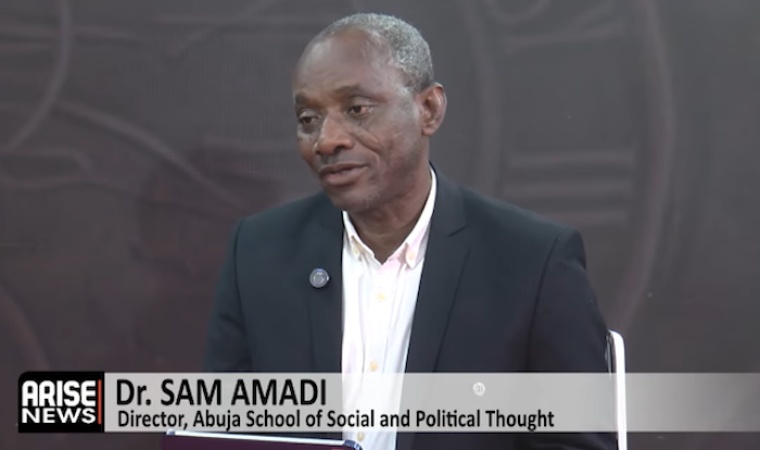
Gambari, who spoke to journalists in Abuja yesterday, dismissed fears that Nigeria was drifting towards a one-party state, stressing that history has consistently shown that attempts at political domination by a single party inevitably collapse under their own weight. He said, “I am not at all worried about this country becoming a one-party state. You can quote me; it will not happen if history is any guide.
“Nigeria’s political class often fails to learn from past mistakes. The Northern Peoples Congress dominated the First Republic, followed by the National Party of Nigeria in the Second Republic, and later the PDP, which once boasted of ruling the country for 60 years. Where has that led us?”
The former diplomat noted that such domineering schemes, rather than promote peace or development, have historically ended in chaos, stressing that excessive political ambition among the elite makes the sustenance of a one-party structure impossible.
He cautioned politicians against waiting for another political breakdown before drawing lessons from history, warning that repeated national failures were the direct consequence of ignoring clear and recurring warning signs.
Court ruling
Ruling on the matter brought before it by the Usman-led caretaker committee, Justice Peter Lifu relied on the April 4, 2025, verdict of the Supreme Court, which removed Abure as the national chairman of the Labour Party and ordered INEC to recognise the former Minister of Finance, Sen Nenadi Usman, as the valid leader of the party.
In the suit marked FHC/ABJ/CS/2262/2025, Abure and the Nigerian Labour Congress (NLC) were listed as defendants. The court ordered INEC to forthwith recognise the Nenadi Usman–led caretaker committee as the only valid authority to represent the LP, pending the conduct of a national convention.
Justice Lifu held that the evidence before the court established that Abure’s tenure as the national chairman of the party had elapsed and that the court could not leave a leadership vacuum in the party.
While rejecting Abure’s contention that the dispute was an internal party affair and therefore non-justiciable, the court held that the constitution of the Labour Party caretaker committee was a necessity flowing from the decision of the Supreme Court.
All the questions asked by Usman were answered in her favour, the court stated, adding that answering them otherwise would amount to judicial rascality and judicial insubordination, insisting that it could not go against the decision of the apex court.
The court consequently affirmed the removal of Julius Abure as the national chairman of the Labour Party and ordered INEC to recognise the Usman-led national caretaker committee as the party’s lawful leadership.
Recall that following the April 4, 2025, ruling of the apex court, the Labour Party established a 29-member caretaker committee, led by Senator Usman as chairman, during an expanded stakeholders’ meeting at the Abia State Government House, Umuahia.
Reactions have continued to trail the Federal High Court ruling, even as Abure declared his intention to challenge the verdict at the Court of Appeal, stressing that Justice Lifu did not take into consideration the fact that the party held a convention in Nnewi, Anambra State, which granted him a fresh four-year term.
Abure, through a statement issued in Abuja by the party’s National Publicity Secretary, Obiora Ifoh, vowed to challenge the ruling at the Court of Appeal, insisting that the judgment contradicted the April 2025 verdict of the Supreme Court on the party’s leadership tussle.
His factional National Working Committee said it would immediately appeal the decision, describing it as a misinterpretation of the Supreme Court’s judgment and an intrusion into the internal affairs of the party. He said, “Although we are yet to see the Certified True Copy of the judgment to fully comment on it, our position will become stronger when we see the CTC of the judgment. But generally, from the brief we have gotten so far, it is clear that the party will appeal the judgment.
“Before today’s judgment, we have been suspecting that it may go this way because of the body language around the court. When the matter was first filed, it was assigned to Justice Omotosho, and suddenly there was a somersault, as another matter was filed, which was an improper material, and the one sent to Omotosho was withdrawn and now sent to Justice Peter Lifu. That was a red flag for us,” the statement read.
“Nigerians should remember that the Court of Appeal pronounced Julius Abure’s National Working Committee as the authentic leadership of the party. That pronouncement was what Nenadi Usman took to the Supreme Court to say that the courts (Federal High Court and Appeal Court) were wrong to have pronounced somebody as the chairman of the party.”
Reacting to the resolution of the LP leadership crisis, elder statesman Chief Chekwas Okorie said he suspected that recent developments within the LP and the PDP were another strategy by the presidency to overrun the opposition in 2027.
While expressing surprise that, within the last two days, the judiciary could restore and recognise leaderships of the various parties which were the source of crises in both parties, he stated that it could be a string being pulled by the presidency to avoid lumping the opposition into one political party for an easy win in 2027.
He claimed that it would be difficult for the ruling party to overcome the scale of opposition that had built up in one political party in the coming elections, hence the resort to what he described as a strategy to weaken the opposition by freeing up their various political parties.
“It is suspected that the presidency appears to have pulled all these strings to allow these various parties to contest rather than force all opposition elements into one platform, because of the realisation that it will be more difficult to confront them in one party. He may want to use that strategy to spread the opposition by bringing them back to their parties. With this, it will be easier for him to deal with them in their separate parties than as a united opposition. It is the game of politics,” he stated.
On the recognition of the Usman-led LP by the Federal High Court, Okorie said that the delay in the judgment and the indulgence shown to the Julius Abure executive by the Independent National Electoral Commission (INEC) had made many members of the party defect to other political parties.
He stated that with the current development, it was left for those who defected to either return to the party or continue on their various platforms.
“The danger in this type of thing is that Obi has formerly moved to the ADC, and following him are many prominent politicians who are very elderly in the field of politics. Whether Obi can have a meeting with all these people to convince them to come back is the challenge. But nothing stops him from coming back because the LP is a formidable platform,” he said.
Okorie hailed those who remained with the LP for restoring their party, adding that the development would deepen the contest in 2027.Also, a former National Deputy Spokesman of the PDP, Diran Odeyemi, has alleged that the Federal Government may have influenced recent court judgments involving the Labour Party national chairman, Julius Abure, and the PDP national secretary, Samuel Anyanwu, as part of a wider scheme to throw opposition parties into confusion ahead of the 2027 elections.
Odeyemi said it could not be ruled out that the judgments were “teleguided”, citing what he described as the alleged closeness between the Chief Justice of the Federation and President Bola Tinubu.
According to him, the growing trend of judicial intervention in the internal affairs of opposition parties was fuelling instability rather than resolving disputes.
“Looking at the pattern of these judgments, one cannot completely rule out the possibility that the Federal Government is behind them,” Odeyemi said. “The judiciary is beginning to raise serious concerns about neutrality.”
He noted, however, that the judgment in the Abure case, which favoured the faction aligned with former Anambra State governor and 2023 Labour Party presidential candidate, Peter Obi, could reshape the opposition’s political calculations.
Odeyemi said that with the leadership crisis in the Labour Party temporarily settled, Obi might no longer have any compelling reason to remain in the African Democratic Congress (ADC), unless he was certain of securing the party’s presidential ticket.
“Now that the judgment has favoured his faction, Peter Obi may not see the need to stay in the ADC if there is no guarantee he will get the presidential ticket,” he said.
He added that the ruling had effectively reopened the door for Obi to return to the LP to contest the 2027 presidential election, rather than remain in the ADC, where he would face stiff competition from political heavyweights such as Atiku Abubakar, Rotimi Amaechi and others.
On the PDP crisis, Odeyemi dismissed the excitement trailing the court’s decision on Senator Anyanwu as misplaced, insisting that the judgment was merely academic. He described those celebrating the ruling as “educated illiterates”, arguing that Anyanwu’s tenure as national secretary had already expired last year.
“That judgment did not give any advantage to any faction in the PDP,” he said. “It is purely academic because Anyanwu’s tenure ended last year.” Odeyemi accused the judiciary of worsening internal party crises by delivering conflicting judgments on political party matters.
“What is even more troubling is that the courts are contradicting themselves,” he said. “There is a subsisting Supreme Court judgment which clearly states that courts have no business interfering in the internal affairs of political parties.” He said the recent judgment in the Abure matter contradicted that position and raised fresh questions about judicial consistency.
“I believe the judiciary is now contributing to the problems in political parties by issuing conflicting rulings instead of helping to stabilise the system,” Odeyemi added.
Meanwhile, the Human Rights Writers Association of Nigeria (HURIWA) has called on the Inspector-General of Police, Kayode Egbetokun, to enforce court rulings, especially the one removing Julius Abure as national chairman of the LP, warning that failure to act would undermine the rule of law.
The National Coordinator of HURIWA, Comrade Emmanuel Onwubiko, said in a statement yesterday that Abure should be arrested and prosecuted for impersonation if he continued to claim leadership of the party.
“Continued defiance of clear and binding court judgments is a grave threat to constitutional democracy,” the group said, even as it urged INEC to formally request police enforcement of the rulings to “restore sanity to the political space”.
The Senator Usman-led LP has welcomed the Federal High Court’s ruling directing the Independent National Electoral Commission (INEC) to recognise Senator Nenadi Usman as the party’s only legitimate leadership.
Describing the judgment as a victory for democracy and the Nigerian people, the party stressed that it was not a personal triumph for Senator Usman or any individual officer, but a reaffirmation of the rule of law and the integrity of the Labour Party.
In a statement, the Special Adviser to the interim national chairman, Ken Eluma Asogwa, said that, being mindful of the challenges posed by the protracted leadership dispute, it was time for members to embrace the moment as an opportunity for reconciliation rather than celebration.
“There is only one united and indivisible Labour Party in Nigeria,” the statement said. To foster cohesion, the party announced the immediate formation of a Truce and Reconciliation Committee to engage all aggrieved members and restore harmony.
“Members who feel dissatisfied with the court’s ruling were urged to set aside differences and engage in dialogue in the interest of the party’s growth and credibility.”
The Labour Party also appealed to INEC to fully comply with the judgment by ending any delays or distractions and formally recognising Senator Usman’s leadership without ambiguity.
Finally, the party thanked its supporters for their resilience and faith in justice, commended its legal team for their professionalism, and lauded the judiciary for upholding the law and protecting democratic processes.
(The Guardian)



