
Updating your news feed...
NEWS EXPRESS is Nigeria’s leading online newspaper. Published by Africa’s international award-winning journalist, Mr. Isaac Umunna, NEWS EXPRESS is Nigeria’s first truly professional online daily newspaper. It is published from Lagos, Nigeria’s economic and media hub, and has a provision for occasional special print editions. Thanks to our vast network of sources and dedicated team of professional journalists and contributors spread across Nigeria and overseas, NEWS EXPRESS has become synonymous with newsbreaks and exclusive stories from around the world.























Loading banners
Loading banners...


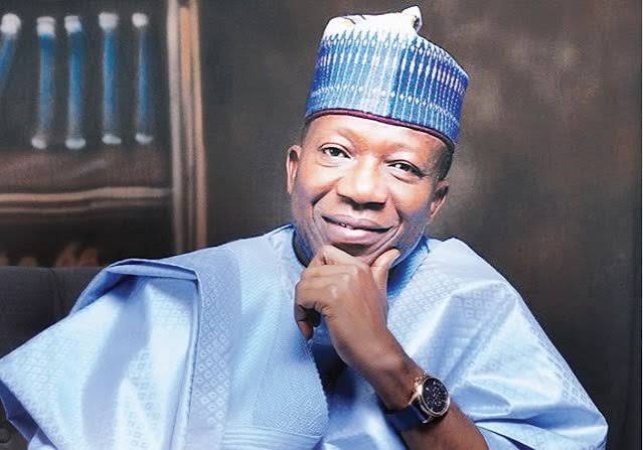
Kastina Governor, Radda
The move by the Katsina state government to release over 70 bandits from detention, following a reported peace deal, is generating ripples across the country. In this report, security experts and stakeholders condemned the decision saying that such deals were dangerous and unreliable, and could further jeopardise the fragile peace in the North; BENJAMIN SAMSON reports.
The peace accord
On January 2, this year, a letter detailing the Katsina state government’s plan to secure the release of some suspected bandits facing criminal trials for their Involvement in banditry related activities surfaced. Classified as “SECRET,” it was issued by the Ministry of Justice and addressed to the state’s Chief Judge, Justice Musa Abubakar.
In the letter, the state government, through the Ministry, sought the intervention of the Administration of Criminal Justice Monitoring Committee (ACJMC) to facilitate the release of the detained suspected terrorists.
Signed by the Director of Public Prosecutions, Abdur-Rahman Umar, the letter indicated that a list of 48 individuals accused of banditry-related offences had been forwarded to the Ministry of Justice by the Ministry of Internal Security and Home Affairs.
According to the letter, the planned release of the suspected terrorists was “one of the conditions precedent for the continuance of the peace accord deal signed between the frontline local governments and the bandits.”
The government also said while some of the suspects were standing trial before the Federal High Court, others remained in detention, awaiting trial at various magistrates’ courts across the state.
Umar added that a separate list of no fewer than 22 inmates facing trial before various high courts across the state was submitted, and that the letter sought their release under the same peace arrangement, urging the state Chief Judge to take “necessary action” to that effect.
‘Not safe for fragile regional peace’
Speaking with this reporter, a retired military officer, Col. Michael Oguntimo, said poorly implemented deals would never lead to peace. He said, “During these so-called peace deals, notorious warlords or groups of commanders sit across from government officials or clerics.
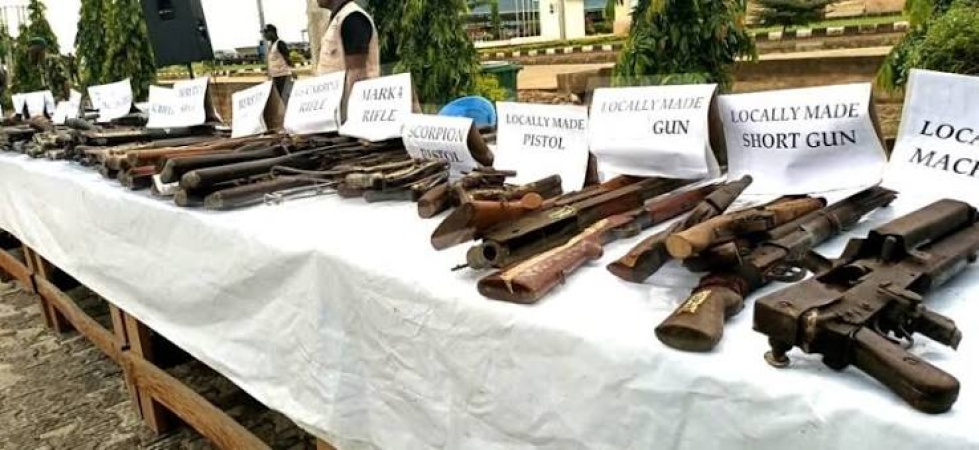
“They make public declarations of repentance, often swearing on the Koran and conduct a ceremonial handing over of a token number of weapons – sometimes rusty old rifles. Captives are released in staged ceremonies. Government leaders hail these moments as breakthroughs, but within months, the violence returns, worse than before.
“As someone who has served theatre operations across Zamfara, Katsina, Sokoto and Kebbi states, I also know the cost of these failed policies.”
Continuing, he said, “Instead of producing peace, the pursuit of poorly structured amnesty deals has emboldened armed groups, deepened community mistrust of the state and perpetuated impunity. These peace deals are not a path to stability; they are dangerous illusions.
“There are other better ways to tackle the expanding violence that has driven people from their homes, triggered alarming levels of food insecurity, turned the region into the country’s kidnap capital, and overwhelmed Nigeria’s already over-already over-stretched security forces.”
Victims the losers
Similarly, a retired officer, Group Capt. Abubakar Girma, urged the Katsina state government not to reward killers with a peace deal. He said any peace built on appeasing violent actors was fragile and unsustainable.
“Any initiative that prioritises perpetrators of violence over the millions of innocent citizens who have suffered displacement, trauma, and the loss of their homes and livelihoods must be rejected.
“Many northern families, for more than a decade, have lived through unrelenting violence, massacres, kidnappings, burned villages, and the forced displacement of entire communities. As we speak, millions of Nigerians remain uprooted, scattered across camps and temporary shelters.
“Children have grown up in IDP settlements, never once stepping onto the farmland their parents once owned, countless women have buried husbands, and parents have mourned children lost to attacks that could have been prevented,” he said.
Furthermore, he said, “Despite this overwhelming suffering, public voices continue to advocate for leniency toward the very groups that inflicted these atrocities. Many ravaged villages and farmlands remain under the control of armed elements, not their rightful residents.
“As long as displaced citizens remain unable to return to their homes, releasing bandits is both premature and unjust. No nation rewards those who spill innocent blood, and Nigeria must not become an exception.”
He urged Northern governors, especially the Katsina state governor, Dikko Umaru Radda, to work together with security agencies in order to prioritise the reclaiming of occupied territories, restoration of community security, as well as facilitating the safe return of displaced families.
According to him, justice for victims cannot continue to be deferred, while their voices are silenced by violence and neglect.
He stressed that, “Any credible path toward peace must include reconstruction of destroyed communities, rehabilitation of abducted persons, dismantling of criminal networks, and the establishment of clear accountability mechanisms.”
He said, “Peace built on appeasing violent actors is fragile and unsustainable. True stability requires justice, dignity, and the recognition of victims’ rights. The national leaders, traditional institutions, and civil society groups must place humanity and fairness at the centre of all discussions on security and reconciliation.
“Peace deals must not substitute justice, and no proposal should overshadow the suffering and rights of the millions of Nigerians whose lives have been torn apart by violence.”
‘Deals fatal, totally unreliable’
Also, a Professor in the Department of Peace and Conflict Studies, Gombe State University, Marcus Ardo, said peace deals with bandits in Northern Nigeria “have a calamitous record because most of them are badly administered.”
“Zamfara first experimented in 2016 with an agreement with the notorious bandit leader, Buharin Daji. The truce, brokered by former governor, Abdulaziz Yari, saw fighters surrender stolen cattle and a few weapons in exchange for cash. By 2017, over a thousand young men had sworn off violence, a spectacle repeated in Katsina and Sokoto.
“But the agreement was badly administered and fell apart when Daji – who was made a special government advisor and put on a stipend – was killed by rival bandits.
“In 2019, Zamfara’s new governor, Bello Matawalle, revived the policy with a ‘cows-for-guns’ deal. Hundreds of hostages were freed, and repentant fighters paraded for the media.
“Yet, these gestures rewarded impunity more than they restored security. As critics warned at the time, many of those that had signed up for peace returned to the bush and resumed their lucrative violence. Markets closed, villages were torched, and farmers were again forced to flee their fields or pay taxes to competing bandits,” he said.
Continuing, he said, “Neighbouring Katsina state has experienced a similar story. In October 2019, the government granted amnesty to armed groups in exchange for the release of 70 captives.
“During the ceremony, the bandits turned in just two AK-47 rifles. The governor promised rehabilitation and reintegration; yet, within months, residents reported fresh attacks.
“Sokoto state has also been down this road. Its first recorded peace agreement was in 2016, in the Isa District, but it collapsed almost immediately. Another attempt in 2019 suffered the same fa’e. The deals were nothing more than ‘a chance for the bandits to show us that the government needs them more than they need the government.”
‘Encourages arms struggle’
Similarly, a security expert, Dr. Ken Nnanna, reminded the Katsina state government that such a peace deal could encourage more people to take up arms against the government.
He said, “Paying ransom and granting amnesty to bandits will have multiplier effects which other bandits will see as an opportunity to take up arms as it is happening now.
“They should be aware that when bandits are paid and pampered, it makes the operators see it as a viable business venture which could be very difficult to control or stop.
“In fact, the very idea of granting amnesty to supposedly ‘repentant’ criminal elements, who are nothing other than rampaging terrorists, bandits and kidnappers, by embracing them with free feeding, clothing, accommodation, all from the public purse, is reprehensible, obnoxious, immoral, highly unpatriotic and totally condemnable!”
He added, “In other climes, such heartless vampires, whose stock in trade is unmitigated blood-letting, are arrested, given speedy trial and publicly executed, if found guilty. Such would send a note of stern warning to upcoming criminals that those who kill would pay for it with their own life.
“But over the years, the weak treatment or outright impunity these mindless murderers have enjoyed here in Nigeria gives the nauseating notion that their lives are more precious than those of their helpless victims. This is most unfortunate.”
Way forward
Nnanna said further that he was not totally against the peace deal as part of a non-kinetic approach to curb insecurity but the methods deployed by the Katsina state government and other Northern states might not lead to permanent peace.
He said, “I am not saying that dialogue is impossible, but that the North-west’s version has inverted the proper sequence. Disarmament must be real, visible, and verified. Protection of witnesses and communities must precede any granting of safe passage to bandits.
“Payments, whether by governments or communities, should be treated as extortion, documented, and prosecuted. However, where talks continue, they need hard conditions, mapped command structures, third-party monitoring, and deadlines for weapons hand-ins, clear sanctions for violations, and a parallel track for victim restitution.”
He said further that, “State government pledges to pastoralists to provide protected grazing reserves, water points, veterinary services, and schools must be delivered; and communities must see consistent protection and investment – not empty promises.
“This means early-warning systems, a formal security presence in remote areas, and resilience-building support for farming economies. If the goal is to stop the killing, the standard should be simple: Did attacks cease? Were abductees returned? Were weapons surrendered? And were those who broke the law held to account?
“If Nigeria hopes to break the cycle of false peace, policymakers must move beyond the illusion that dialogue alone can deliver lasting security.”
Katsina govt’s disclosures
However, defending its actions, the Katsina government said the planned release of 70 suspected bandits on trial was aimed at consolidating the peace deal between communities affected by insecurity in 15 local government areas of the state and repentant bandits.
Umar maintained that such tactics were adopted in war situations globally. The government said the deal had led to the release of, at least, 1,000 people held captive by the suspected bandits in various attacks. (Blueprint)




