Updating your news feed...
NEWS EXPRESS is Nigeria’s leading online newspaper. Published by Africa’s international award-winning journalist, Mr. Isaac Umunna, NEWS EXPRESS is Nigeria’s first truly professional online daily newspaper. It is published from Lagos, Nigeria’s economic and media hub, and has a provision for occasional special print editions. Thanks to our vast network of sources and dedicated team of professional journalists and contributors spread across Nigeria and overseas, NEWS EXPRESS has become synonymous with newsbreaks and exclusive stories from around the world.























Loading banners
Loading banners...

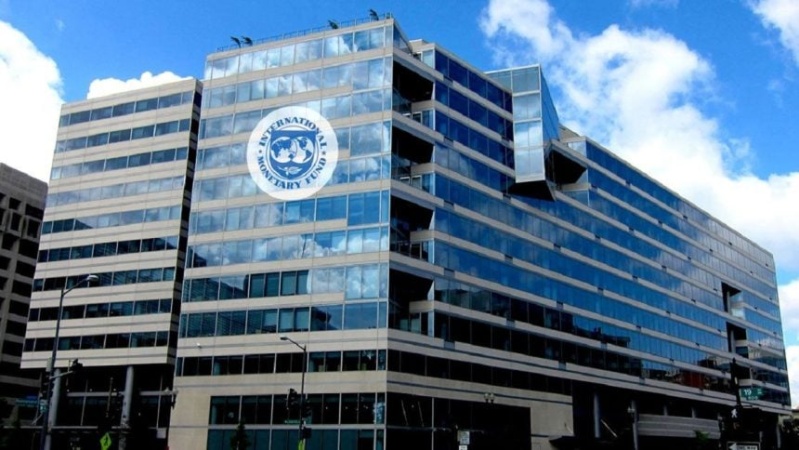
The International Monetary Fund (IMF) has raised Nigeria’s economic growth forecast for 2026 to 4.4 per cent, up from its earlier projection of 4.2 per cent, signaling growing optimism about the country’s medium-term economic prospects.
The revised outlook was included in the IMF’s January 2026 update of the World Economic Outlook (WEO), released on Monday at the report’s official launch. The Fund said the adjustment reflects increasing confidence that Nigeria’s ongoing reforms, improved fiscal coordination, and efforts to stabilise the macroeconomic environment are beginning to yield results.
According to the IMF, Nigeria’s economy is now expected to expand by 4.4 per cent in 2026, compared with the 4.2 per cent forecast issued in October 2025. The Fund, however, made no major changes to its near-term outlook, suggesting that the upgrade is largely driven by expectations of stronger performance over the medium term rather than immediate gains.
The IMF’s assessment places Nigeria within a broader pattern of gradual recovery across Sub-Saharan Africa. Regional growth was revised slightly upward from 4.0 per cent to 4.1 per cent for 2025, and from 4.3 per cent to 4.4 per cent for 2026, indicating a shared improvement in economic conditions across the region.
South Africa also recorded a modest upgrade in its outlook, with growth forecasts raised to 1.3 per cent for 2025 and 1.4 per cent for 2026, up from earlier projections. This suggests that Nigeria’s improved forecast is part of a wider regional trend rather than an isolated development.
In its October 2025 World Economic Outlook, the IMF had projected Nigeria’s 2026 growth at 4.2 per cent, citing persistent concerns around inflation, fiscal pressures, and structural challenges. Since then, Nigerian authorities have continued implementing reforms aimed at restoring macroeconomic stability, strengthening fiscal discipline, and boosting productivity across key sectors of the economy.
The IMF has consistently stressed that structural reforms are critical for achieving sustainable growth in emerging and developing economies, including Nigeria. The latest upward revision indicates that the Fund now expects stronger payoffs from these reform efforts over the medium term.
Analysts say the improved growth outlook carries important implications for policymakers, investors, and households. A stronger medium-term projection can help support investor confidence at a time when global capital remains cautious and highly selective about emerging market investments. It may also provide some fiscal breathing space by improving revenue prospects and supporting debt sustainability efforts.
For households, sustained economic expansion is vital for easing cost-of-living pressures and improving employment opportunities, even though challenges such as inflation and weak purchasing power remain significant.
On the global front, the IMF expects economic conditions to remain relatively stable. The Fund projects global growth of 3.3 per cent in 2026 and 3.2 per cent in 2027, broadly in line with the estimated 3.3 per cent outcome for 2025. It said this stability reflects a balance between headwinds from changing trade policies and tailwinds from technology-driven investment, including artificial intelligence, alongside supportive financial conditions.
Global inflation is also expected to continue moderating, with headline inflation projected to fall from 4.1 per cent in 2025 to 3.8 per cent in 2026 and further to 3.4 per cent in 2027.
For Nigeria, easing global inflation and steady world growth could create a more supportive external environment for domestic reforms and economic expansion. Overall, the IMF’s latest forecast signals cautious confidence that Nigeria is moving toward a firmer recovery path, even as near-term risks and structural challenges persist. (TRIBUNE)