Updating your news feed...
NEWS EXPRESS is Nigeria’s leading online newspaper. Published by Africa’s international award-winning journalist, Mr. Isaac Umunna, NEWS EXPRESS is Nigeria’s first truly professional online daily newspaper. It is published from Lagos, Nigeria’s economic and media hub, and has a provision for occasional special print editions. Thanks to our vast network of sources and dedicated team of professional journalists and contributors spread across Nigeria and overseas, NEWS EXPRESS has become synonymous with newsbreaks and exclusive stories from around the world.






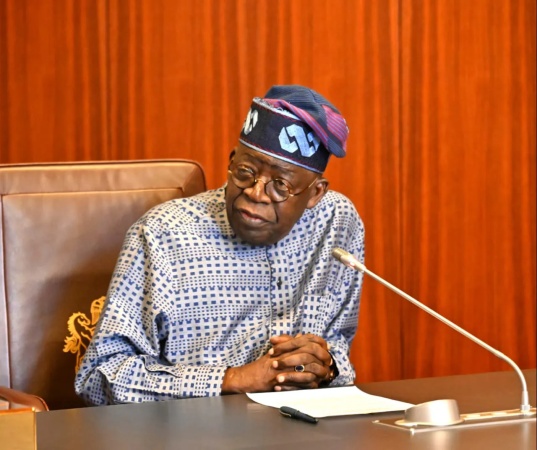









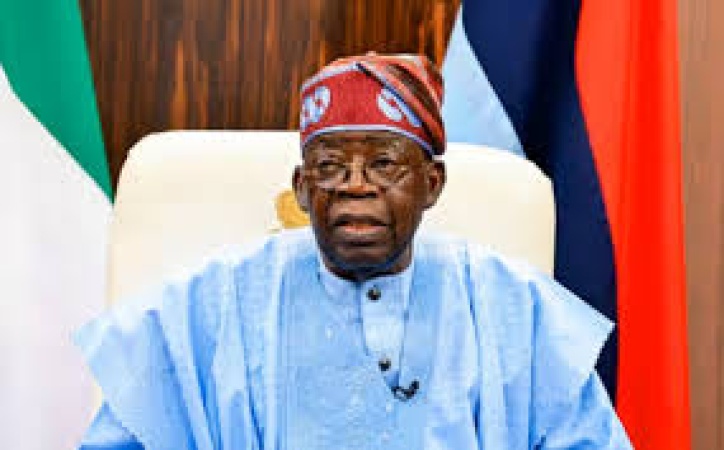
President Tinubu
The Federal Government has projected revenue of N33.39 trillion for the 2026 fiscal year while proposing to spend N15.91 trillion on debt servicing, according to details contained in the 2026 Appropriation Bill before the National Assembly.
The revenue framework in the bill shows that the largest portion of federally generated income will come from the country’s share of net federation revenues estimated at N20.20 trillion.
This comprises N18.84 trillion from the fyederal Government’s share of the main Federation account pool, N1.29 trillion from the Value Added Tax pool and N63.85 billion from the Electronic Money Transfer Levy.
Independent revenues are projected at N4.31 trillion, reflecting expectations from government-owned institutions and agencies. Of this amount, tax-related independent revenues are put at N124.25 billion, while non-tax revenues are estimated at N845.98 billion.
Operating surplus from government agencies is expected to contribute N3.34 trillion, reinforcing the government’s reliance on remittances from ministries, departments and agencies to fund public expenditure.
Additional inflows are expected from dividends paid by government-linked enterprises, with total dividend income projected at N247.70 billion. The Nigeria Liquefied Natural Gas Limited is expected to contribute N135.14 billion while the Development Bank of Nigeria and the Bank of Agriculture are projected to remit N57.97 billion and N51.05 billion respectively. Galaxy Backbone is expected to add N3.55 billion, while no dividend is projected from the Bank of Industry for the year under review.
The budget also anticipates N1.37 trillion from foreign aid and grants, reflecting continued engagement with development partners to support priority programmes. Special levies and transfers to designated government accounts are estimated at N300 billion.
Revenue from government-owned enterprises is projected at N9.40 trillion, although this figure is adjusted for operating surplus, resulting in net revenue of N4.98 trillion after deducting N4.42 trillion classified as operating surplus already captured under independent revenues.
Other revenue sources are expected to generate N1.99 trillion. This includes N1.90 trillion from development levies, N22.68 billion from domestic recoveries, assets and fines, and N65.05 billion from oil price royalty receipts. No revenue is projected from signature bonuses or renewals within the period.
On the expenditure side, the Federal Government plans to allocate N15.91 trillion to service public debt in 2026, underscoring the significant fiscal burden of debt obligations on public finances.
Domestic debt service, including Ways and Means advances, is estimated at N10.16 trillion, while foreign debt service is projected at N5.36 trillion.
In practical terms, this means that in 2026 the Federal Government plans to spend far more servicing debts owed within Nigeria than those owed to external creditors, and that domestic borrowing remains the dominant pressure on public finances.
The N10.16 trillion domestic debt service covers interest and principal repayments on loans raised inside the country. These include Federal Government bonds, Treasury bills, Sukuk, savings bonds, and, crucially, Ways and Means advances from the Central Bank of Nigeria.
Ways and Means are short-term overdraft facilities the government uses to cover cash shortfalls, but over time they have grown into a large stock of debt that now attracts significant interest costs.
The size of this figure shows that financing government deficits through domestic borrowing and Central Bank support has created a heavy repayment obligation that must be met before other spending priorities.
The N5.36 trillion foreign debt service relates to obligations to external lenders such as multilateral institutions, bilateral partners, and holders of Nigeria’s Eurobonds. These payments are usually denominated in foreign currency, mainly dollars, which means they place pressure on the country’s external reserves and foreign exchange market.
Although the foreign debt service figure is lower than domestic debt service, it carries additional risks because it depends on exchange rate movements and the availability of foreign currency.
Putting both figures together, shows that debt servicing alone will absorb a very large share of government resources in 2026. When combined, domestic and foreign debt service of about N15.5 trillion accounts for a substantial portion of total projected revenue, leaving less fiscal space for capital projects, social services, and economic development programmes.
The heavier weight of domestic debt service also suggests that while external borrowing often attracts public attention, the more immediate strain on the budget is coming from debts accumulated within the local financial system and from central bank financing of government spending.
In addition, N388.54 billion is set aside for a sinking fund aimed at retiring maturing promissory notes, bringing total debt service provisions for the year to N15.91 trillion.
The figures indicate that nearly half of the federal government’s projected revenue for 2026 will be devoted to meeting debt obligations, a trend that continues to shape fiscal planning and constrain spending space for development and social programmes. (The Nation)