
Updating your news feed...
NEWS EXPRESS is Nigeria’s leading online newspaper. Published by Africa’s international award-winning journalist, Mr. Isaac Umunna, NEWS EXPRESS is Nigeria’s first truly professional online daily newspaper. It is published from Lagos, Nigeria’s economic and media hub, and has a provision for occasional special print editions. Thanks to our vast network of sources and dedicated team of professional journalists and contributors spread across Nigeria and overseas, NEWS EXPRESS has become synonymous with newsbreaks and exclusive stories from around the world.






















Loading banners
Loading banners...
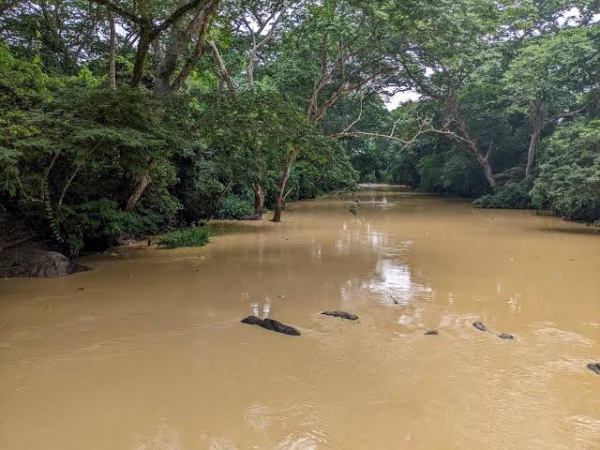
Civil society organisation Urban Alert has issued a strong warning against the consumption of untreated water from the Osun River, clarifying that recent claims declaring the water safe for drinking were based on a misinterpretation of scientific research.
The warning comes in response to media reports, specifically a December 19, 2025 which quoted Professor Nusrah Afolabi-Balogun of Fountain University, Osogbo, as stating that water from the Osun-Osogbo grove is safe for human consumption.
Urban Alert, in 2021 released a laboratory result that proved the existence of mercury, lead, cyanide and other toxic elements in the river caused by activities of gold miners operating in many communities in Osun State.
In a statement signed by its Communications Associate, Titilade Alayande, on Sunday, December 28, 2025, Urban Alert clarified that the claim did not originate from Professor Afolabi-Balogun’s findings but was a result of media interpretation that extended beyond the scope of her work.
The group noted that following a review of the Professor’s inaugural lecture and subsequent direct clarification from her, it was established that her research did not assess potable water safety or evaluate drinking-water thresholds for heavy metals and toxic contaminants.
“Professor Afolabi-Balogun has clarified that her research did not assess potable water safety,” the statement read.
“Any public framing of her work as a declaration of present-day drinking water safety is therefore inaccurate and unintended.”
The organisation explained that the research in question was conducted between 2016 and 2019, focusing on ecological and microbial characteristics, biochemical properties, and bioremediation potential. The study was ecological in nature rather than a public health assessment of water quality.
Urban Alert emphasised that environmental conditions have changed significantly since the Professor’s research concluded in 2019.
The organisation pointed to persistent reports of widespread color change and contamination risks in the river attributed to intensified mining activities.
Citing its own structured evidence gathering, Urban Alert stated: “The findings of these tests reported the presence of multiple harmful indicators, including mercury, lead, and cyanide, at concentrations exceeding recognised safety thresholds.”
The group argued that post-2019 pollution drivers must be assessed using current data, asserting that earlier ecological studies cannot substitute for updated risk evaluations under “materially altered circumstances.”
Pending updated and transparent assessments, Urban Alert advised residents, visitors, and devotees to “exercise caution regarding the use of untreated river water for drinking and to rely on verified safe sources where available.”
The organisation reiterated its call for an updated, independently supervised, multi-stakeholder water quality assessment of the Osun River system. It also urged state and federal authorities to strengthen enforcement against illegal mining discharge and publish an actionable remediation plan.
“Urban Alert remains committed to evidence-based advocacy… to safeguard the Osun River, the Osun-Osogbo Sacred Grove, and the health of communities along this vital river system,” the statement concluded. (TRIBUNE)




