ADVERTISEMENT

ADVERTISEMENT


























Loading banners


NEWS EXPRESS is Nigeria’s leading online newspaper. Published by Africa’s international award-winning journalist, Mr. Isaac Umunna, NEWS EXPRESS is Nigeria’s first truly professional online daily newspaper. It is published from Lagos, Nigeria’s economic and media hub, and has a provision for occasional special print editions. Thanks to our vast network of sources and dedicated team of professional journalists and contributors spread across Nigeria and overseas, NEWS EXPRESS has become synonymous with newsbreaks and exclusive stories from around the world.
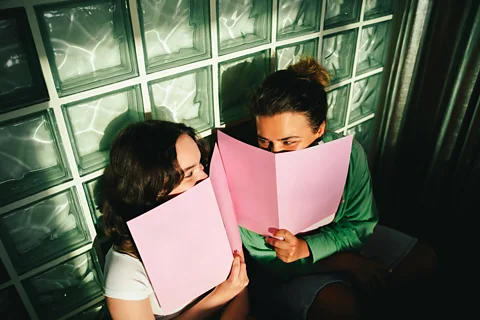
From channelling your anger to writing lists and singing more often – here are some science-backed tips to boost your wellbeing.
The start of a new year can seem like the ideal time to make a fresh start – to shrug off the worries and pressures of the previous 12 months and view the world in a different way. But it is also a lot easier to promise yourself that you'll think about things differently this year than to actually do it.
Fortunately, there is plenty of scientific research that offers different ways to help you improve your mood. From making use of your anger to putting your phone to work for you, here are nine tips that we have discovered during our reporting.
Perfectionism is often seen as a positive trait. But as the aphorism goes, "perfect is the enemy of good". And being a perfectionist can be bad for your health too.
There is mounting evidence that a perfectionist mindset is linked to depression and anxiety, as well as a laundry list of other conditions including social anxiety disorder, obsessive-compulsive disorder, eating disorders, chronic fatigue syndrome, insomnia and even the risk of suicide. In fact, according to some experts, the stronger your perfectionism trait is, the more psychological disorders you're going to suffer.
Perfectionists set themselves unrealistic standards and when they inevitably fail to meet those standards they experience more guilt, shame and anger than non-perfectionists. They beat themselves up for mistakes and never quite feel good enough.
But how can one get out of this self-destroying mindset? According to experts, one of the most robust protections against anxiety and depression is self-compassion. In other words, try to be kind to yourself. If you make a mistake, don't rush to self-criticise. And if you have children, try to create a family environment where imperfection isn't just accepted but is celebrated. Those imperfections, after all, are what make us human.
Friendships are enormously important for our health. They can influence everything from the strength of your immune system to your risk of heart disease. Surrounding yourself with good friends can even help you live longer.
But sometimes it's worth looking at what kind of friend you are to the people around you. People who blow both hot and cold – creating what are known as "ambivalent relationships" can be more harmful to others' wellbeing than those who are consistently unpleasant.
One step you can take might be to have more conversations about good news – try asking for more information, discussing the implications and expressing joy for them. Celebrating successes in this way can boost both your mood as well as your relationship.
It's never too late to start a new hobby.
Last year I went to a life drawing class for the first time as part of an experiment to see which hobby was best for building social connections. And as I am not artistically gifted (trust me), I was nervous at first – but I quickly found that my skill level didn't matter. For those two hours, my brain was quiet. It turns out that drawing, when done in a way that makes us focus on the world around us, can improve mood and wellbeing. I also made a friend during the tea break, someone who I'd have never ordinarily crossed paths with. Ann Mackowski, the artist hosting the session, said her classes become like "a little family" for some people.
If you're more interested in moving your body, team sports can provide the benefit of social connection while releasing endorphins. In fact, team sports can even make exercise feel easier, due to something psychologists call "shared intention" – where people connect over a common goal, or action. This helps us feel closer to each other and makes subsequent interactions much easier.
So, try a new activity this year – you never know who you might meet.
Nothing can destroy quite like anger. When tensions boil over, words or actions can erupt that we never intended and don't endorse. But if the energy from those negative feelings is recognised in time, research suggests it can also be captured and re-directed to surprisingly productive ends.
That doesn't mean suppressing angry emotions, which can increase your risk of a heart attack nearly three-fold. It means channelling them into something that serves you better. Using your anger to throw faster, kick harder or jump higher can improve your sporting prowess (although happiness produces a similar effect, compared to an emotionally neutral state). It can also be harnessed to greater feats of persistence, and even bursts of creativity (though anger can also make creativity harder to sustain).
Key to wielding these transformations is being able to reign in and moderate how your anger is expressed. Employing techniques such as psychological distance to avoid allowing anger to boil over into aggression along with using patience to delay your response can help you channel your anger more constructively.
It is an old idea, but one that is well evidenced. Taking a few moments each day to write a list of three things that you are grateful for has been shown to have an outsized effect on our wellbeing.
Studies of the exercise have shown that people who spent a month jotting down three good things each day showed improvements in their happiness levels and a drop in depressive symptoms. Tests have also shown it can benefit people from all walks of life – from teenagers living in city slums in Kenya to elderly women living in Switzerland.
Key to its benefits is the focus on the positive, helping you search out those good things throughout your day. To give it a try, set aside some time each evening to reflect on your day, writing down three things that went well or that you enjoyed. It can be anything, however small or seemingly inconsequential. The important element, though, is to think about why these things felt positive to you.
A few times a year I break out in a sweat worrying about how my phone might be wrecking my mind. My Screen Time tool says I pick my mobile device up about 105 times a day – which is saintly compared to the average American's 186 times a day. Research suggests habits like these could have consequences for memory, attention span, sleep, mental health and more.
But our phone fixations could have benefits too. One study, for example, found that using a screen to take notes improved performance on difficult memory tasks, suggesting that the note-taking app languishing on your device could help you offload certain kinds of cognitive work.
It's not that hard to mitigate some of the phone's harms, either. Simply hearing notifications may hurt your performance on simple tasks almost as badly as an actual phone call. If you don't like the sound of that, you could make use of your phone's feature to batch-deliver notifications instead of receiving them in real time – both iPhones and Androids have these tools.
But if you really want to get your head out of your screen entirely, you could experiment with the benefits of leaving your phone in the other room. Baby steps.
When the nights draw in and temperatures drop, it is common for people to see their mood drop. Research shows that many people can become sad and sluggish over the winter months as the decreased hours of daylight take their toll.
But a change of mindset could help. Studies suggest that learning to notice and embrace the positive features of winter, such as the natural beauty it brings, can help to combat the winter blues. One study of 238 people in Norway, for example, found that looking forward to the opportunities of winter, such as skiing and cosy nights spent with loved ones in front of a fire, reported better wellbeing.
There is even evidence that humans may be evolved to seek out the company of others more during cold weather. Our film-viewing habits seem to change in the winter too for similar reasons – a heart-warming movie apparently fulfils our evolved desire for emotional warmth when it is chilly outside.
Have you ever felt the pure unbridled elation of singing when no one is listening? Or the heightened sense of connection to others when you sing in a group? Researchers say singing is a "cognitive, physical, emotional and social act" – meaning the benefits of this ancient human practice are multifold.
Singing activates a broad network of neurons on both sides of our brain, including in regions that deal with language, movement and emotion. Combined with the focus on breathing, this makes singing an effective stress reliever. And singing as part of a group has been found to promote an even greater level of psychological wellbeing than singing alone.
Blasting out your favourite song is good for your heart, boosts immune function and can even suppress pain. The act of singing is also an aerobic exercise, comparable to a brisk walk. So, not only is it a good work out, you also get that rush of endorphins – the brain's "feel-good" chemicals. Singing has even been found to help the brain repair itself.
So, whether you enjoy a gentle sing-along or belting out a tune with joyful abandon in the shower, you can do so with the knowledge that you are reaping the benefits.
In many countries, having a catnap is part of daily life. An afternoon siesta is a common ritual in Spain, for example, while in Japan, workers often enjoy an afternoon sleep, known as hirune.
Research shows that habitual naps can help keep our brains bigger for longer, which can delay brain ageing by between three to six years. Preserving your brain size for as long as possible is important as shrinkage has been linked to diseases such as Alzheimer's and vascular dementia. Short naps, lasting five to 15 minutes, can immediately improve how well we perform mentally, with the stimulus lasting for up to three hours after we wake up.
How do you make sure that your afternoon nap leaves you feeling energised and not more tired than you were to begin with?
Timing is key. Try to keep your naps less than 20 minutes. If you exceed this time, you'll find yourself falling into deep sleep and you're likely to wake up feeling groggy and disoriented.
The best time for a cat nap is between 14:00-16:00 as this is when there is a dip in your circadian rhythm and your body temperature starts to fall. During the morning, it is still rising, making you more alert. If you leave it too late in the day, you might disrupt your sleep at night. (BBC)