ADAD
ADAD
Updating your news feed...
NEWS EXPRESS is Nigeria’s leading online newspaper. Published by Africa’s international award-winning journalist, Mr. Isaac Umunna, NEWS EXPRESS is Nigeria’s first truly professional online daily newspaper. It is published from Lagos, Nigeria’s economic and media hub, and has a provision for occasional special print editions. Thanks to our vast network of sources and dedicated team of professional journalists and contributors spread across Nigeria and overseas, NEWS EXPRESS has become synonymous with newsbreaks and exclusive stories from around the world.
Loading banners
Loading banners...

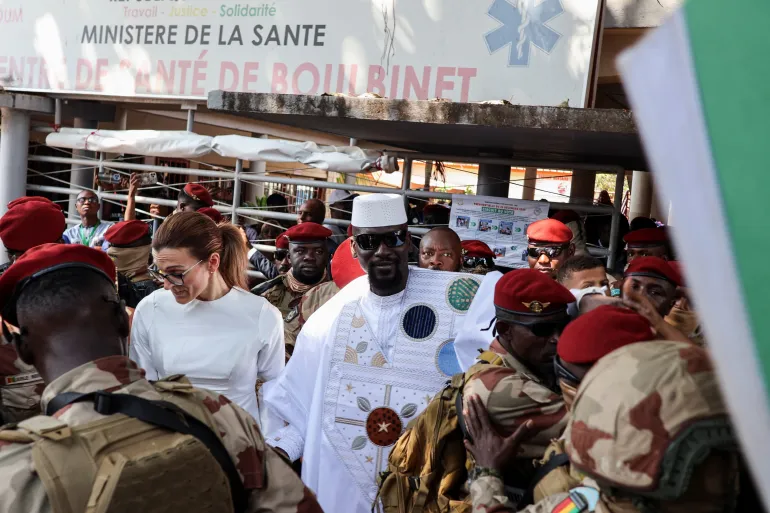
Guinea coup leader Mamady Doumbouya has been elected president, according to provisional results, following the country’s first election since a military takeover in 2021.
The results announced on Tuesday showed Doumbouya winning 86.72 percent of the vote, held on December 28, an absolute majority that allows him to avoid a run-off.
The Supreme Court has eight days to validate the results in the event of a challenge.
The election was widely seen as a means to legitimise Doumbouya’s stay in power.
It was also the culmination of a transition process that began four years ago after Doumbouya ousted President Alpha Conde, who had been in office since 2010.
The coup leader has since clamped down on opposition and dissent, critics say, leaving him with no major opponents among the eight other candidates who were in the race.
Both Conde and longtime opposition leader Cellou Dalein Diallo live in exile.
The lesser-known Yero Balde, a former education minister in Conde’s government, came a distant second, with 6.51 percent of the votes. The General Directorate of Elections said that 80.95 percent of the 6.7 million people registered had voted in the poll.
After seizing power, Doumbouya had said that he and other military officers would not run in elections. However, a referendum in September allowed officers to run and extended the presidential term from five to seven years.
Guinea is home to the world’s largest reserves of bauxite and holds one of the biggest untapped iron ore deposits at Simandou, a project officially launched last month after years of delays.
Doumbouya has pointed to progress on the mine as evidence of his leadership, saying his government has ensured the country will benefit more directly from its resources.
His administration has also moved towards greater state control of the mining sector, revoking the licence of Emirates Global Aluminium’s subsidiary Guinea Alumina Corporation, following a dispute over refinery development, and transferring its assets to a state-owned company.
Similar policies of resource nationalism in fellow African nations, such as Mali, Burkina Faso and Niger, have bolstered support for military-led governments in the region.
Political activity in Guinea has remained tightly controlled under Doumbouya’s leadership. Civil society groups accuse the authorities of banning demonstrations, limiting press freedom and restricting opposition organising.
The election campaign was “severely restricted, marked by intimidation of opposition actors, apparently politically motivated enforced disappearances, and constraints on media freedom”, the United Nations human rights chief, Volker Turk, said last week.
On Monday, opposition candidate Faya Lansana Millimono told a news conference that the vote was affected by “systematic fraudulent practices” and said that observers were prevented from monitoring both voting and ballot counting.
The government did not comment on the allegations. (Aljazeera)