
Updating your news feed...
NEWS EXPRESS is Nigeria’s leading online newspaper. Published by Africa’s international award-winning journalist, Mr. Isaac Umunna, NEWS EXPRESS is Nigeria’s first truly professional online daily newspaper. It is published from Lagos, Nigeria’s economic and media hub, and has a provision for occasional special print editions. Thanks to our vast network of sources and dedicated team of professional journalists and contributors spread across Nigeria and overseas, NEWS EXPRESS has become synonymous with newsbreaks and exclusive stories from around the world.


















Loading banners
Loading banners...


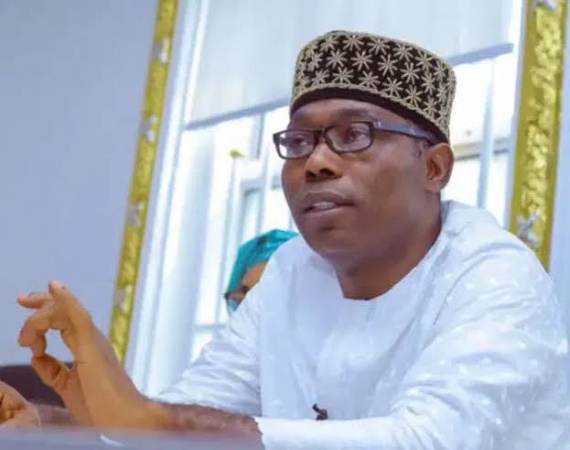
Govs Soludo and Lawal of Anambra and Zamfara, respectively
Anambra and Zamfara States have joined the growing list of sub-national governments domesticating Nigeria’s sweeping tax reforms, signalling stronger alignment with the fiscal overhaul championed by President Bola Ahmed Tinubu.
In Awka, Anambra State, the Executive Governor, Professor Charles Chukwuma Soludo, signed into law the Harmonised Taxes and Levies (Approved List for Collection) Law, making Anambra the third state in the federation to adopt the landmark legislation. The law provides a clear, unified framework for taxes and levies collectible within the state, replacing a previously-fragmented system that often breed confusion and abuse.
Similarly, the Executive Governor of Zamfara State, Dauda Lawal, recently assented to the Law to Repeal and Re-enact the Zamfara State Consolidated Revenue Laws. The legislation establishes the Zamfara State Internal Revenue Service with explicit powers for the assessment, collection and accounting of revenues accruing to the state government. It also provides for the harmonisation of tax and non-tax revenues and creates a robust legal framework for effective tax administration and related matters.
These decisive actions follow closely on the passage of the Ekiti State Revenue Administration Law, underscoring a widening consensus among states on the urgency of reforming, modernising and rationalising revenue administration systems. Collectively, the moves reflect a shared commitment to align state-level practices with the national tax reform agenda.
At the heart of the reforms is a deliberate shift away from outdated, opaque and multiple revenue collection practices toward a system that is pro-people, coherent and harmonised. By leveraging technology and prioritising fairness, equity, certainty and economic efficiency, the new laws aim to simplify compliance while strengthening public trust.
Crucially, the alignment of approved taxes and levies within a national framework, tackles one of the most persistent complaints from citizens and businesses: multiple and overlapping charges. By eliminating these distortions, the states have taken a significant step toward easing the cost of doing business and reducing the burden on households.
Beyond administrative efficiency, a harmonised revenue regime promotes transparency, curbs arbitrary collections and restores confidence in public institutions. It also creates a more predictable environment for commerce and investment, particularly for small and medium-sized enterprises that are often most exposed to informal levies and enforcement excesses.
The recognition of Anambra and Zamfara also highlights the momentum building across the federation. Legislative processes are already at advanced stages in states such as Lagos, Katsina and Bauchi, among others, pointing to a collective resolve to bring order, uniformity and development-focused governance to sub-national revenue administration nationwide. (The Sun)




