Updating your news feed...
NEWS EXPRESS is Nigeria’s leading online newspaper. Published by Africa’s international award-winning journalist, Mr. Isaac Umunna, NEWS EXPRESS is Nigeria’s first truly professional online daily newspaper. It is published from Lagos, Nigeria’s economic and media hub, and has a provision for occasional special print editions. Thanks to our vast network of sources and dedicated team of professional journalists and contributors spread across Nigeria and overseas, NEWS EXPRESS has become synonymous with newsbreaks and exclusive stories from around the world.













Loading banners
Loading banners...

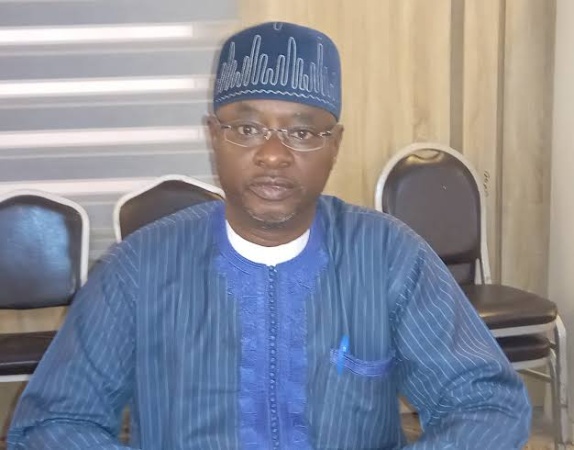
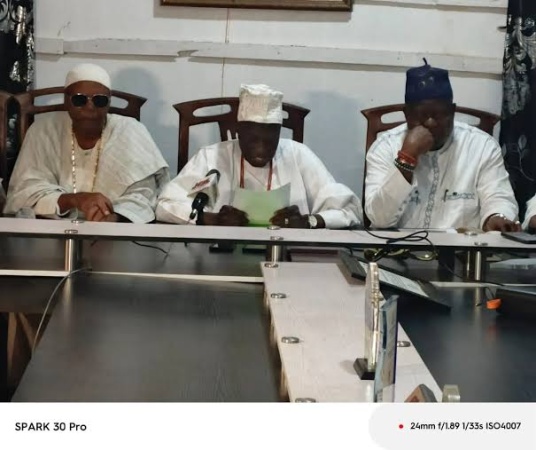
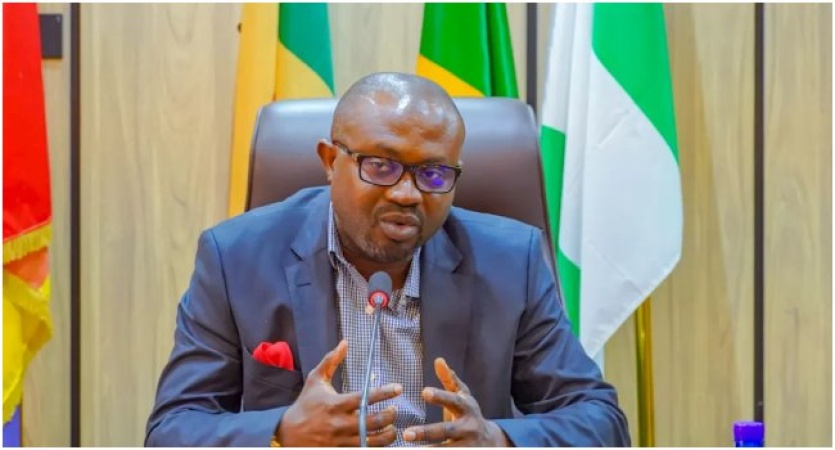
NEF spokesperson, Prof Abubakar Jika Jiddere
The Northern Elders Forum (NEF) has called on Nigerians to speak out against what it described as reckless and unsustainable borrowing by the federal government, warning that the country’s economic future is being dangerously mortgaged.
In an open letter addressed to Nigerians, the elders said silence in the face of mounting public debt amounted to complicity, stressing that the nation was no longer dealing with routine fiscal decisions but a pattern of borrowing marked by weak accountability and democratic neglect.
Signed by the NEF spokesperson, Professor Abubakar Jika Jiddere, the group expressed deep concern over the federal government’s reported move to secure an additional N17.89trn loan to fund the 2026 budget, even though the budget has not been debated by the National Assembly.
The forum said the fresh loan request came against the backdrop of a troubling borrowing record since mid-2023, with little evidence of commensurate delivery of capital projects across the country.
The NEF outlined what it described as a “record that demands answers”, citing figures reportedly drawn from public records and media reports.
It noted that in 2023, the Tinubu administration borrowed N2.17trn for supplemental capital projects, with about 70 per cent of the intended outcomes reportedly achieved.
For 2024, the forum said the federal government borrowed $21.5bn, €2.2bn, and ¥15bn to fund capital projects, yet only about 30 per cent of the capital targets were reportedly met.
The situation, according to the elders, worsened in 2025, when borrowings escalated to include $2.347bn, $347mn, €4bn, N1.15trn and a $500m Sukuk bond.
As of December 11, 2025, the forum claimed that none of the capital projects linked to these loans had been implemented.
“Despite this record, the federal government is now pressing for another N17.89 trillion loan to fund the 2026 budget. This trajectory is neither normal nor sustainable,” the elders warned.
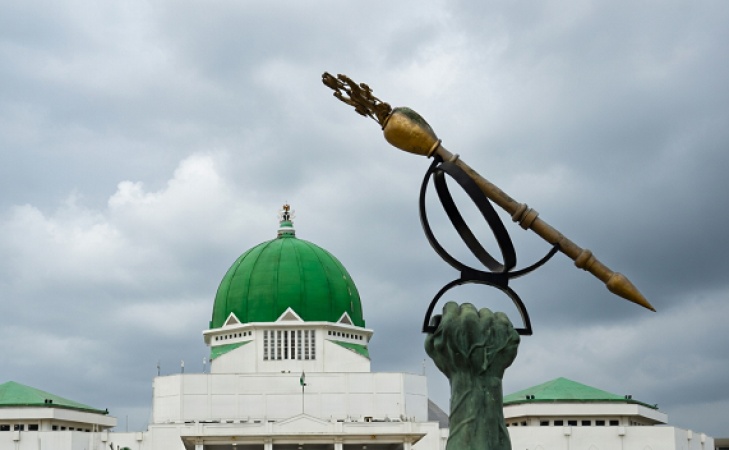
The NEF also criticised the National Assembly, accusing it of abdicating its constitutional responsibility by allegedly approving loan requests without rigorous scrutiny.
The forum lamented that loans approved since mid-2023 were not subjected to transparent, line-by-line assessments of budget performance, project execution, value for money or socio-economic impact.
The elders said the legislature existed to protect the public interest, not to rubber-stamp executive requests, especially when the stakes involved the economic survival of the country.
On the broader economic implications, the forum warned that Nigeria was sliding deeper into a debt–revenue crisis, where a disproportionate share of government income was devoted to servicing debt rather than building the economy.
The elders listed several consequences already evident, including rising debt servicing obligations that crowded out spending on infrastructure, healthcare, education and security; inflationary pressures caused by deficit financing without productivity growth; exchange rate vulnerability due to heavy external borrowing; and the crowding out of the private sector as government borrowing pushes up domestic interest rates.
In stark terms, the forum said Nigeria was “borrowing to stand still and paying to go backward.”
They further warned that the burden of today’s borrowing would ultimately fall on ordinary Nigerians through inflation, heavier taxation and shrinking social services.
As the country approaches January 2026, the elders said there was no scenario in which borrowing on the current scale would not translate into higher taxes for citizens.
They pointed to signs such as aggressive tax enforcement, effective increases in personal income tax due to inflation, higher corporate taxes passed on to consumers, the proliferation of levies and fees and the gradual collapse of public spending on social services.
“This is the cruel arithmetic of reckless borrowing: Nigerians will pay first through inflation, and again through taxation, without seeing commensurate public benefits,” the forum said.
The NEF also raised alarm over the timing of the proposed borrowing, noting that Nigeria was approaching an election year.
Drawing from past experience, the elders warned that large pools of loosely monitored public funds during election periods were vulnerable to diversion for political patronage and vote-buying.
They cautioned that approving a N17.89trn loan without strict safeguards, transparency and prior performance audits would be fiscally reckless and politically dangerous, insisting that Nigeria could not afford another election indirectly financed by debt.
Another major concern raised in the letter is the issue of fuel subsidy removal. The elders recalled that the federal government had assured Nigerians that savings from the subsidy removal would be transparently deployed for national development and social cushioning.
However, they noted that Nigerians were yet to see a clear, independently verifiable account of how much had been saved, how the savings had been utilised or evidence that the funds had improved the lives of ordinary citizens.
The forum insisted that a full account of subsidy savings must be published before any new loans are taken.
According to the elders, borrowing without results is a betrayal of public trust, while silence by oversight and accountability institutions amounts to institutional failure.
The forum called for a full, independent and publicly accessible audit of all loans obtained since mid-2023; project-by-project disclosure of allocations, contractors and implementation status; rigorous cost-benefit analyses of past and proposed borrowings; immediate publication of fuel subsidy savings; and a moratorium on new borrowing until existing loans are shown to have delivered measurable economic value.
“This is a time for Nigerians across regions, religions and political affiliations to speak out, ask questions and demand answers. Democracy does not survive on ballots alone; it survives on vigilance,” the elders said, adding that Nigeria’s treasury does not belong to any administration but to the people and future generations.
Efforts to obtain a reaction from the Presidency on the statement by the Northern Elders Forum were unsuccessful, as Bayo Onanuga, Special Adviser to the President on Information and Strategy, could not be reached for comment. (Daily Trust)