Updating your news feed...
NEWS EXPRESS is Nigeria’s leading online newspaper. Published by Africa’s international award-winning journalist, Mr. Isaac Umunna, NEWS EXPRESS is Nigeria’s first truly professional online daily newspaper. It is published from Lagos, Nigeria’s economic and media hub, and has a provision for occasional special print editions. Thanks to our vast network of sources and dedicated team of professional journalists and contributors spread across Nigeria and overseas, NEWS EXPRESS has become synonymous with newsbreaks and exclusive stories from around the world.




Loading banners
Loading banners...

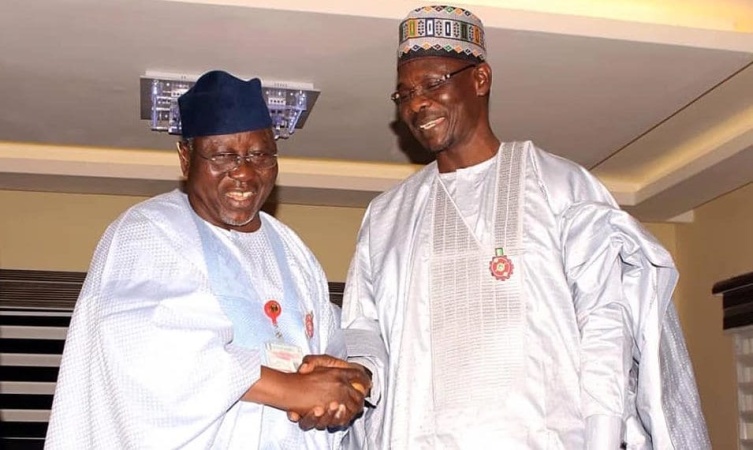
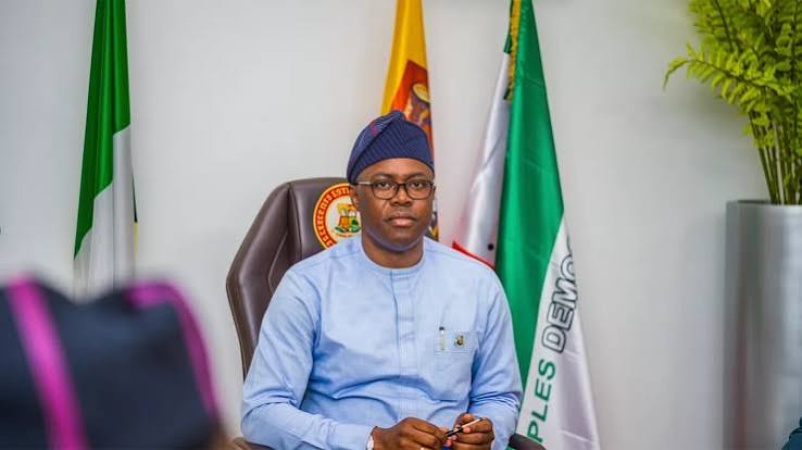
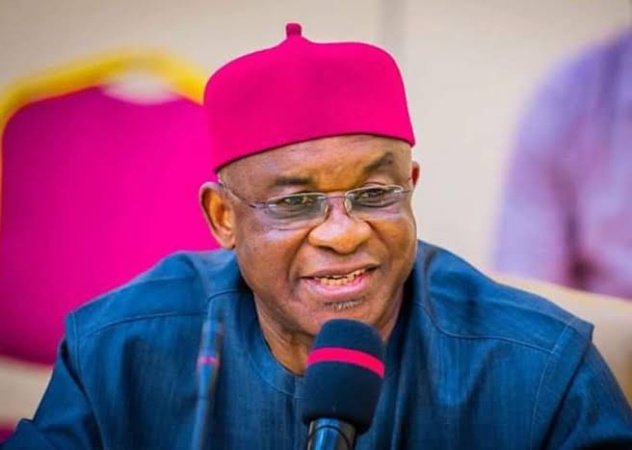
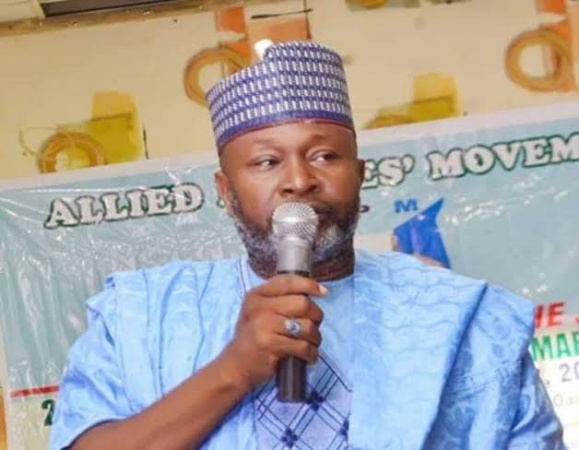
Gov Sule, Al-Makura
Politics in Nasarawa State is once again at a delicate crossroads, as the ruling All Progressives Congress (APC) moves to manage internal power realignments ahead of the 2027 general election. While the party recently adopted consensus as the mode of selecting officials for its forthcoming congresses, political observers say the decision has done little to erase the long-running cold war between Governor Abdullahi Sule and his predecessor, Senator Umaru Tanko Al-Makura.
Rather, the consensus decision, coupled with Sule’s insistence on zoning, has exposed deep undercurrents within the party—raising questions about loyalty, control of political structures and the future direction of the APC in Nasarawa State.
A Relationship That Shaped Nasarawa Politics
Governor Sule’s emergence as Nasarawa State governor in 2019 was largely facilitated by Senator Al-Makura, then completing his second term as governor. At the time, zoning was embraced as a stabilising political mechanism and Sule, from Nasarawa North Senatorial Zone, fit neatly into the arrangement.
However, shortly after assuming office, Sule’s administration encountered its first internal controversy. His initial executive council was dominated by individuals widely regarded as Al-Makura loyalists, sparking public debate over whether the new governor truly controlled the political machinery of the state.
Political analyst, Dr. Musa Abdullahi observes that “in Nigerian politics, perception often matters more than reality. The early dominance of Al-Makura’s allies in Sule’s cabinet created the impression of a shared or contestedpower structure.”
Early Rift, Abuja’s Intervention
A few months into the administration, rumours of a rift between the two leaders began circulating. Reports emerged that Governor Sule had travelled to Abuja to meet Al-Makura in an attempt to clarify misunderstandings and stabilise their relationship.
While both camps dismissed the reports as exaggerated, insiders insist the meeting marked the beginning of a carefully managed political distance.
A senior APC stakeholder explained, “That meeting was not just reconciliation; it was about boundaries. From that point, Sule became more conscious of the need to assert his authority.”
The simmering tension became more visible in 2022 when Governor Sule convened a stakeholders’ meeting of the APC. At the gathering, party elders openly advised the governor to build his own political structure for effective governance and political survival.
According to political observer Ibrahim Shuaibu, the meeting was a turning point.
“It was the first time party leaders publicly acknowledged the existence of two power blocs within the APC. Advising a sitting governor to create his own structure was a coded message,” Shuaibu added.
From then on, the APC in Nasarawa increasingly appeared divided between those loyal to the incumbent governor and those aligned with the former governor.
How 2023 general election deepened cracks
Governor Sule’s re-election bid faced stiff resistance, and allegations surfaced that some APC stakeholders and political appointees worked against him from within the party. The contest eventually ended in the courts, with the matter travelling from the tribunal to the Supreme Court, which affirmed Sule’s victory.
Political scientist Dr. Hauwa Ahmed describes the episode as defining. “The election exposed internal betrayals and reshaped trust. Legal victory restored Sule’s mandate, but politically, it forced him to rethink loyalty.”
Cabinet Reshuffle and Consolidation
Following his victory at the Supreme Court, Governor Sule carried out a cabinet reshuffle widely seen as a strategic consolidation of power. The new executive council largely comprised individuals perceived as personally loyal to the governor.
An APC chieftain from Nasarawa West remarked, “This was inevitable. No governor can govern effectively without his own base. Sule learned that lesson through experience.”
Gradually, the governor began building his own political structure, one rooted in loyalty, control and long-term planning.
Ahead of 2027 election, past stakeholder engagements involving both Senator Al-Makura and Senator Abdullahi Adamu, which insiders say reveal contrasting positions within the APC hierarchy, appears to have made both camps renew their supremacy battle.
Sources within the party confirmed that both Al-Makura and Abdullahi Adamu separately convened meetings of southern and western stakeholders, with Governor Abdullahi Sule in attendance at different times.
At one of such meetings involving stakeholders from the southern zone, Senator Al-Makura was said to have played down the relevance of zoning, arguing instead for competence and broad acceptability as guiding principles for power shift.
Conversely, at a separate stakeholders’ meeting in the southern zone, former APC National Chairman, Senator Abdullahi Adamu, openly canvassed the position that the 2027 governorship should be zoned to Nasarawa West Senatorial Zone, a view reportedly expressed in the presence of Governor Sule.
Political watchers say the contrasting messages from two of the party’s most influential figures have further muddied the zoning narrative, reinforcing perceptions of internal power tussle and strategic positioning ahead of 2027.
Against this backdrop, the APC in Nasarawa State recently adopted consensus as the mode of selecting party officials at the ward, local government, state and national levels.
The decision was taken during an expanded APC State Executive Council meeting held at the Government House, Lafia.
In a move seen as inclusive, the party’s legal adviser first moved a motion allowing non-members of the state executive council to participate in the meeting, following Governor Sule’s decision to broaden participation in party decision-making.
After deliberations, the state chairman of the APC, Dr. Aliyu Bello, invited the member representing Awe/Doma/Keana Federal Constituency, Hon. Hassan Abubakar Nalaraba, to formally move the motion adopting consensus as the preferred mode of selection of party officials.
“I rise to move the motion that this expanded State Executive Council resolves to adopt consensus as the preferred and recommended mode of selection of party officials at the ward, local government, state and national levels, provided such consensus is transparently and voluntarily achieved by all relevant stakeholders,” Hon. Nalaraba stated.
The motion was seconded by the Deputy National Secretary of the APC, Professor Abdulkarim Abubakar Kana (SAN), and subjected to a voice vote conducted by the first civilian governor of the state and former APC National Chairman, Senator Abdullahi Adamu, who presided over the process. The resolution was unanimously adopted.
In his remarks, Governor Sule welcomed the adoption of consensus, describing it as a pathway to peace and stability within the party.
“By adopting the consensus mode of selection, you have reduced all the challenges we are likely to face. It means the decisions will be made by you and brought back to us,” he said.
More significantly, the governor used the occasion to re-emphasise his commitment to zoning, stressing that he is himself a product of the arrangement.
“Being a product of zoning, I will be the last person to tamper with an arrangement that has ensured peaceful coexistence in Nasarawa State,” Sule stated.
Political observers say the statement was not accidental, but a direct response to emerging ambitions ahead of 2027.
The political equation has become more complex with the entry of a former Inspector General of Police, Adamu Abubakar Abdullahi, from Nasarawa South Senatorial Zone, into the governorship conversation.
Within APC circles, it is widely alleged that Senator Al-Makura is sympathetic to the former IGP’s ambition—an allegation reinforced by the visible alignment of Al-Makura loyalists with the emerging southern bloc.
Political pundit, Samson Luka explains: “Zoning only works when power brokers agree. Once influential figures begin to support alternative interests, zoning becomes contested.”
Notably, supporters loyal to Senator Al-Makura and those believed to be backing the former IGP were conspicuously absent from the expanded APC meeting where consensus was adopted. Their absence has fuelled speculation that the consensus arrangement may not enjoy universal acceptance within the party.
For many observers, the absence was as loud as a statement.
“It cast doubt on the unity narrative,” says political analyst, Joseph Onimisi. “In Nigerian politics, who attends and who stays away, often tells the real story.”
Adding to the intrigue was the recent suspension of the Lafia Local Government Chairman by the State House of Assembly. While officially presented as a legislative action, political actors quickly framed it as a calculated signal to Al-Makura, who is believed to have influenced the chairman’s emergence.
Whether coincidence or strategy, the episode reinforced perceptions of an institutionalised power struggle.
Senator Al-Makura’s growing national relevance
His recent appointment by President Bola Ahmed Tinubu as North- Central Coordinator for the APC presidential campaign underscores his influence within the party’s national hierarchy.
Political scientists argue that this national leverage makes Al-Makura a formidable force whose local influence cannot be easily neutralised.
Between Unity and Rivalry
Despite repeated calls for unity, the Sule–Al-Makura relationship continues to mirror a broader Nigerian political reality: the uneasy transition from godfatherism to independent leadership. According to Dr. Ahmed, “This is not merely a personal rivalry. It is a structural struggle over who defines the future of APC in Nasarawa, continuity of old power networks or the consolidation of a new order.”
As Nasarawa State inches closer to 2027, the APC faces a crucial test: managing internal competition without implosion. For Governor Sule, the task is to maintain authority while preserving party cohesion. For Al-Makura, it is balancing national relevance with local dominance.
The adoption of consensus and the reaffirmation of zoning may offer temporary calm, but beneath the surface, the battle for supremacy remains unresolved.
Ultimately, the direction the APC takes in Nasarawa will depend not only on resolutions passed at meetings, but on how competing interests reconcile power, loyalty and ambition in the months ahead. (The Sun)