ADVERTISEMENT

ADVERTISEMENT



.webp&w=256&q=75)
Loading banners


NEWS EXPRESS is Nigeria’s leading online newspaper. Published by Africa’s international award-winning journalist, Mr. Isaac Umunna, NEWS EXPRESS is Nigeria’s first truly professional online daily newspaper. It is published from Lagos, Nigeria’s economic and media hub, and has a provision for occasional special print editions. Thanks to our vast network of sources and dedicated team of professional journalists and contributors spread across Nigeria and overseas, NEWS EXPRESS has become synonymous with newsbreaks and exclusive stories from around the world.
: Abdullahi D Mohammed
Finally, the US—or, better still, Donald Trump—has kept his word and struck Nigeria, in spite of opposition from within the country, some parts of Africa, Russia, and China, its traditional adversaries in global power play.
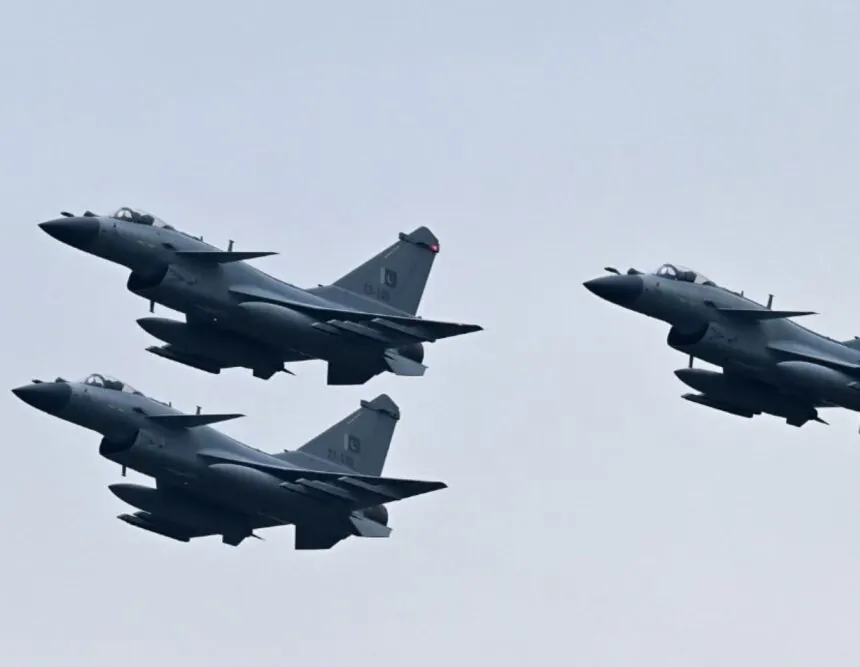
The Christmas Day twin airstrikes in Tambuwal and Offa, in Sokoto and Kwara states respectively, have received mixed reactions, especially across the country. What appeared to be the desecration of Nigeria's sovereignty by the US was quickly downplayed when Nigeria's Foreign Affairs Minister, Yusuf Tuggar, alluded to the fact that the president was fully aware, and it was a collaborative effort of intelligence sharing.
Curiously, man of the moment Donald Trump posted on Truth Social that the US struck and killed ISIS terrorists in northwest Nigeria, in the state of "Soboto"—obviously, he meant Sokoto. First, Sokoto, though it has bandit cells and some elements of Lakurawa, was never an ISIS stronghold. This was the first red flag. Why put out a false narrative?
Second, Offa, in Kwara State, is located in central Nigeria. Most insecurity and activities of non-state actors in the state are carried out in the southern forest areas of the state. Offa is insulated from ISIS and other terrorist activities. Another red flag. False narrative.
Third, according to multiple witnesses both in Jabo, Sokoto and Offa, there were zero casualties. While the Sokoto airstrike hit a farm close to a general hospital, Offa's hit a home and a hotel. More details emerged of the Sokoto airstrike, especially around Tangaza, in which unconfirmed reports say there might be casualties, as the strike hit Lakurawa terrorist cells. Therefore, Donald Trump's claim of killing ISIS terrorists is false.
Now, to the crux of the matter. Is the US military intervention in Nigeria done in good faith? Could there be ulterior motives? Conspiracies around the US obsession with Nigeria are endless.
To fully grasp an explanation or context of US action in Nigeria, two American scholars, James Rosenau and Joseph Frankel, have provided a leeway through their 1960 work, Linkage Theory. The theory "refers to the concept of connecting otherwise unrelated issues or behaviors across systems—such as domestic and international politics—to influence outcomes. It posits that actions in one domain (e.g., a state's behavior on trade) can be made contingent on responses in another (e.g., arms control), creating leverage through interdependence."
Clearly, domestic politics in the US has inadvertently led to the current airstrike. For emphasis, the white Christian Evangelicals and conservatives in the US, who form Trump's political base, wield a significant amount of influence that shapes the country's domestic and international policies.
Since Trump's first tenure, they have persistently pushed the Christian persecution claims. His second coming, however, has led to the amplification of genocide against Nigerian Christians, which is equally flawed. Currently, US domestic politics, especially the Epstein Files, is at the fore of heated debate. An escape route is what Trump would graciously wish for. The airstrike in Nigeria could just be the trump card Trump leverages to distract US citizens.
Again, the speed at which he posted these half-truths on his platform seems like a direct message to his base, subtly saying—yes, I have hit the Christian-killing Jihadists.
More worrisome is Nigeria being the theatre of war. A totally needless war, shaped by US domestic politics. Military intervention in sovereign countries leaves nothing but tears, sorrow, blood, and regrets. Like the Sokoto and Offa airstrikes, we must explore and question the US's precision and pattern of attacks. How accurate are these attacks, and do they hit the intended targets?
According to data from Airwars, a UK-based conflict monitoring think tank, roughly 1,000+ failed US strikes against Islamists—based on documented civilian harm incidents and operational errors—since 2001. Broader interventions backfired strategically in 7+ cases, fueling jihadist growth. Total airstrikes neared 100,000, with 22,000–48,000 civilian deaths signaling widespread "wrong" outcomes.
With such data, we should be wary of the US Greek gift. Seeking military assistance, logistical support, or sharing intelligence isn't new in international diplomacy, but such should be anchored on transparency, accountability, and clear motives. Minimal or indirect involvement of the US would build hope, not project fear.
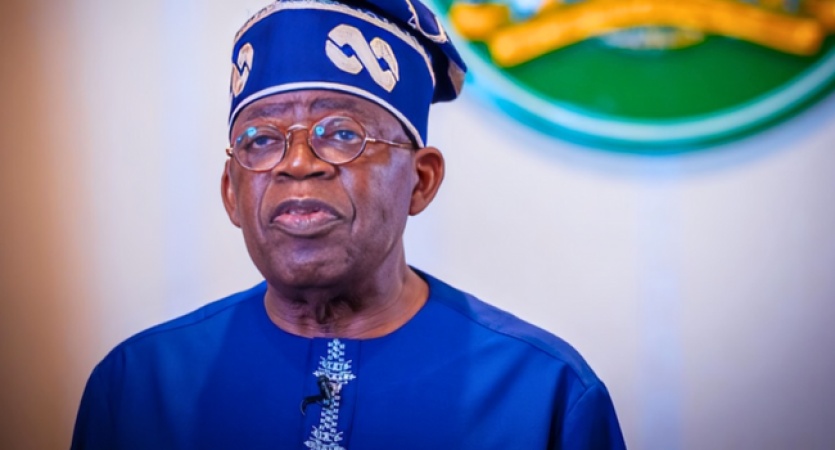
Nigerian leaders must exercise extreme caution when dealing with the USA, given its history of linkage politics that prioritizes American domestic agendas over partner nations' stability. Past interventions in Iraq, Libya, and Afghanistan show how US strikes, often rushed for political optics, have spiraled into chaos, displacing millions, empowering extremists, and leaving economies in ruins—outcomes Nigeria can ill afford amid its own fragility. Leaders like President Tinubu should demand verifiable intelligence, joint oversight committees, and strict rules of engagement before any further collaboration, avoiding the pitfalls that turned allies into failed states. Blind trust risks turning Nigeria into another proxy battlefield, where US elections dictate African fates, eroding sovereignty and fueling anti-Western sentiment that bandits exploit. Historical precedents, from the Bay of Pigs to Syria, underscore that Washington's "help" frequently masks resource grabs or geopolitical pivots, as seen in Nigeria's oil-rich north. By insisting on audited strikes, no-fly restrictions over civilian zones, and post-operation reparations for collateral damage, leaders can mitigate risks. Ultimately, caution means diversifying partnerships—towards Russia, China, or ECOWAS—rather than handing the USA a blank check that could ignite endless conflict. This measured approach safeguards Nigeria's future without rejecting aid outright. (212 words added)
Nigerian government alluded publicly to having given the US the nod to initiate the airstrike. One would wonder: What happens to the many Bello Turjis, the numerous terrorist camps around forests of Katsina, Zamfara, Kebbi? What do the Nigerian authorities say about Boko Haram in Sambisa Forest, ISWAP activities in the Lake Chad Basin? Aren't these areas crucial and strategic in fighting terrorism? Obviously, if true, it seems the Nigerian authorities had given the US wrong intelligence. By the way, the Nigerian Air Force had bought and taken delivery of nine Tucano fighter jets from the US during Trump's tenure—what has become of these machines?
True, the Nigerian military of the ECOMOG era in the 1990s, which instilled fear and shaped sub-regional security policies in West Africa and indeed the entire continent, has fallen. The gallantry has obviously been eclipsed.
Nigeria must reassert its regional influence and position in Africa through a thorough self-assessment. Even if Nigeria needs a strategic military partnership with the US, the details and mode of operation should be mutual and cohesive. Allowing access to our airspace by the US is an open invitation to anarchy. Most failed states across the world have the imprint of US domestic politics and policies.
Nigeria has many options and better alternatives to the USA. It is just a matter of choices and convenience. But in the meantime, can, and will, the US be a trusted ally?
•Abdullahi D Mohammed is the Coordinator, Initiative for Concerned Citizens Against Drug Abuse and Community Awareness. He writes from Kano and can be reached via abdullahkidnyce@gmail.com