
Updating your news feed...
NEWS EXPRESS is Nigeria’s leading online newspaper. Published by Africa’s international award-winning journalist, Mr. Isaac Umunna, NEWS EXPRESS is Nigeria’s first truly professional online daily newspaper. It is published from Lagos, Nigeria’s economic and media hub, and has a provision for occasional special print editions. Thanks to our vast network of sources and dedicated team of professional journalists and contributors spread across Nigeria and overseas, NEWS EXPRESS has become synonymous with newsbreaks and exclusive stories from around the world.
Loading banners
Loading banners...

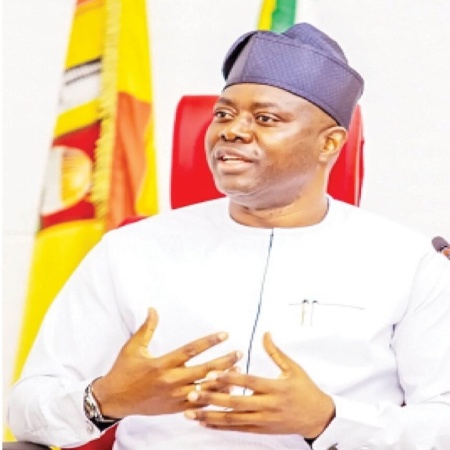
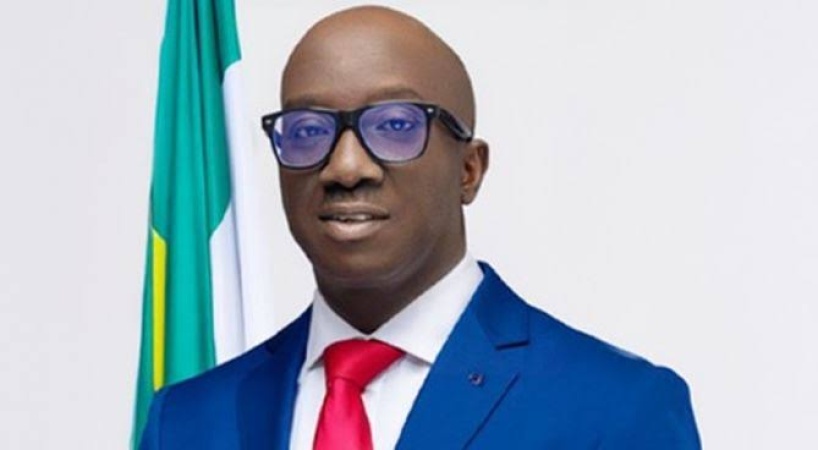
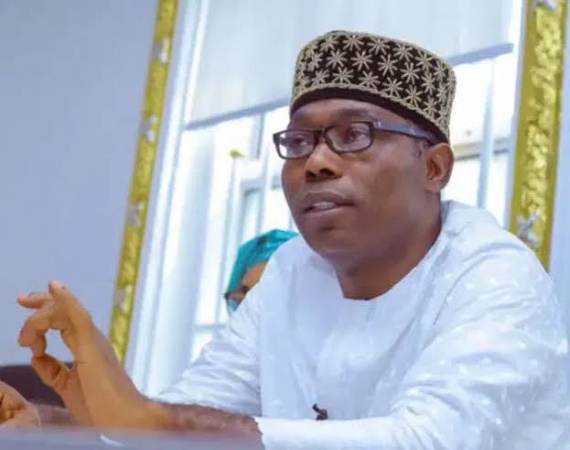
Oyo State governor, Seyi Makinde, recently held a media interaction in Ibadan, the state capital with selected media professionals from across the Nigerian media spectrum. Governor Makinde spoke on a variety of issues and bared his mind on many conceptions, just as he made revelations about a few unsubstantiated issues. SAM NWAOKO brings excerpts of the interview.
You recently signed the 2026 Oyo State’s “budget of economic expansion” into law. Your government is anchored on Health, Infrastructure, Agribusiness, Security, and Education among others. How do you plan to finance the N892billion budget when you consider the state’s federal allocation and IGR? In real-time, what does the budget mean for the people of Oyo State?
Our FAAC is roughly N19bn to N20 billion monthly. So, that’s about N240 billion. And we have the IGR which is roughly N8 billion. So, that’s another N96 billion, almost N100 billion. When you add that together, we have almost N340 billion. You also have receipts from other sources. Then you have investments also in the state. And then, we in Oyo State tried to de-emphasise going cap in hand, on a monthly basis, to Abuja for federal allocation and things like that. For us, from the outset, we focused on infrastructure and the economy. For instance, if a road doesn’t make sense economically, we’re not going to do it. Because, at this point, what we’re trying to do is expand our economy. Under Omituntun 2.0, we said expansion of our economy will go through agribusiness; also solid minerals, tourism and infrastructure. We said expansion of our economy will go through agribusiness, also solid minerals, tourism and infrastructure. The idea was to have a circular road to a concessionaire. Let them raise the money and then recover their money over maybe 25, 30 years. But I couldn’t get that. We said, okay, we have to chest it.
So in the first phase, we put in the resources of the state. In the course of the year, we spent close to $200 million on the first phase – the 32-kilometer stretch. It’s almost completed now. We will commission its first phase in the first quarter of 2026. And with that, if we get a concessionaire, we would have had capital receipts of almost $200 million which we can put in the budget. So, on budget estimates we hope we’ll get this in and this is how we will apply it. But I remember my first year in the office – I came in on May 29, 2019 – the budget for 2019 was prepared by the previous administration. So we had to run it to the end. We reduced it. We came out and looked at the receipts. I think the budget there was about N240 billion. We reduced it by 25%.
So, if you check the budget performance for Oyo State in the last six years, we’ve been at about 70, 75%. So, this one is not going to be any different.
And according to BudgIT, Oyo State has done well in some areas. Oyo is ranked Number 4 in consumption in the states across 35 states of the nation. And the IGR is calculated as being relatively lower than most states. Is there a problem with tax collection or generation of revenue by the state? Are there challenges in that area over the last six years?
First, we made up our minds that we will not increase taxes paid by our people. No new taxes. So in the past six plus years, we’ve had no new taxes in our state. But what we’ve done is we’ve brought in more people into the tax net. It’s a chicken and egg type of situation. What do you do first? Do you tax the people first or do you allow them to create an enabling environment where they can expand production? When you expand production and you have a productive economy, instead of a consultative economy, then you are in a position to tax more and raise your IGR.
So that is a less traveled road, but that is the road that we decided as a government to take. And I’ll tell you what we’ve done in the past. This year we looked at the landscape in Nigeria. We looked at schemes that other African countries have been able to take advantage of to expand their economy. Let’s take AGOA for instance – the African Growth and Opportunity Act (AGOA). What is the data for Nigeria? But countries like Mauritius, Rwanda, all of those countries, Kenya, take advantage of AGOA. They expanded their productive base. But we were still talking about FAAC and all of that. So we said no.
Now, we looked at the African Continental Free Trade Agreement (AfCTA. There’s a provision in there that you don’t necessarily have to operate at the national level. The subnational can also go out there, get their own deals and then fulfill it. So, in the continent of Africa, Oyo State became the first sub-national government to sign the agreement as a party. So, any day you have AfCTA events, Oyo State will be at the table with other heads of government from other African countries.
Why did we do that? We didn’t want to wait for federal allocations. We want to broaden our own productive base. We want to be able to, under that protocol, expand our own economy and sell to other African countries.
Beyond structures and infrastructures, what would, let’s say, the ordinary man, Jamilu, in Beere, say about your administration that has changed their lives?
What I heard from Jamilu in Beere is that, look, Mr. Governor, we don’t want this music to stop. You know, we are paying salaries on the 25th of every month. It’s about now N20 billion for the state and about N12 to N13 billion for the local government. That is N33 billion into Oyo State’s economy every four weeks. Jamil, carpenters, you know, traders, market women, they’re all having this. And then you need to look at the atmosphere that we’ve provided, the economic activities going on in there. I think their concern is how will this music not stop?
How about Local Government autonomy?
So many inconsistencies here. For instance, they created LCDAs in Lagos. Is that consistent with local government autonomy? What are you saying when you have created LCDAs? Are you not saying that the local government should be under the state? So how come now suddenly…? So I know there’s a Supreme Court judgment on this matter, but some of these things may not be resolved strictly through the judicial process. Some, you have to negotiate a political solution and things like that. I think this will fall into that category where people should honestly come to the table and say we have issues with this area or that area. We can’t keep shifting. If you are at the sub-national level, you take one position. If you’re at the federal level, you take another position. I don’t think that should be it.
Your government has invested heavily in road infrastructure. Some areas that were not accessible, you’ve linked them. The Iseyin-Ogbomoso Road, Ibadan-Iseyin road, and that hub is the core agribusiness, the food basket of the state. However, the circular road project has been generating some issues, especially the 500m corridor. What is the philosophy behind the road? What is the state doing to ensure that those who have property and genuine claims will be adequately compensated?
The concept of the circular road is to ease the movement of those who need rapid transfer around Ibadan. You should have a road that can encircle the city because it’s a growing city. I came in on a British Airways flight. When we landed in Lagos, they gave us some data about the flight. They said we flew by Barcelona, a city of over one million people. It also flew past Cannes, 500,000 plus people. It flew past Ibadan to get to Lagos, 3.5 million people; I know that we’re even slightly more. But if you go around Ibadan today, there’s no gridlock the type you experience in Lagos. And we don’t want that to happen because you learn from the experience of others. The acquisition of the circular road corridor was done well before I even became a governor.
It was gazetted and was published in the Nigerian Tribune of November 19, 2018. The idea of that circular road was mooted initially by Baba Lam Adeshina, but it was brought out as a project and the first real attempt to execute it was made by the current Olubadan of Ibadanland, Oba Rashidi Ladoja. And that’s why we named the entire 110-kilometer corridor as Rashidi Ladoja Circular Road – because he set aside the first seed money, although it wasn’t done, from records available to us. When Governor Adebayo Alao-Akala came in, the priorities changed. He would rather use that money for other roads. So it’s not about Seyi Makinde or this administration grabbing people’s land. But when we came in, there was an encroachment on the corridor and we said what do we do? We decided that we should go on with the project. Where we can get the 500 meters on both sides, we’ll take it. Where we cannot because of development, we will look at it. But for a highway like that, you have a minimum standard you have to maintain to the highway. And this will be the first proper motorway in Nigeria simply because it is in the mode of maybe M25 in London, the London Orbiter. For people that are used to America, in Houston, Beltway 8 which goes around Houston.
We know that the government exists to look after the people. So we asked most of these people for their documents. No documents. But we still did not say ‘no documents, so you must go outside and be homeless. We said even with no document, if you can prove that you’re the one living in those houses, we will compensate you so that you can go elsewhere and settle in.
Why did we develop that corridor? And the corridor is not just about people wanting to build estates. No, it’s for industrial and commercial concerns as well, because if you have to move from a consumptive economy to a productive one, you must have industrial corridors and your children will have to work somehow. They have to work somewhere.
So it is easier to take the bullet for the incoming administration because the people of Oyo State have gotten so used to me that they can vouch for me. They know what I stand for. So if I come in and say, look, this is what we’re doing, they believe me. We’ve been able to reduce to the barest minimum the trust deficit between the government and the people, at least here in your state. After I went to address the people in that corridor, they asked me if I could sign that successive administrations will not bother them again. So you trusted me to that extent that you wanted me to sign for you? I said, well, I will sign for you. But when the time comes also, I will also introduce people that will not bother you, you know, and then you can be rest assured that the principle of government being a continuum will apply.
Infrastructure is good, but the central thing happens to be the people. How are you ensuring that poverty is tackled, particularly in the last six years that you’ve been in the saddle in the state?
For me as a person and for this administration, people tell us that they have gone around and see no potholes. We’ve built a state road almost 150 kilometers from Ibadan to Ogbomoso, there are no potholes, not one pothole. I think the people ‘ll say yes about infrastructure. But I won’t want to be remembered for building roads and all that, no. We will love to be remembered for the institutions that we’re creating that will ensure that there’s good governance and sustainable development and growth long after we’ve left this place. If I ask people who constructed that existing ring road – I went to search for the history of that road and I found that when it was constructed, it was the most expensive road per kilometer that was ever constructed in Nigeria at the time. And if you ask people who constructed that road now, I can tell you they do not know. So that is what you get. The only way they will know who started the road will be if the road is not finished. If the project becomes abandoned, then they will tell you, ah, this road was started by XYZ. When I was working within the oil patch at Kwale, we went to Ogume. We saw an abandoned bridge. When I asked the people in that area they said that the bridge was built during Ogbemudia’s time. Successive governments did not complete it, and you can get credits for that. But if you start a project, finish it, and people start to use it, within a very short time, they would have forgotten.
So for us in Oyo State, we believe that we’re not going to give people handouts. We will create, and we’ve been creating that conducive environment for people to come in and have opportunities. And then they’ll take themselves out of poverty.
I was working on Shell Boni terminal when they were sand filling the entire Finima for the Nigeria LNG project. And then all the fishermen and those people, they built decent houses for them. It didn’t take five years before the whole place was turned into a shanty town.
I argued this with the World Bank. Their preference is to have conditional cash transfer, give people money and I said no. In Oyo State, what we did was rather subsidise the productive efforts of our people. We said when we hit this economic whirlwind, a lot of state governments were bringing in palliatives. Okay, yeah, we’ll have palliatives, you know, give food to people. What we did here was we created what we call the SAFER program. It’s Sustainable Action for Economic Recovery.
Our SAFER programme, part of it, is the transportation sector. We pay the state’s transport company, they move close to 20,000 people every day. For those 20,000 people, the vulnerable ones in there, students, elderly, physically challenged, they paid a discounted price, half the price. So, we subsidized them with N100 million every month. But that N100 million is actually subsidising productivity. You’re not going to just get on the bus for a ride because it’s half price. You get on the bus for a ride because you’re going somewhere that is important to you which are likely going to yield something productive for you. So, that’s our approach here.
How do you balance compromise and conviction? How do you determine what to go ahead with, no matter what people think, no matter what people say, and what to compromise?
I believe that the government should look after the people. I also always tell my people that we’re not the most brilliant around. We’re not infallible, it’s only God that cannot make mistakes. So, we may make decisions that may, in the long run, be wrong. I told people when I was asking for their votes that I may not be right all the time, but I will be honest all the time to the people.
So, if we did anything which, in the end, we have to adjust because new facts became available to us, we’re not that proud to say, look, we won’t do that. So, I think that’s really the way we’ve operated. And it has connected us more to the people because they know. I go around them. I stay with them. I listen to them.
So, having admitted that you regret your actions then, you seem to be trying to correct what happened that time. And to the elephant in the room, are you planning to take the bull by the horns, run for president in 2027?
Well, I’ve heard that also. I’ve heard people saying, oh, it’s Seyi trying to position himself for the 2027 presidency. Let me make this very clear. I am qualified to serve this country at the highest level. I’m even overqualified. I’ve run Oyo State. Even the current president, what brought him to the table? He was governor of Lagos State – two terms. By the end of May 2027, God sparing my life, I would have been to the end of the tunnel as a two-term governor of Oyo State. So, what are we talking? Professionally, I ran a company from a very young age, at 29. Some of my colleagues were just finishing their youth service at that point. I ran the company, and people can go out there and check. I did not go to NNPC, you know, or the likes to get contracts.
I was working for multinational oil companies. I worked for Shell, Exxon Mobil, and Chevron. To the extent that at a point, I went on holiday to my house in Houston, Exxon Mobil came to me and said, look, we want to work in your neighborhood. We have work to do in Chad and Cameroon, on the Chad-Cameroon pipeline project. I personally, I was in Kribi, where they positioned the FSO. I sent engineers to Chad, I sent engineers to Cameroon. You can’t go there because you’re Nigerian, no. You can only go there because professionally, they have trust in you. I worked on the West African gas pipeline. ABB came to us and said, look, from Lagos, you know, to Tema in Ghana. I was in Tema myself because when I started, during the day, I was working as a field engineer. At night as the general manager. I couldn’t even tell people on my card that I own the company. Because they would look at me and say, you own which company?
So, I sent engineers to Equatorial Guinea. We worked on the Equatorial Guinea LNG. All of those things were because professionally, we did what was right. I could have joined politics in 1998 because I made enough money to do that. But I won’t tell you I’m a foundation member of PDP, no. I joined PDP in 2002. And why did I join? I joined solely because of Baba Ladoja. I joined to support him towards the 2003 elections. I already moved my family to the U.S. then, in the year 2000. I had a wife and a daughter at that time. We had the second one in December of 2000. And I moved my office from Port Harcourt to Lagos. So, most weekends, no family, nothing. So, I came to Ibadan to meet my parents. One thing led to the other.
From that place, I commissioned the classroom block that I gave to my alma mater, Bishop PhillipsAcademy, Ibadan. They brought Governor Lam Adeshina to do the commissioning at that time. And I gave him a proposal for the farm settlements here – the power solution. He said, okay my assistant will call you. I waited. Nobody called me. So, going towards 2003, I thought if a professional is elected as the governor of Oyo State, maybe things might be one shade better.
At this point, you need to have a party. You need to have a competitive political environment. In Ebonyi, I said to the Igbo nation out there that, in 1999, we’re going to have an almost very similar situation that we’re in today. All the generals, all the elites, you know, they were all gravitating towards PDP, until Ogbonnaya Onu gave up his presidential ticket in APP to have APP and AD join together and they produced Baba Olu Falae and Umar Shinkafi. And the environment became instantly competitive. So, I’m not fixated on running or not running.
Right now, if I correctly calibrate the environment, we have to go beyond PDP. We have to channel our energy towards having a competitive political environment. And that means we need to talk across the board. We need to start talking about survival of democracy in Nigeria. Individual ambition is tertiary, not even secondary. We need everybody, we should keep talking. Even people within the APC that are not happy there. We will talk to them also. We should all keep talking because we run the risk of the Arab Spring. You have people without leadership, a shoemaker will be made a leader for them and they will show us shege. In fact, people should write it down. What Nigerian people will show politicians and elite in 2027, we cannot imagine it right now. And when they say governors are defecting and all of that, what about hunger? Where is the place of hunger and anger in the land? Have they defected?
You see, if we don’t do what is right for democracy to survive in Nigeria, it will be very difficult in the foreseeable future. So the issue of running or not running and things like that is still far off. At this stage, we must ensure a competitive political environment.
Your Excellency, you said politics is a game but governance is not. But politics is a sort of party governance. So how do you ensure that governance and party functions are separated, bearing in mind some of the things that have been happening in the PDP in recent years?
I’ll start by saying that we’ve tried several constitutions, you know. We started with the parliamentary system, and then we went to the presidential, right? When you’re seeking votes, you know, you go out, engage with the people, you can promise them heaven and earth, right? But if you’re given the opportunity to serve the people, you have to deliver, and you have to deliver not only to the people of your own party. We engage at the federal level and say, look, we think you should do this for the states. And then we hear things like, oh no, you cannot empower your enemy or your competitor. With what?
Yes, we’ll play the game. While we’re campaigning, you will say all sorts of things, you know, about the other parties. You try to sell your own programmes and policies. But once it comes to governance the game stops because destinies are involved, even generations yet unborn can be impacted. I had a meeting with the cabinet secretary in Kenya. That is the equivalent of, maybe SGF in Nigeria, the number three citizen out there. He said to me while we were in his office watching the drama in Gaza between Israeli and the Palestinians. And then he said, look, this could have actually been Kenya. Because when they were looking for land to create the state of Israel, Kenya was actually considered. And that bill was defeated by one vote in parliament. So some of the things we do in governance, we may think, oh, ok, this is just easy. But generations yet unborn are impacted.
If you know my political trajectory, this is my very first job in the public sector. And I got the job when I was 51. So what happened to me between zero and 51? And I’ll be 58 on Christmas day. So what happened to me between zero and 51? I operated in the private sector. And I operated not only in Nigeria, but, you know, across different continents. I believe once prayers have been answered – because nobody can get anything without God giving it to that individual. And even leadership, you cannot become a leader by yourself, it is because God has given that position to you. And he will give people the kind of leaders they deserve at any particular time. In the Bible, God allowed a wicked king to be enthroned because at that particular time, God decided that that is the kind of king the people deserved. But that is usually not the end of the story.
So I will say that in Nigeria today, we have to rise above partisanship. This may go straight into the issue within PDP. I say everybody has defected and I’m saying I’m not moved because the people that negotiated Nigeria, they have two major things that were in there, in that negotiation. First, federalism. That’s why they call us the Federal Republic of Nigeria.
Two, multi-party democracy. That is why, upon independence, you had Action Group, you had Northern People’s Congress, you had NEPU, you had NCNC. You understand? At independence, it was a multi-party democracy. So, now you are moving the country towards a one-party state. It won’t work. I was in Ebonyi State recently and they brought Kola to me and said, in Igbo land, if you are receiving a big visitor, this is how you do it. I said, well, Kolanuts is grown in the west, eaten in the north, and literally worshiped in the east. So you have different nations, different cultures within the nation called Nigeria.
And the people who negotiated our independence felt that it was okay to have unity in that diversity, it has to be a federal arrangement. If you move the country towards a one-party state, what happens the day you require a multi-party or bipartisan approach to issues? Who are you going to call? The day you move the country towards a one-party state, you remember what happened with the Arab Spring. Once people don’t have leadership, they will find leaders by all means. So we better get our acts together as political leaders in this country. That will be my own approach to your question.
Talking about PDP, I know there was a time you were in the G5, and that G5 actually supported the president. What happened concerning your relationship between the president and your friend, Nyesom Wike…? What happened, because at some point, everybody thought it was all rosy?
Okay, I contested the election for the first time in 2007 to go to the Senate here in Oyo State. And, well, I lost. I contested under the All Nigeria Peoples Party (ANPP). I was in PDP with Oba Rashidi Ladoja. You remember his impeachment and all of that, all the shenanigans that happened within that period? So it wasn’t possible. The PDP franchise was handed over to Baba Lamidi Adedibu. And me, as a person, as a 39-year-old trying to get into politics for the first time, I didn’t like that brand of politics. And I said I wasn’t going to be involved with that brand of politics. That was why I contested under ANPP. But ab initio my first outing in politics, I joined PDP. So, we lost. We came back 2011 in PDP again. They didn’t even allow me to go past the party primaries. So I lost. And then I said, look, I’ve been dealing with people here. I think since I’ve lost twice at the senatorial level, let me move up, let me promote myself to the governorship level.
So I contested in 2015 to be the governor of the state. Again, I lost. But my point is, in all of this journey, I never interacted with, or went to Bourdillon (Bola Tinubu’s Lagos home). No. I held my own. Whatever I couldn’t get through to the people of Oyo State, I left it like that. I don’t believe in godfatherism in politics. So I didn’t go. I stayed here. But 2019, the people of Oyo State decided. Did they decide because there is influence of anybody from Bourdillon or from outside of the state? The answer is no.
So, in 2023, we felt that after eight years of President Buhari who hailed from the north, the presidency should come to the south. And I need to also say this: I don’t believe that will be a permanent arrangement in Nigeria. I believe Nigeria will get to a point where, if you like, two Ibibio people can be president and vice president as long as they are qualified. And we have strong institutions that will ensure that they do what is right for the people of Nigeria.
So we felt that the presidency should come to the south. And within my party, Nyesom Wike was contesting, I supported him. He lost in the primaries. And then the Waziri, former vice president (Atiku Abubakar), won; he is from the north. But I said, look, if our party has selected somebody from the north then we should sit down and decide how this thing is going to work.
Atiku came to Ibadan. We were at Ogunlesi Hall at the UCH and we mentioned to him that you are the candidate of the party, you are from the Northeast; Iyorchia Ayu, the national chairman of the party, is from North Central. And in that meeting, we were facing the Press. I didn’t tell him this at the government house? No.
I said Governor Aminu Tambuwal, as of that time, was the chairman of PDP Governors Forum. I said intelligence indicated that you will appoint him as the DG of this campaign. He is from the Northwest. So what are we supposed to use to campaign to convince people because politics is a game of numbers? But we couldn’t reach any agreement.
We met with him in London. The only thing I said to him in London was, allow us to go and remove Iyorchia Ayu and then make Taofeek Arapaja the acting chairman because he was the Deputy National Chairman (South) at that time. Make Arapaja the chairman, he will be at the table when you are all talking and deciding. In London, I said just agree with us to go and remove Ayu. Don’t even bother about how we will do it. He said we should give him one week to decide. He came back to Nigeria and we heard that famous statement that those ‘small boys’ and that he had moved on. Okay, so if he moved on, what would I do? We had to do something. That is politics. So we couldn’t reach that agreement. And it wasn’t Wike that guaranteed the president (Tinubu) before me.
Because I had never had any political dealings with him (Tinubu) up until that point, someone else did the linking. I said, okay, fine. If this is what we will do, we will support you. But even as a candidate, I must have mentioned it three or four times that our expectation would be a government of national unity; a government of national competence where you could start the process of resetting this country.
But is it what we are seeing right now? Is it a government of national competence? Is it a government of national unity? The answer is no. When the president asked me to nominate somebody who may be appointed as a minister, I said, sir, what position do you want to give to us in Oyo State? Then he said, ‘I’m looking for a developmental economist who can be the minister of budget and economic planning’. I said, okay. I will look for somebody that fits that bill. And I sent somebody’s name, who is an Oyo State indigene to him. The individual wasn’t appointed. Rather, they selected the current Minister of Power (Adebayo Adelabu). He wasn’t taken to the Ministry of Budget and Economic Planning. He was taken to the Ministry of Power.
At a subsequent meeting with the president, I think I must have gone to him to seek for approval for the upgrade of the Ibadan airport. He said, ‘I’ll sign it for you. I’ll give you my nod. But, oh, sit down. What’s happening politically? I heard you are upset because your nominee was not given the ministerial slot.’ I said, ‘sir, in Yoruba land, if you don’t want the pregnancy to be aborted, you won’t want the baby to die because it’s easier to abort a pregnancy than to kill a baby.’ I said, ‘you will decide at the end of the day who you want to work with. We can only suggest people. But if you know people that fit your bill, the kind of individuals you want in your cabinet, ours is just to support you. However, let me say this. If you’ve selected the minister of power because you want him to help you organise APC in our state, he doesn’t have the capacity.’ I told the president.’ l
He said, ‘no, no, no, Seyi; it is you that I want to help me organise APC in Oyo State.’ I said, ‘no, sir, I can never help you organise APC in Oyo State because I am of the PDP.’
So, if we have a government of national unity, a government of national competence, we would have been in a very different environment right now.
And let me just mention again this issue of Wike. So, this (displays a contract award paper) was the exact first contract that Mobil gave to my company, Makon (Makon Engineering and Technical Services Limited). I was 29. It was $1 million. They subsequently added two other contracts such that within that one year (1997-1998), I had $1 million in my pocket. I was 29. 1997/98. Wike perhaps at that time just left the Law School. And then his next job after that was local government chairman.
I don’t beef anybody. But the real issue is that I was in a meeting with the president and Wike. And I’m saying this in an open chat. The president’s chief of staff was also in that meeting with a few other people. And Wike said to the president: ‘Sir, I will hold PDP for you against 2027’. I was in shock. So when we got to the veranda. I said, Wike, did we agree to this?
I don’t like talking about people and I will not talk about people or talk about events. But I’ll talk about the real issue. The real issue is that Wike would like to support the president for 2027. That’s fine. It is within his right to do that. But also some of us that want to ensure that democracy survives in Nigeria, we don’t drift into a one-party state. And we want to ensure that PDP survives. He should also allow us to do our own thing. That is just the issue between me and Wike. And I confided in a mutual friend of ours after that meeting. And I kept thinking, okay, I mean, the president did not ask him to do this for me. He was the one that volunteered that I will do that. I said to our mutual friend, look, maybe he was talking about an errand that the president never sent him. So, let’s watch. Let’s engage him. Let’s see if he will back off. But he never did. After he didn’t back off, I said, well, now it’s time to confront him, because I told him from that day that I will never be a part of this. And that is why I will not be supporting the president for 2027. Wike can support him. It is within his right. But also, it is within my own right to decide within the political space who I will support or what I will do in 2027. (TRIBUNE)




