ADAD
ADAD
Updating your news feed...
NEWS EXPRESS is Nigeria’s leading online newspaper. Published by Africa’s international award-winning journalist, Mr. Isaac Umunna, NEWS EXPRESS is Nigeria’s first truly professional online daily newspaper. It is published from Lagos, Nigeria’s economic and media hub, and has a provision for occasional special print editions. Thanks to our vast network of sources and dedicated team of professional journalists and contributors spread across Nigeria and overseas, NEWS EXPRESS has become synonymous with newsbreaks and exclusive stories from around the world.





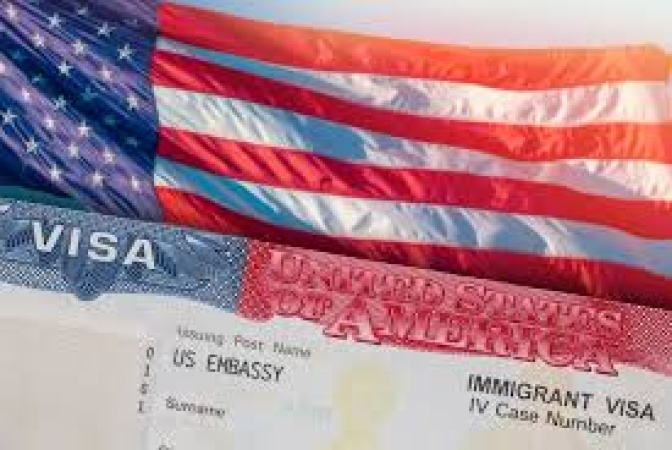
US visa sample
For many aspiring Nigerian students, the January 1 deadline marking a United States travel ban on Nigeria and 18 other countries under the Trump administration has brought a long-cherished ambition to an abrupt halt.
BusinessDay findings show that American universities are already reaching out to Nigerian applicants, urging them to pause their academic plans. The development has left many students grappling with wasted effort, lost opportunities, and deep uncertainty.
Akorede Awode, a post-graduate student at Georgia State University, shared his observation, noting, “Schools have written back to prospective students to tell them that due to the visa restrictions, they won’t be able to go further with their applications pending the time that the ban is lifted.”
He explained that beyond just admissions, vital financial support is also at risk, with ‘scholarships being lost’ as universities withdraw funding for students from restricted nations.
“Scholarships are being lost now. Some schools are withdrawing their scholarships, while others are withdrawing their admissions for international students.”
These restrictions, he said, represent a significant loss of intellectual capital and financial support, as the US remains a primary destination for research and scholarships.
Reinforcing these concerns, Blessing George, manager of Bee Voyage Travel and Tours, said the combination of earlier student visa revocations and the new travel ban has forced many clients to defer their studies.
According to George, “Nigerians who received study visas from the US to study this coming Spring have been deferring their admissions to 2027 due to the recent, stricter US travel policies, which became effective from January 2026. This also includes existing visa hurdles, creating panic about securing future entry after potential trips home.”
“However, most are now deferring their admission to 2027, which is a way to secure their spots while navigating uncertainty, though it requires university approval and checking of financial/scholarship impacts.”
Travel restrictions, bans and cancellation of student visas
This move is a reaction to the directive by the US State Department in August, which reportedly cancelled more than 6,000 student visas of existing students in various American universities and colleges.
Initially reported by Fox News, around 4,000 students already in the U.S. were forced to leave their classrooms, studies, and even research programmes due to crimes including assault, driving under the influence, and burglary.
As many as 300 visas were revoked over what officials tagged ‘support for terrorism.’
The official reasons are that, firstly, about 4,000 visas were cancelled because the students were accused of crimes. These include burglary, drunk driving or assault. Secondly, between 200 and 300 students were accused of supporting terrorism. In some cases, they were suspected of fundraising for banned groups. Thirdly, the rest of the visas were cancelled because of overstays and immigration violations, which the Trump administration called ‘continuous vetting.’
The cancellations of the student visas represent just a fraction of the more than a million foreign students who study at American colleges and universities.
But this is the latest example of the Trump administration’s tough approach towards student visas as part of its broader immigration crackdown.
It primarily affects applicants from selected African and Asian countries, who are either lawful migrants already in the US seeking to adjust their statuses, obtain permanent residency or apply for citizenship.
According to Yemisi Ogunlade, manager at Plumptre Advisory, “There are cycles where certain countries become attractive destinations, and other periods when policy restrictions are introduced that can shrink the market almost overnight.”
“As a result, there is growing uncertainty. People are anxious and increasingly questioning whether the US remains a realistic destination. Many are putting their plans on hold, while others are drastically changing their preferred study destinations. Ultimately, students want some level of reassurance. While nothing is ever guaranteed, they are more likely to invest where the perceived risk is lower and the likelihood of achieving a meaningful return is higher.”
For many Nigerians, Ogunlade noted, studying abroad is a long-term investment aimed at mobility and employability, not education alone.
What this means
Speaking in a TV interview, Ejike Okpa, a global affairs analyst, said that the decision should be understood within the context of shifting US domestic priorities rather than interpreted as a targeted diplomatic snub.
“Every president comes in with an agenda, driven by what they consider national interest,” Okpa said. “These policies do not happen overnight, and they are not necessarily permanent.”
He argued, however, that Nigeria’s weak diplomatic engagement with Washington has left the country poorly positioned to respond. According to him, Nigeria has operated for more than two years without an ambassador to the US, creating what he described as “a serious gap in communication and relationship-building.”
Despite the current freeze, Ekpa insisted the policy is unlikely to be permanent. “This is not the final nail in the coffin,” he said. “Politics is seasonal. It blows hot and cold. The door for conversation is still open.” (BusinessDay)