
ADVERTISEMENT

ADVERTISEMENT

ADVERTISEMENT

ADVERTISEMENT




Loading banners


NEWS EXPRESS is Nigeria’s leading online newspaper. Published by Africa’s international award-winning journalist, Mr. Isaac Umunna, NEWS EXPRESS is Nigeria’s first truly professional online daily newspaper. It is published from Lagos, Nigeria’s economic and media hub, and has a provision for occasional special print editions. Thanks to our vast network of sources and dedicated team of professional journalists and contributors spread across Nigeria and overseas, NEWS EXPRESS has become synonymous with newsbreaks and exclusive stories from around the world.
Calls are mounting for immediate suspension of the implementation of the new tax laws as lawmakers, opposition parties and civil society groups continue to raise the alarm over allegations of post-passage alterations.
Those calling for suspension warn that proceeding with the implementation in January without resolving the allegations could have far-reaching consequences, fuelling questions about transparency, accountability and the integrity of the legislative process.
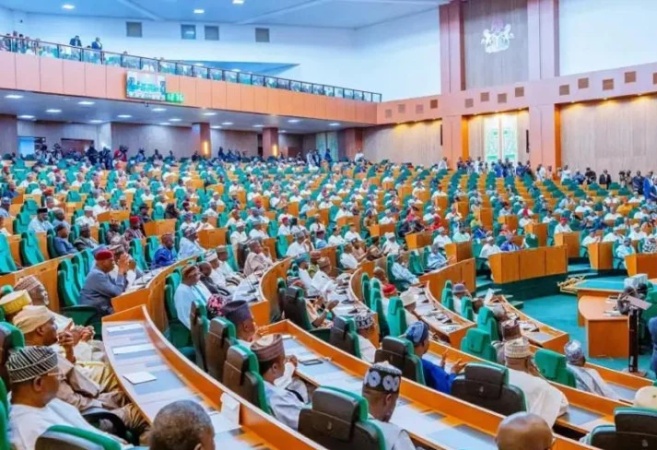
A member of the House of Representatives, Abdussamad Dasuki (PDP, Sokoto), had, during plenary on Wednesday, alleged discrepancies between the versions passed by the House and the copies later gazetted, the laws scheduled for implementation on January 1, 2026.
The Senate and the Office of the Attorney-General of the Federation, when contacted by Daily Trust yesterday, did not comment on the controversy.
The four Acts that jointly make up tax reform framework are the National Revenue Service (Establishment) Act, the Joint Revenue Board of Nigeria (Establishment) Act, the Nigeria Tax Administration Act and the Nigeria Tax Act.
Pressure mounts over tax laws
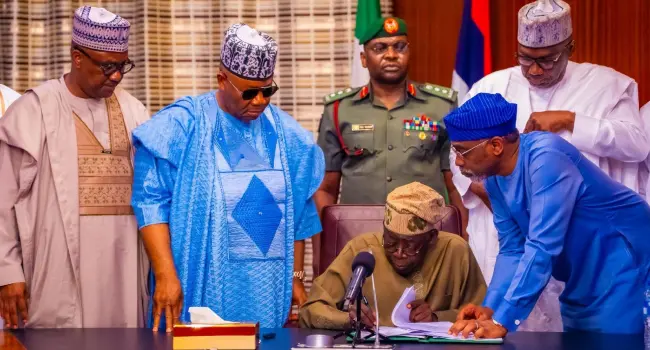
They were initially passed by both chambers of the National Assembly in March, with Votes and Proceedings produced in May; while President Bola Ahmed Tinubu signed them in June. The laws were gazetted on June 26, according to soft copies of the official gazette sighted by Daily Trust.
Dasuki raised a matter of privilege, alleging discrepancies between the tax laws passed by the National Assembly and the versions subsequently gazetted and made available to the public.
Findings by Daily Trust had unveiled major discrepancies in the gazetted laws when compared with the version passed by the lawmakers.
Another rep alleges alterations, moves motion for suspension Tuesday
A member of the House of Representatives, Mansur Manu Soro (Bauchi), said on Sunday that his independent review of the Votes and Proceedings of the National Assembly, the harmonised versions of the tax bills as passed and the versions published in the Official Gazette confirmed the existence of what he described as “material discrepancies.”
He said he was working with like-minded members to raise the matter on the floor of the House tomorrow.
“I can confirm the existence of material discrepancies between the bills duly passed by the National Assembly and the versions subsequently gazetted,” Soro said.
“These discrepancies are neither minor nor inadvertent. They represent deliberate alterations that removed critical oversight and reporting mechanisms expressly approved by the National Assembly. Furthermore, the altered provisions confer new coercive and fiscal powers on the executive — powers that were not approved by the legislature,” he added.
Soro said the alleged alterations necessitated an immediate halt to implementation.
“In defence of the Constitution of the Federal Republic of Nigeria, which unequivocally vests legislative authority in the National Assembly, I hereby call for the immediate suspension of the Tax Laws, 2025, currently scheduled to take effect on January 1, 2026,” he said.
According to him, the suspension should remain until “all post-passage alterations are identified, expunged and duly addressed by the National Assembly.”
While acknowledging the House’s decision to constitute an ad-hoc committee to investigate the allegations, Soro noted that the one-week reporting deadline falls on Thursday, December 25, a public holiday when the House does not sit.
“Given the gravity of this constitutional breach and the imminent implementation date of January 1, 2026, I am working with like-minded Honourable members to raise this matter on the floor of the House on Tuesday, December 23, 2025 — the final legislative sitting before the Christmas recess — as a Matter of Urgent National Importance,” he said.
He urged the House to take “a clear and definitive position” before proceeding on its Christmas and New Year break.
Some other lawmakers have also voiced concern over the controversy.
Speaking on BBC Hausa’s Ra’ayi Riga programme, Muhammad Bello Fagge (Fagge Federal Constituency, Kano) and Yusuf Shitu Galambi (Gwaram Federal Constituency, Jigawa) warned that any discrepancies between the passed bills and the gazetted laws could undermine constitutional order and further erode public trust.
Fagge recalled that the opposition initially objected to the tax bills, prompting nationwide consultations before their eventual passage.
“We in the opposition initially objected to the tax bills because of fears that certain provisions could be introduced without proper scrutiny,” he said.
“That led the Speaker of the House of Representatives, Tajudeen Abbas, to constitute a committee that went round the country, met with traditional rulers and governors, and asked them to submit their grievances and suggestions. After that process, the bills were harmonised and approved.”
He cited differences in the Nigeria Revenue Service Act, particularly Section 25 on accounts and audit, as well as Sections 26 and 30. He also pointed to discrepancies in the Joint Revenue Board Act, especially Sections 9, 14, 30, 40 and 44.
“Even if it is just one part that is different from what we agreed, there is a problem,” he said.
Fagge warned that some of the alleged changes appeared to transfer powers from the legislature and judiciary to the executive, particularly the Nigeria Revenue Service.
“There is no way the legislature will make a law without giving itself oversight functions. That is the essence of checks and balances. This issue goes beyond party politics. This is not about opposition politics. This is about saving Nigeria,” he said.
Galambi said public resistance to taxation was often rooted in mistrust over how public funds are utilised.
“People do not like tax because they do not trust how government spends their money. But if people are certain and have trust, nobody will object,” he said.
While describing the allegations as disturbing, Galambi said they remained unproven and noted that the National Assembly had set up a committee to investigate the matter.”
NASS
Lawyers, rights groups, youths urge suspension of tax laws
Several lawyers, civil society organisations and youth groups have joined the calls for the suspension of the tax laws.
Barrister Malachy Ugwumadu, former president of the Committee for the Defence of Human Rights (CDHR), in an interview with Daily Trust yesterday, flayed the move to proceed with implementation despite concerns raised by lawmakers.
Ugwumadu said any alteration of a law after passage, if proven, constitutes a grievous offence serious enough to warrant the withdrawal of presidential assent.
“In the process and procedure of lawmaking, every stage is designed to ensure clarity and certainty,” he said. “If a discrepancy is identified not by the public, but by a principal participant who possesses the final copy transmitted for assent. That is a fundamental issue.”
He said if a lawmaker holds an authenticated copy of the harmonised bill sent to the president and finds it inconsistent with what was eventually signed and gazetted, it raises a “red flag” pointing to a possible breach of the legislative process.
“That should bother both the president and the National Assembly. It signals the presence of a fifth columnist in the legislative process. There must be a thorough investigation to establish how this happened and who was responsible. Whoever is culpable must face punishment for forgery,” he said.
Ugwumadu argued that the controversy alone was sufficient reason for the Presidency to withdraw its assent, noting that any law gazetted could also be ungazetted.
“We should not run this country like a banana republic where documents can be falsified at that level without consequences,” he said.
On the legal implications of implementing the law amid the controversy, Abeni Mohammed (SAN), said it was difficult to immediately determine the veracity of the allegations but warned that, if proven, the National Assembly could lawfully halt implementation.
“If the allegation is true, the National Assembly can, by proclamation, ask the president not to commence operation of the law until it is established that the gazetted version is exactly as passed,” he said, though he expressed scepticism about such action.
Similarly, E.M.D. Umukoro said the matter was weighty enough to warrant investigation by security agencies, including the police and the Department of State Services.
“It means some persons arrogated to themselves the powers of the National Assembly by altering what was passed and presenting their own version for assent. That is a constitutional breach and cannot be taken lightly,” he said.
Barrister Lawal Ishaq said the issue could initially be resolved administratively through a joint executive-legislative committee before resorting to litigation, noting that courts could also suspend implementation if the dispute is eventually challenged.
Another lawyer, Hameed Jimoh, said the Clerk of the National Assembly should immediately verify the authenticity of the documents in question.
“If the National Assembly fails to investigate, members of the public can compel it to do so. Either way, the matter must be resolved,” he said.
The Socio-Economic Rights and Accountability Project (SERAP) also yesterday urged President Tinubu to direct the Attorney-General of the Federation, Lateef Fagbemi , to publish certified true copies of the tax laws signed into effect and the original bills received from the National Assembly.
In a Freedom of Information request dated December 20, SERAP also asked the president to clarify whether the bills transmitted by the legislature are identical to the versions signed into law and gazetted.
It called for the establishment of an independent panel of inquiry, headed by a retired Justice of the Supreme Court or Court of Appeal, to investigate the alleged alterations and identify those responsible.
SERAP warned that any unlawful alteration of duly passed legislation would violate the Constitution, international human rights obligations and the doctrine of separation of powers.
The group gave the Federal Government seven days to respond, warning it would pursue legal action if its request was ignored.
Northern youths reject tax laws
Northern youths under the umbrella of the Arewa Youth Assembly (AYA) yesterday rejected the tax laws, describing the alleged discrepancies as “governance by ambush.”
In a statement issued in Kaduna, its speaker, Mohammed Salihu-Danlami, warned that presenting Nigerians with laws different from those approved by elected representatives amounted to subverting democracy.
“This is not a clerical error; it is a constitutional crisis,” he said, adding that the controversy could have serious political consequences if unresolved.
Similarly, the Resource Centre for Human Rights and Civic Education (CHRICED) described the alleged alterations as a deliberate attempt to rewrite the will of the Nigerian people.
In a statement signed by its Executive Director, Ibrahim M. Zikirullahi, the organisation warned that if proven, the action would amount to legislative forgery and a criminal hijacking of the lawmaking process.
CHRICED said the alleged insertions reportedly expanded coercive powers of tax authorities, weakened judicial oversight and imposed new burdens on taxpayers without legislative approval.
The organisation demanded the immediate suspension of the affected tax laws, a full independent investigation and prosecution of anyone found culpable, insisting that silence from relevant authorities was unacceptable.
The Centre for Information Technology and Development (CITAD) also said allegations that the gazetted versions of the Tax Reform Acts differ materially from the versions passed by the National Assembly raise “serious constitutional, legal and democratic questions.”
In a statement signed by its Executive Director, YZ Yau, CITAD said Nigeria’s Constitution vests law-making powers exclusively in the National Assembly, warning that any alteration of an Act outside the prescribed legislative process amounts to an unlawful intrusion into legislative authority and a violation of the doctrine of separation of powers.
The Civil Society Legislative Advocacy Centre (CISLAC), Nigeria’s chapter of Transparency International, has also raised concerns over allegations that the Presidency assented to a tax law materially different from the version passed by the National Assembly.
In a statement signed by its Executive Director, Auwal Musa Rafsanjani, CISLAC warned that if proven, such actions would amount to a serious breach of constitutional order, legislative integrity and public trust.
The organisation said Nigeria’s law-making process is clearly defined by the Constitution, stressing that any alteration of a bill after parliamentary passage undermines democratic governance and the doctrine of separation of powers.
CISLAC urged the Presidency to publish the exact version of the tax law assented to, alongside the authenticated copy passed by the National Assembly, to enable public and institutional verification.
It called for an independent review involving relevant institutions such as the Office of the Attorney-General of the Federation and, where required, the judiciary, to establish the facts and assign responsibility.
Similarly African Democratic Congress (ADC), in a statement by its National Publicity Secretary, Bolaji Abdullahi, said its forensic review showed that key accountability provisions had been deleted while new clauses conferring coercive powers on the executive had been inserted.
Describing the alleged changes as “criminal insertions”, the ADC cited provisions it claimed grant the government powers to arrest and take over the property of persons who fail to comply with the tax laws.
“The African Democratic Congress has reviewed various reports which confirm doubts that the tax laws passed by the National Assembly and signed into law by President Bola Tinubu contain substantial forgery of key provisions,” the statement said.
“The forensic review established beyond doubt that key accountability provisions were deleted and new provisions inserted, granting coercive powers to the executive without recourse to the courts.”
Attorney-General, Senate mum
There was no reaction from the Attorney-General of the Federation and Minister of Justice, Lateef Fagbemi, yesterday as his media aide, Kamarudeen Ogundele, neither answered calls nor replied to messages sent to his mobile telephone lines.
Similarly, the spokesman of the Senate, Senator Yemi Adaramodu, did not respond when one of our correspondents reached out to him via phone calls and WhatsApp and text messages.
Spotlight on House probe panel
Attention has been shifted to the seven-member ad-hoc committee set up on Thursday by the House of Representatives to investigate the alleged discrepancies in the tax laws
The committee, which is expected to submit its report within one week, is chaired by Muktar Aliyu Betara (APC, Borno).Other members are Ahmed Idris Wase (APC, Plateau), Sada Soli (APC, Katsina), James Abiodun Faleke (APC, Lagos), Babajimi Benson (APC, Lagos), Fred Agbedi (PDP, Bayelsa) and Igariwey Iduma Enwo (PDP, Ebonyi).
Although the panel is expected to submit its report on Thursday, December 25, uncertainty surrounds the timeline, as the House is scheduled to proceed on Christmas and New Year recess before then.
Daily Trust reports that the House is expected to begin its end-of-year recess tomorrow after concluding work on the repeal and re-enactment bill seeking to extend the 2025 budget implementation to March 31, 2026.
As of the time of filing this report, it was unclear whether the committee had commenced its work. Efforts to obtain updates from the chairman and other members were unsuccessful, as calls and WhatsApp messages sent to them were not replied to.
It is also unclear which institutions or individuals the panel intends to invite in the course of its investigation, amid growing public pressure for transparency and a swift resolution.
Composition of the probe panel
The seven-member committee comprises five lawmakers from the ruling All Progressives Congress (APC) and two from the opposition Peoples Democratic Party (PDP), with three members from the North and four from the South.
Muktar Aliyu Betara
Betara, an APC lawmaker from Borno State, chairs the panel. He served as chairman of the House Committee on Appropriations during the Ninth Assembly under former Speaker Femi Gbajabiamila.
He is currently chairman of the House Committee on the Federal Capital Territory (FCT) and was a top contender for the speakership of the tenth Assembly before stepping down for Speaker Abbas Tajudeen.
As a ranking member with extensive legislative experience, Betara is expected to steer the panel through what many observers describe as a sensitive and constitutionally significant assignment.
Ahmed Idris Wase
Wase, an APC member from Plateau State, was Deputy Speaker during the Ninth Assembly and currently chairs the House Committee on Federal Character.
He also contested the speakership of the tenth Assembly. Lawmakers and observers describe him as forthright and experienced; qualities expected to shape the panel’s deliberations.
James Abiodun Faleke
Faleke, an APC lawmaker representing Ikorodu Federal Constituency of Lagos State, chairs the House Committee on Finance.
His committee handled the four tax bills and the harmonised reports adopted by the House after the conference with the Senate, positioning him as a central figure in the probe. He is seen as an experienced legislator and a close ally of President Tinubu.
Fred Agbedi
Agbedi, a PDP lawmaker from Bayelsa State, is one of two opposition members on the panel. He is the chairman of the PDP South-South Caucus in the House and is known for his outspoken positions on legislative matters.
Babajimi Benson
Benson, an APC lawmaker from Lagos State, chairs the House Committee on Defence. he is also a ranking member expected to play an influential role in the committee’s work.
Sada Soli
Soli represents Jibia/Kaita Federal Constituency of Katsina State on the APC platform. He chaired the House Committee on Water Resources during the Ninth Assembly.
He was among lawmakers who made notable contributions and proposed amendments to controversial provisions of the tax bills before their passage.
Igariwey Iduma Enwo
Igariwey, a PDP lawmaker from Ebonyi State, is the second opposition member on the panel. He serves as deputy chairman of the House Committee on Appropriations and is leader of the South-East caucus.


