ADAD
ADAD
Updating your news feed...
NEWS EXPRESS is Nigeria’s leading online newspaper. Published by Africa’s international award-winning journalist, Mr. Isaac Umunna, NEWS EXPRESS is Nigeria’s first truly professional online daily newspaper. It is published from Lagos, Nigeria’s economic and media hub, and has a provision for occasional special print editions. Thanks to our vast network of sources and dedicated team of professional journalists and contributors spread across Nigeria and overseas, NEWS EXPRESS has become synonymous with newsbreaks and exclusive stories from around the world.









Loading banners
Loading banners...

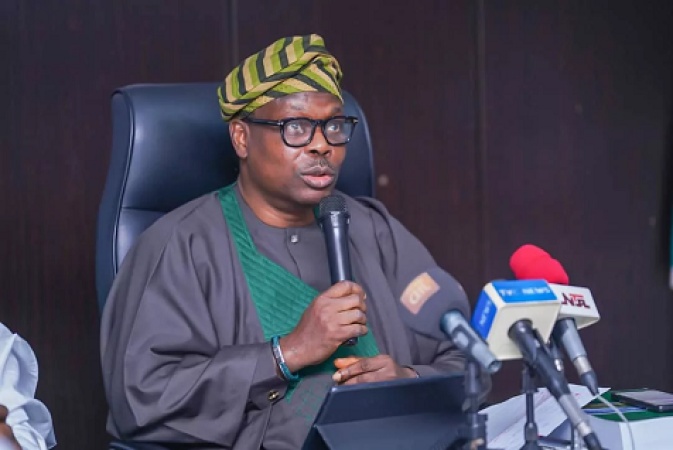
Minister of State for Health and Social Welfare, Dr Iziaq Salako
By ABUJAH RACHEAL
The Federal Government has called for a stronger Pan-African collaboration to tackle the continent’s cancer burden, warning that cancer now kills more Africans annually than HIV/AIDS, malaria and tuberculosis combined.
Dr Iziaq Adekunle Salako, Minister of State for Health and Social Welfare, made the call on Saturday while addressing delegates to the Africa Oncology Collaboration and Innovation Forum holding in Luxor, Egypt.
The News Agency of Nigeria (NAN) reports that the event was tagged “The Organiser of the Africa Oncology Collaboration and Innovation Forum 2025”.
It was organised to strengthen cross-border partnership in oncology care by Africa Oncology Collaboration and Innovation Forum Planning Committee, in partnership with relevant Egyptian oncology institutions, and supported by African oncology networks and development partners.
Salako said that Africa recorded 1.18 million new cancer cases and 763,843 deaths in 2022, according to GLOBOCAN.
He described the figures as an unacceptable burden requiring collective continental action.
He said Nigeria, Egypt and South Africa jointly accounted for the highest number of cancer cases on the continent, with Nigeria alone responsible for more than 10.5 per cent of Africa’s total cancer burden.
The minister said the rising burden was driven by lifestyle factors, ageing populations, late diagnosis, weak early detection systems and gaps in treatment infrastructure across African countries.
He commended the organisers of the forum for advancing the African Union Agenda 2063 vision of an integrated Africa, and applauded the Shefa Alorman Hospital in Luxor, which participants toured earlier in the day.
He described the facility as “a phenomenal creation Africans should be proud of” and praised the devotion and expertise of the staff.
He highlighted major reforms undertaken by Nigeria to overhaul its cancer control system, especially in the last 31 months of President Bola Tinubu’s administration.
He said the government had increased budgetary allocation for cancer prevention and care, established six new cancer centres of excellence, and procured specialised oncology equipment.
The minister also disclosed that Nigeria had developed two new strategic documents to guide the country’s cancer control efforts.
These, he said, included the National Nuclear Medicine Policy and Strategic Plan, and the National Cancer Control Plan 2026–2030 scheduled for launch in the first quarter of 2026.
According to him, the new plans align with global frameworks such as the WHO Global Breast Cancer Initiative, Global Initiative for Childhood Cancer and the UICC Global Cancer Declaration.
“It will serve as a guide for every oncology stakeholder in Nigeria, from policymakers to researchers, private sector partners, non-governmental organisations and even survivors,” he said.
He reported significant progress in cervical cancer prevention, saying nearly 15 million girls aged nine years to 14 years had been vaccinated against Human HPV since its introduction into Nigeria’s routine immunisation programme in 2023.
He also said the National Task Force on Cervical Cancer Elimination was working to screen at least 50 per cent of eligible women and treat all detected precancerous lesions by 2027.
To address financial hardship faced by cancer patients, the minister disclosed that Nigeria’s National Health Insurance Programme was finalising a health insurance scheme covering cancer care.
“The country is also implementing a National Cancer Health Fund and has supported the Nigeria Cancer Society to establish a private sector-led cancer intervention fund,” he said.
He urged African countries to prioritise “Healthcare Pan-Africanism” by building bridges and strengthening resource-sharing.
He expressed Nigeria’s support for the emerging Africa Oncology Network, describing it as a critical tool for a unified continental response.
“Nigeria is ready to contribute to entrench the spirit of oncology collaboration that bridges borders, shares resources and information, and focuses on a jointly-developed roadmap to reduce cancer incidence and mortality,” he said.
He urged that the initiative should involve policymakers, health providers, the pharmaceutical industry, entrepreneurs and technology firms, with emphasis on value-based care and equity. (NAN)