
Updating your news feed...
NEWS EXPRESS is Nigeria’s leading online newspaper. Published by Africa’s international award-winning journalist, Mr. Isaac Umunna, NEWS EXPRESS is Nigeria’s first truly professional online daily newspaper. It is published from Lagos, Nigeria’s economic and media hub, and has a provision for occasional special print editions. Thanks to our vast network of sources and dedicated team of professional journalists and contributors spread across Nigeria and overseas, NEWS EXPRESS has become synonymous with newsbreaks and exclusive stories from around the world.














Loading banners
Loading banners...

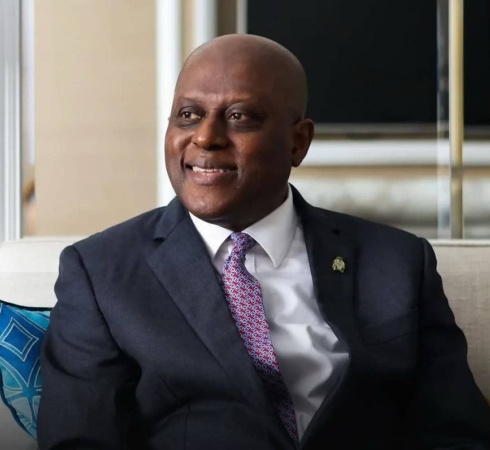
The foreign exchange (FX) reforms driven by the Central Bank of Nigeria (CBN) attracted foreign capital inflows worth US$20.98 billion in the first 10 months of 2025, the governor, Olayemi Cardoso has disclosed.
This represents a 70 per cent increase over total inflows for 2024 and a 428 per cent surge compared to the US$3.9 billion recorded in 2023.
CBN Governor, Olayemi Cardoso says the surge in FX inflows reflect a clear resurgence in investor confidence in the economy and expects greater milestones in the months ahead.
The ongoing surge in forex inflows into the economy is a demonstration of financial sector stability and rising investors’ confidence in the domestic economy.
Already, the financial market is witnessing interest in Nigeria assets from domestic and global investors, as seen in the latest capital inflows to the country.
The rising investors’ interest is linked to fallout of crucial reforms instituted by the Central Bank of Nigeria (CBN) under the Olayemi Cardoso leadership.
Upon assuming office in October 2023, the apex bank leadership had prioritised reforms to rebuild Nigeria’s economic buffers and strengthen resilience.
CBN Governor, Olayemi Cardoso explained that over the past year, the apex bank has sustained the unification of the multiple exchange‑rate windows.
He said that at present, the once‑crippling multi-billion dollar FX backlog has been fully cleared, restoring credibility and giving businesses the confidence to plan.
Cardoso speaking at the 60th dinner of Chartered Institute of Bankers of Nigeria (CIBN) said the story of Nigeria’s economic recovery cannot be appreciated without first recalling where “we started, because the reforms of today are borne out of a determination to change the conditions we met”.
“When this leadership team assumed office, our economy faced severe macroeconomic distortions. Inflation was surging. FX liquidity had evaporated. External reserves were non-existent . Trust in economic management had weakened. Unorthodox monetary practices had eroded confidence. Businesses could not plan or price. Investors could not commit.”
Continuing, he said: “The foreign exchange market was in paralysis. A backlog of over US$7 billion in unmet FX obligations undermined market integrity. The spread between official and parallel market rates had blown out to more than 60 per cent, creating distortions and rent‑seeking opportunities.”
“High inflation had become normalised, stuck in double digits for most of the last 35 years and risen to 34.6% as of November 2024. Food prices were crippling households. Liquidity conditions were unstable. Many businesses faced an existential threat”.
Also, the banking sector, though fundamentally sound, was at risk of being dragged into distress by a deteriorating macro environment and inconsistent policy signals.
“This was the Nigeria we inherited, not one standing at the edge of a macroeconomic precipice, but one that had already gone over the cliff. It is important to recall this not for drama, but for context: the progress we cautiously acknowledge today is meaningful only when measured against the depth of the challenges that came before it,” he said.
Achieving Economic Turnaround
According to Cardoso, over the past 12 months, Nigeria’s economy has transitioned from crisis management to laying the groundwork for a sustainable recovery.
“After nearly a decade in which real GDP growth averaged about 2%, reforms have restored momentum and confidence in our broad macroeconomic environment. Our economy grew by 4.23% in the second quarter of 2025, the strongest pace in four years, driven by improvements in telecommunications, financial services, and oil production,” he said.
“More importantly in terms of long-term stability, inflation, while still high, has moderated consistently. From a peak of 34.6% in November 2024, it has more than halved to 16.05 per cent in October 2025. This marks seven consecutive months of disinflation. Food inflation, the largest single component of the basket, fell to 13.12 per cent in October, down from 16.87 per cent in September and 21.87 per cent in August,” he said.
This significant, steady decline in inflation is restoring real purchasing power for households and businesses. It also demonstrates disciplined execution and Nigeria’s return to orthodox monetary policy.
“We continue with determination to bring inflation down further. The current double-digit rate cannot be acceptable. Price stability is the foundation of sustainable growth. Our transition to an inflation‑targeting framework is gaining traction. We have improved data analytics, strengthened communication, and ended monetary financing of fiscal deficits. These actions have strengthened monetary policy transmission and anchored expectations”.
Bigger, stronger rebased GDP
Nigeria’s hope of achieving a $1 trillion economy by 2030 will gain significant support from the banking sector.
Nigeria’s Statistician-General, Adeyemi Adeniran, had explained how the economy fared in the rebased Gross Domestic Product (GDP) report.
He said: “In nominal terms, the rebased GDP for 2019 stood at N205.09 trillion N213.63 trillion in 2020, N243.30 trillion in 2021, N274.23 trillion in 2022, N314.02 trillion in 2023, and N372.82 trillion in 2024”.
Adeniran further explained that the rebasing allows the country to better reflect the realities of the economy. “It’s not just about a bigger number but about accurate, timely data that supports smarter policy and economic planning,” he said.
According to the Third Quarter GDP report released on Monday, the GDP grew by 3.98% (year-on-year) in real terms in the third quarter of 2025, according to a report by the National Bureau of Statistics.
The report said the growth rate is higher than the 3.86% recorded in the third quarter of 2024.
The report said in nominal terms, the economy is N113.587trn and the performance is higher when compared to the third quarter of 2024, which recorded an aggregate GDP of N96.160trn, indicating a year-on-year nominal growth of 18.12%.
Banking sector in focus
A well-recapitalised banking sector is undeniably crucial for the growth of the domestic economy. Hence, Olayemi Cardoso, Central Bank of Nigeria (CBN) governor, advised banks to prepare for a new round of recapitalisation to ensure they have the necessary capital to support the Federal Government’s plan to achieve the $1 trillion Gross Domestic Product (GDP) target by 2030. As of today, 27 banks have raised capital to meet the recapitalisation deadline.
He said that President Bola Ahmed Tinubu’s economic plan aims to reach a $1 trillion GDP by 2030, emphasising that the current bank capitalisation is insufficient to support such a large economic scale.
Aliyu Ilias, developmental economist, noted that several sectors have previously remained un-captured in official data, particularly entertainment.
He explained that the exercise will also reveal untapped economic potential and guide government resource allocation. “It will show where we are strongest structurally, such as in mining or other emerging sectors. That insight will help the government focus its efforts more strategically.”
“Finally, it will support economic policy formulation, helping us align our strategy with the reality on the ground. We will know exactly where to put more effort,” he added.
Ilias explained that while this statistical adjustment does not instantly generate new revenue, it creates a more reliable framework for fiscal planning, investment strategies, and development interventions.
For him, by aligning economic data with current realities, the government and private sector can more effectively target policies that stimulate job creation, improve productivity, and sustain long-term growth.
Seun Onigbinde, director of Civic Technology Group BudgIT, said the previous rebasing underscored the substantial impact of policy changes in the services and ICT sectors, such as telecommunications deregulation and banking sector recapitalisation. “Rebasing of the GDP must reflect changes in the economy, which are a product of public policies over time,” he added.
Rebasing is also critical for domestic policy. It allows the government to better assess tax collection efficiency, measure sectoral contributions, and design social programmes that are data-driven and results-oriented.
Gabriel Okeowo, country director for BudgIT, said, “Rebasing allows planners to be more intentional about solving Nigeria’s biggest problems: poverty, infrastructure gaps, and job creation.”
3rd quarter GDP report shows economy firmly on track
Meanwhile, the Centre for the Promotion of Private Enterprises (CPPE) in its policy brief on the third quarter GDP report said while the 3.98 per cent growth in real terms reflects a slight moderation from the 4.3 percent growth recorded in the second quarter, the data confirms that the economy remains firmly on a path of steady recovery and consolidation.
“The Q3 performance highlights the positive impact of ongoing economic reforms, especially in stabilising the exchange rate, moderating inflation, improving fiscal conditions, and gradually restoring investor confidence. These macroeconomic gains have strengthened business sentiment and supported activity across key sectors of the economy,” the Director/CEO of CPPE, Dr. Muda Yusuf said in the policy brief.
However, he noted that despite improving fundamentals, the cost-of-living crisis remains a concern.
It said, “While disinflation is underway and prices of some food items and manufactured products are easing, the social outcomes of economic reforms continue to weigh on households. It is therefore imperative for policymaking to prioritise targeted interventions to address the uneasiness around the cost of living and ensure that GDP Growth and macroeconomic stability translate into real improvements in citizens’ welfare—particularly for vulnerable groups.”
To consolidate the gains recorded in Q3 and unlock stronger, more inclusive growth, it called for reduction in structural bottlenecks, mitigating the cost-of-Living crisis and strengthening agricultural productivity. (Daily Trust)




