ADAD

Updating your news feed...
NEWS EXPRESS is Nigeria’s leading online newspaper. Published by Africa’s international award-winning journalist, Mr. Isaac Umunna, NEWS EXPRESS is Nigeria’s first truly professional online daily newspaper. It is published from Lagos, Nigeria’s economic and media hub, and has a provision for occasional special print editions. Thanks to our vast network of sources and dedicated team of professional journalists and contributors spread across Nigeria and overseas, NEWS EXPRESS has become synonymous with newsbreaks and exclusive stories from around the world.
Loading banners
Loading banners...

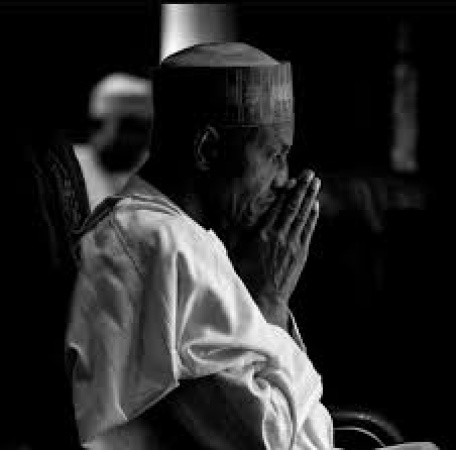
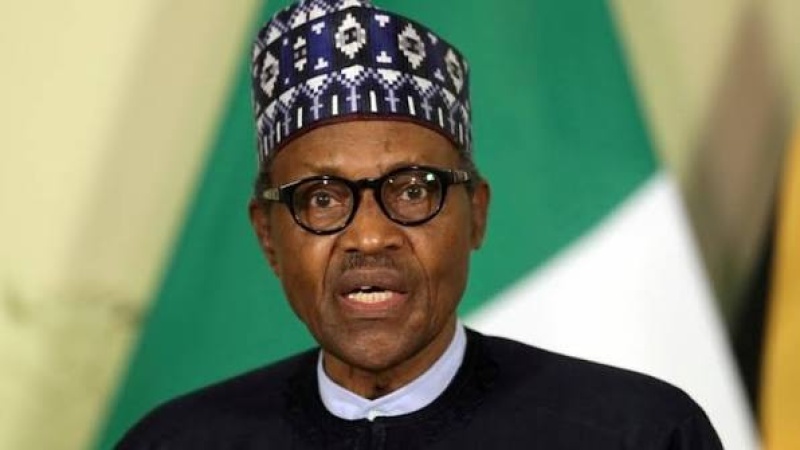
Late former president Buhari
A new biography of late President Muhammadu Buhari has revealed his involvement in the July 1966 military counter-coup that toppled the administration of Major General Johnson Aguiyi-Ironsi, disclosing that his role was limited to logistical assignments, including arranging vehicles and dispatching weapons for the operation.
The book, Buhari: The Authorised Biography, written by Dr Udu Yakubu, said Buhari, who was then a junior infantry officer, was not involved in planning the counter-coup or the actual shooting but was entrusted with specific tasks by one of its key organisers, Major Theophilus Danjuma.
According to the account, Buhari was asked to arrange vehicles for the operation and dispatch weapons to a designated location, an assignment that indicated the confidence senior officers involved in the revolt had in his reliability.
The disclosure Is contained in Volume One of the biography, particularly Chapter Seven, titled “Seasons of Upheaval: The Coups of 1966,” which examines the January 1966 coup, the subsequent counter-coup and the events that plunged Nigeria into a prolonged period of military rule.
The book traced Buhari’s involvement in the events to the deepening ethnic and political tensions within the Nigerian Army following the January 15, 1966 coup led by Major Chukwuma Kaduna Nzeogwu and other young military officers.
The January coup, which claimed the lives of several prominent political leaders and senior military officers, was initially presented by its organisers as an attempt to end corruption, tribalism and political misrule in the First Republic.
However, the pattern of killings, the ethnic composition of the principal conspirators and the survival of some prominent Eastern political figures fuelled suspicions that the operation was driven by sectional interests.
Yakubu noted that among those killed were Prime Minister Abubakar Tafawa Balewa, Northern Region Premier Ahmadu Bello, Western Region Premier Samuel Ladoke Akintola and Finance Minister Festus Okotie-Eboh.
According to the author, the killings of senior military officers, including Brigadiers Zakariya Maimalari and Samuel Ademulegun, further heightened resentment, particularly among northern soldiers who believed that the coup had disproportionately targeted their political and military leadership.
The biography noted that the failure of the coup to take control of the country and the subsequent emergence of Major General Aguiyi-Ironsi as Head of State did little to calm tensions within the armed forces.
Ironsi, the most senior surviving officer, had rallied loyal troops to suppress the rebellion before assuming power following the collapse of civilian rule.
However, his administration’s policies and appointments, particularly the introduction of the Unification Decree of May 24, 1966, further deepened northern suspicions of Igbo domination.
The decree abolished the federal structure for administrative purposes and sought to establish a unitary system of government, transferring greater authority to the central government.
Although the policy was presented as an attempt to eliminate regionalism and ethnic divisions, it was widely interpreted in the North as an attempt to consolidate Igbo influence over the country’s political and administrative institutions.
The resulting resentment contributed to the May 1966 disturbances in northern cities, during which hundreds of Igbo people were killed.
According to the biography, the failure to prosecute the January coup plotters also aggravated tensions, as many northern military officers believed that bringing those responsible to trial would have helped restore confidence and prevent further reprisals.
Buhari, who was then stationed at Abalti Barracks in Surulere, Lagos, was said to have been deeply affected by the January killings because he personally knew some of the senior officers who lost their lives.
His duties included preparing vehicles for the daily activities of senior officers, making their sudden disappearance from the barracks particularly painful.
The book quoted Buhari as believing that the January coup plotters were motivated more by ambition and rivalry than by their publicly stated objective of fighting corruption.
By the middle of 1966, the biography said, frustration among northern soldiers had reached breaking point, with junior officers and non-commissioned personnel increasingly demanding action against those they believed were responsible for the January killings.
The resentment culminated in the July 29, 1966 counter-coup, led by Lieutenant Colonel Murtala Muhammed, with Major Theophilus Danjuma and Captain Martin Adamu playing prominent roles.
Unlike the January coup, the counter-coup was loosely coordinated, with groups of northern officers in Lagos, Ibadan, Abeokuta and Enugu holding separate meetings and discussing what they considered the need to correct regional and institutional imbalances.
Other officers identified in the biography as being involved included Buhari, Paul Tarfa, William Walbe, Musa Usman, Shittu Alao, Jerry Useni, Ibrahim Bako, Garba Dada, Shehu Musa Yar’Adua and Pam Mwadkon.
At the time, Ironsi was in Ibadan for a meeting with traditional rulers and was being hosted by Lieutenant Colonel Adekunle Fajuyi, the military governor of the Western Region.
Unknown to both men, mutinous soldiers had already surrounded Government House.
By the following morning, the counter-coup was in full swing, resulting in the capture and killing of Ironsi and Fajuyi.
The biography explained that Buhari’s participation was restricted to logistical support, stressing that he neither participated in the planning nor took part in the shooting.
Nevertheless, his assignment to arrange vehicles and dispatch weapons to a designated location placed him among the junior officers entrusted with supporting the operation.
According to the account:
“By mid-1966, frustration among northern soldiers had reached breaking point. Junior officers and non-commissioned ranks spoke openly of revenge for the January killings. That anger finally erupted on 29 July 1966, when northern officers staged a counter-coup.
“The revolt was led by Lieutenant Colonel Murtala Muhammed of the Signals Corps, working closely with Major Theophilus Danjuma from Supreme Headquarters and Captain Martin Adamu of the Second Battalion in Ikeja.
“Their hostility towards General Ironsi was no secret; they viewed him as shielding the January plotters from justice. Unlike the tightly coordinated January coup, the July revolt was loosely organised. Groups of northern officers in Lagos, Ibadan, Abeokuta, and Enugu planned separately, meeting informally to discuss how to correct what they saw as regional and institutional imbalance.
“Among the officers involved were Murtala Muhammed, Theophilus Danjuma, Martin Adamu, Muhammadu Buhari, Paul Tarfa, William Walbe, Musa Usman, Shittu Alao, Jerry Useni, Ibrahim Bako, Garba Dada, Shehu Musa Yar’Adua, and Pam Mwadkon – virtually every northern officer stationed in the southern commands was drawn in one way or another.
“Amid the rising tensions, General Ironsi travelled to Ibadan on 28 July for a meeting with traditional rulers. He was hosted by Lieutenant Colonel Adekunle Fajuyi, the military governor of the Western Region and one of his most loyal officers. Unknown to both men, mutinous soldiers had already surrounded Government House. By dawn the following morning, the revolt was in full swing.
“For Muhammadu Buhari, still a junior infantry officer, participation was limited to logistics. He was not part of the planning or the shooting. Even so, Theophilus Danjuma trusted him with specific tasks: dispatching weapons to a designated point and arranging vehicles for the operation. The role was narrow. It still indicated the confidence senior conspirators had in his reliability.
“The coup unfolded, and General Ironsi was captured and killed in Ibadan. Buhari’s reaction and role in the counter-coup were shaped by the events of January. He believed the first coup plotters must have anticipated a reaction, having exploited a political opening to seize control of the country.
“In his view, as long as the military and political hierarchies remained unchanged, the North would continue to hold an advantage in the nation’s leadership arrangement, making a backlash almost inevitable. To him, this was the true explanation of what followed years and decades after the July counter-coup.
“Buhari’s battalion remained in Lagos until the political upheaval passed. In early 1966, he had been posted as Adjutant to the 2 Infantry Battalion, initially based in Ikeja. In this role as the battalion’s administrative officer, he supervised administration, drills, and aspects of the training programme, especially parades and ceremonies. He was responsible for enforcing discipline, ensuring troops assembled on time, maintained proper health standards, and upheld professionalism.
“The 2 Infantry Battalion was judged to have been too closely involved in the events of 1966. As a result, the unit was redeployed from Lagos to Kaduna to reduce its concentration of influence in the capital. In April 1967, Buhari was appointed brigade major of the Second Sector, 1 Infantry Division, a position he held until July of that year.
“Until 1966, the army was, for most of its officers, a career rather than a platform for power. Postings and commissions marked progress within a profession; they were not yet steps towards the State House. The shocks of January and July changed that perception,” it stated.
Following the counter-coup, Buhari’s battalion remained in Lagos until the political upheaval subsided.
The 2 Infantry Battalion, which was considered to have been too closely involved in the events of 1966, was subsequently redeployed from Lagos to Kaduna to reduce its concentration of influence in the nation’s capital.
In April 1967, Buhari was appointed Brigade Major of the Second Sector, 1 Infantry Division, a position he held until July of that year.
The biography observed that the January and July 1966 upheavals fundamentally transformed the Nigerian military, changing its character from a largely professional institution into an increasingly influential actor in the country’s political affairs.
“Until 1966, the army was, for most of its officers, a career rather than a platform for power. Postings and commissions marked progress within a profession; they were not yet steps towards the State House,” the book stated.
It added that the shocks of January and July changed that perception, setting the military on a path of repeated interventions in Nigeria’s political leadership.
The events of 1966 subsequently shaped the country’s political and military trajectory, contributing to the ethnic reprisals and tensions that preceded the Nigerian Civil War and the decades of military involvement in governance. (Nigerian Tribune)