ADAD

Updating your news feed...
NEWS EXPRESS is Nigeria’s leading online newspaper. Published by Africa’s international award-winning journalist, Mr. Isaac Umunna, NEWS EXPRESS is Nigeria’s first truly professional online daily newspaper. It is published from Lagos, Nigeria’s economic and media hub, and has a provision for occasional special print editions. Thanks to our vast network of sources and dedicated team of professional journalists and contributors spread across Nigeria and overseas, NEWS EXPRESS has become synonymous with newsbreaks and exclusive stories from around the world.










Loading banners
Loading banners...

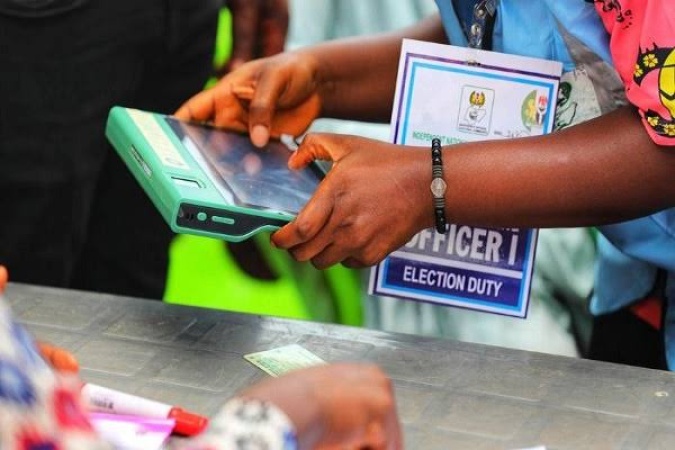
INEC portal showing the Bimodal Voter Accreditation System
Fifty days before Nigerians return to the ballot to decide their next president, the Independent National Electoral Commission (INEC) will tomorrow roll out a nationwide test as it deploys its Bimodal Voter Accreditation System (BVAS) and electronic results upload technology across 17,676 selected polling units in a mock exercise designed to identify operational weaknesses, test equipment reliability and strengthen public confidence ahead of the 2027 elections.
The exercise, scheduled for 8:30 a.m. to 2:30 p.m., will cover two polling units in each of the country’s 8,838 registration areas, giving INEC an opportunity to assess the performance of its electoral technology across different locations before the presidential and National Assembly elections on January 16, 2027, and the governorship and State Houses of Assembly elections on February 6.
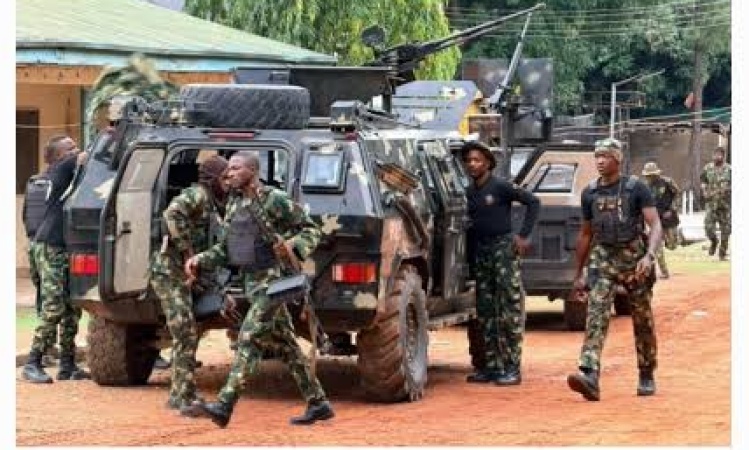
Ahead of the polls, INEC has already identified nine states affected by escalating campaign violence, political intolerance and attacks on electoral officials, warning that the incidents could undermine preparations for the 2027 general elections.
The Commission listed Lagos, Edo, Ekiti, Enugu, Ebonyi, Delta, Cross River, Oyo and Benue as states where campaign convoys, town hall meetings, party offices and supporters had come under attack. INEC Chairman, Prof. Joash Amupitan, disclosed this yesterday in Abuja at the INEC–Office of the National Security Adviser (ONSA) Strategic Election Security Conference, attended by heads of security agencies.
Amupitan raised the alarm over the harassment, intimidation and physical attacks on the Commission’s leadership, staff and ad-hoc workers by supporters and agents of political parties. Warning that such actions amounted to attempts to undermine the independence of the electoral umpire, he condemned the incidents, insisting that political parties and their candidates had a responsibility to ensure peaceful campaigns across the country.
“No political ambition is worth the blood of a single Nigerian, and no party or political actor has the right to turn public spaces into theatres of thuggery or declare any territory a no-go area for lawful political engagement”, he said.
He warned political party leaders against distancing themselves from the activities of their supporters, saying responsibility for campaign violence extended beyond those directly involved in attacks. Amupitan warned that failure to address the violence could lead to voter suppression, threaten the safety of election workers and trigger post-election unrest.
He said the Commission required more than 1.41 million ad hoc personnel to conduct the elections across 177,299 polling units, adding that the safety of the workers, many of whom would be National Youth Service Corps (NYSC) members, must be guaranteed.
Speaking, National Security Adviser (NSA), Nuhu Ribadu, gave the assurance that President Bola Tinubu was committed to providing the security required for peaceful, transparent and credible elections in 2027. He further assured that security agencies would discharge their responsibilities professionally, impartially and in accordance with the law, irrespective of political affiliations.
The NSA also warned that misinformation and disinformation on social media could trigger tension and violence, urging security agencies to strengthen early-warning systems and respond to threats before they escalated.
The Inspector-General of Police, Olatunji Disu, pledged professional and impartial policing during the elections, emphasising the need for stronger collaboration among security agencies, intelligence-sharing and timely responses to identified threats.
This is as Kano, Delta, Rivers, Edo, Ondo and Kebbi have emerged as the leading flashpoints of pre-election violence, according to a new report by the Kimpact Development Initiative (KDI). The report, released in Abuja, said the six states recorded the most significant incidents out of 124 violent incidents documented across 35 states and the Federal Capital Territory (FCT) between July 1 and November 23, 2026, resulting in 22 deaths.
Delta recorded the highest fatalities with five deaths from 10 incidents, followed by Kano with three fatalities from 11 incidents, while Rivers recorded one fatality from 10 incidents. Edo, Ondo and Kebbi were also listed among the states with significant incidents, underscoring what KDI described as a nationwide spread of violence rather than isolated hotspots.
The incidents were documented through KDI’s Nigeria Election Violence Education and Reporting (NEVER) Project. The report showed a sharp escalation in violence as the election draws closer — from just three incidents in July to 48 in October, and another 40 within the first half of November. KDI warned that the trend could worsen in the six leading states and beyond if political parties, security agencies and other stakeholders fail to take urgent measures.
It blamed growing political intolerance and inflammatory rhetoric among political actors and their supporters for fuelling the violence, stressing that the problem cut across political parties and should not be blamed on any single group. It urged candidates, spokespersons and campaign organisations to focus on issues, policies and programmes rather than language capable of inciting hostility.
Giving a breakdown of the incidents nationwide, KDI said physical assaults accounted for 46.8 per cent, property destruction 28.8 per cent, shootings 10.2 per cent, intimidation and harassment 9 per cent, while kidnappings accounted for 4 per cent.
It said political supporters, civil servants, journalists and ordinary citizens were increasingly exposed to intimidation for exercising their democratic rights. The organisation called on political parties and candidates, particularly in the six leading states, to publicly commit to peaceful campaigns and restrain their supporters from violence.
It also urged security agencies to strengthen preventive deployments in the flashpoint states, respond promptly to early warning signs and enforce electoral laws without bias.
Meanwhile, the Executive Director of Yiaga Africa, Samson Itodo, has warned that declining public confidence in Nigeria’s electoral institutions, misinformation and insecurity could threaten the credibility and stability of the 2027 general elections. He said the growing distrust in the electoral process, compounded by the spread of disinformation and threats of violence against perceived election manipulators, posed a significant security risk ahead of the polls.
He made this known at the Nigeria 2027 Elections Stakeholder Conference, themed Nigeria’s 2027 Elections: Security Threats and Pathways to National Stability, organised by the General LEO Irabor Early Warning Systems Centre and the Nigerian Institute of International Affairs (NIIA) yesterday in Lagos.
Itodo said the integrity of the information environment had become a security question, warning that false information, particularly during the collation and announcement of election results, could trigger violence and endanger electoral officials, observers and other citizens. He identified three major crises confronting Nigeria’s democracy as a crisis of trust, a multidimensional security crisis and an information integrity crisis, arguing that their interaction could undermine the electoral process.
According to him, findings from Yiaga Africa’s National Voting Intention Survey showed that the proportion of Nigerians confident that INEC would conduct credible elections declined from 45 per cent in December 2025 to 34 per cent in September 2026. He also cited an Afrobarometer survey released two weeks earlier, which found that only 37 per cent of Nigerians expected the 2027 elections to be free and fair, while 79 per cent anticipated that valid votes would not be counted and 78 per cent feared that incorrect results would be announced.
Itodo said the figures reflected the depth of public distrust in the electoral system, warning that the country risked losing the democratic confidence necessary to sustain its institutions.
On the information integrity crisis, he disclosed that the Kukah Centre, secretariat of the National Peace Committee, documented 126 incidents of violations of the National Peace Accord between August 19 and November 5, 2026. He said misinformation and disinformation accounted for about 25 per cent of the recorded infractions, making them the second most common category after political intolerance and violence.
Itodo cited fabricated quotations, forged correspondence and misleading newspaper-style graphics among the tactics being deployed to manipulate public perception ahead of the elections.
He also expressed concern over the increasing use of artificial intelligence to generate misleading content, warning that deepfake videos and fabricated audio recordings of political candidates could become prominent tools of electoral manipulation.
On insecurity, he said 5,272 people were killed across Nigeria between January and May 2026, while bandits and terrorists abducted nearly 8,000 people between June 2025 and June 2026. He added that 42 per cent of Nigerians surveyed said they were willing to vote but feared coming out on election day because of possible violence.
According to him, the three crises reinforce one another, as declining trust makes falsehood more believable, information disorder slows verification, while insecurity makes the consequences of misinformation potentially deadly.
He warned that delayed results, technical glitches or fabricated result sheets circulating on social media could trigger violent reactions from citizens already primed to believe that electoral malpractice deserved death.
Itodo further warned that the 2027 elections could witness increased deployment of AI-generated audio, deepfake videos, coordinated WhatsApp broadcast networks, partisan media platforms masquerading as credible journalism and identity-based incitement.
He also raised concerns about foreign information manipulation and interference, noting that Russia, China and the United Arab Emirates had been identified among countries associated with disinformation activities around elections in Africa.
The Director-General of the Nigerian Institute of International Affairs (NIIA), Prof. Eghosa Osaghae, has urged stakeholders to address security threats surrounding elections, warning against the normalisation of electoral violence and instability in Nigeria’s democratic process. He said elections should not be approached as warfare, despite the recurring tendency to prepare for polls in an atmosphere of fear, violence and uncertainty, stressing that electoral contests should produce winners and losers through peaceful, civil processes rather than violent confrontations.
Osaghae said voter turnout remained an important measure of electoral success, noting that beyond voter education and mobilisation, Nigeria should explore ways of making voting a more engaging and pleasurable civic experience that encourages citizens to participate without fear.
Former INEC Resident Electoral Commissioner, Dr Mike Igini, also described election periods as among the most dangerous moments in Nigeria’s national life, warning that the forthcoming elections would test the country’s commitment to democracy and the rule of law.
He stressed that electoral security was the responsibility of security agencies rather than INEC, while urging citizens to reject violence and take proactive steps to protect democratic institutions ahead of the polls. (The Guardian)