ADAD

Updating your news feed...
NEWS EXPRESS is Nigeria’s leading online newspaper. Published by Africa’s international award-winning journalist, Mr. Isaac Umunna, NEWS EXPRESS is Nigeria’s first truly professional online daily newspaper. It is published from Lagos, Nigeria’s economic and media hub, and has a provision for occasional special print editions. Thanks to our vast network of sources and dedicated team of professional journalists and contributors spread across Nigeria and overseas, NEWS EXPRESS has become synonymous with newsbreaks and exclusive stories from around the world.
























Loading banners
Loading banners...

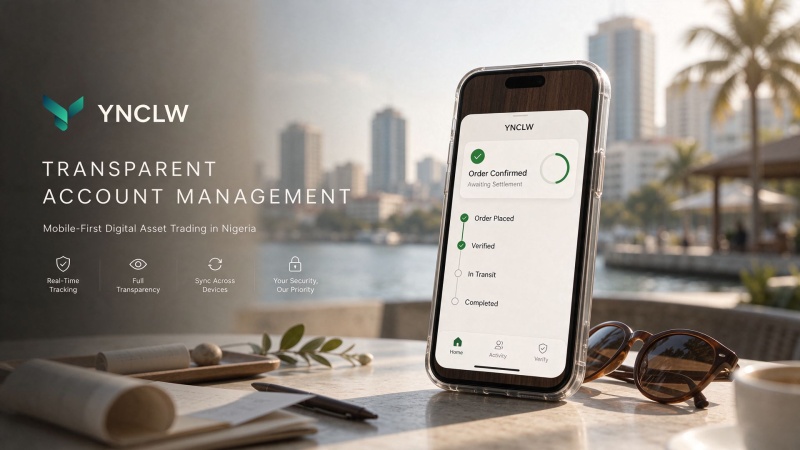
YNCLW has opened its platform to users in Nigeria as part of its mobile-first strategy. To address the challenges of trading on uneven network infrastructure, the platform aims to reduce uncertainty through continuous order tracking and tools that let users independently verify their account balances.
Digital asset trading platform YNCLW recently announced that its services are now available to users in Nigeria, the first major market in its global rollout. YNCLW says it studied how local users interact with trading platforms and found that the vast majority rely heavily on smartphones for tasks ranging from monitoring markets to transferring assets. Those findings shaped its approach to mobile trading, particularly when an unstable connection delays an update or leaves a trader unable to reconcile an account balance.
For mobile traders, confidence in a platform depends in part on knowing what has happened to an order after they leave the trading screen or lose their connection. YNCLW identifies uncertainty about execution as a major obstacle to more frequent trading in emerging markets. Its mobile platform focuses on three priorities: providing precise order updates, making trades executed while a device is offline easy to trace, and allowing users to verify their balances independently.
In areas with unreliable mobile coverage, a trader may submit an order and receive no acknowledgement. Unsure whether it went through, the trader may tap the submit button again and inadvertently commit more funds than intended.
YNCLW says it has deployed an engine that synchronises order status between the mobile device and its servers. When a device reconnects, the system automatically reconciles the two sets of records. As soon as the user reopens the trading screen, the platform displays a single status for the order, showing whether it is still queued, has been filled or was automatically cancelled after a timeout. According to YNCLW, the mechanism prevents errors caused by network retransmission and gives users a clear basis for deciding what to do next.
YNCLW gives users access to the execution records behind a change in their balance. Its trading rules distinguish between the order a user submits and the trade that takes place when the platform matches it. Users can look up the details of that execution in their account.
If an order is filled while a phone is locked or disconnected, the user can retrieve the full trade record after reconnecting. It shows the quantity traded, the actual price of each fill when an order is executed in parts, and the associated asset movements. For users reviewing transaction costs afterwards, that record provides information a screenshot of the market at the time of submission cannot capture: how much actually traded and at what prices.
Alongside the transaction history, YNCLW says it has introduced a verification tool for individual accounts. At specific points in time, the platform generates an account record that users can check against their own balance. By reviewing that record together with subsequent transactions, users can trace how their balance changed after that point.
This approach gives users a way to cross-check individual trade details against the broader account ledger. For Nigerian users who manage their assets primarily by phone, YNCLW sees the ability to verify their holdings wherever they are as an important reason to keep using the platform over time.