ADAD

Updating your news feed...
NEWS EXPRESS is Nigeria’s leading online newspaper. Published by Africa’s international award-winning journalist, Mr. Isaac Umunna, NEWS EXPRESS is Nigeria’s first truly professional online daily newspaper. It is published from Lagos, Nigeria’s economic and media hub, and has a provision for occasional special print editions. Thanks to our vast network of sources and dedicated team of professional journalists and contributors spread across Nigeria and overseas, NEWS EXPRESS has become synonymous with newsbreaks and exclusive stories from around the world.





.webp)









Ahead of the presidential assent to the bill for the establishment of the State Police Service, the National Economic Council (NEC) has committed an extra ₦130 billion to overhaul Nigeria’s police training institutions, bringing the total funding to ₦230 billion.
The Council also endorsed two major development projects involving proposed $850 million in World Bank financing to strengthen disaster preparedness, climate resilience and early childhood development across the country.
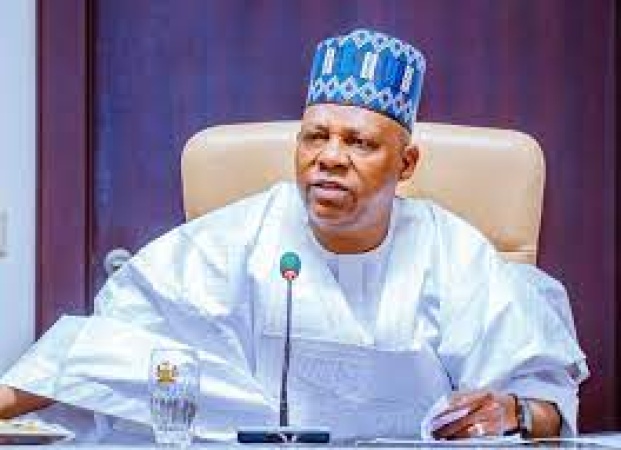
These formed part of the decisions reached at the Council’s 162nd virtual meeting, held on Monday with Vice President Kashim Shettima presiding.
Checks revealed that the Council had last October approved ₦100 billion for the rehabilitation of the police institutions, following the establishment of the committee on the recommendation of President Bola Ahmed Tinubu.
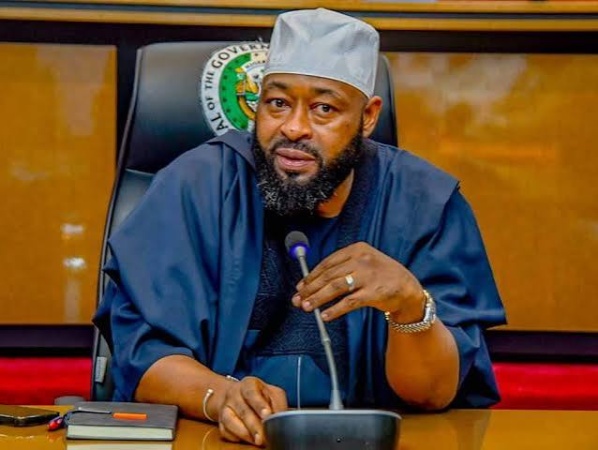
Making his presentation at the meeting, Enugu State Governor Peter Mbah, who is also the Chairman of the NEC Ad-Hoc Committee, disclosed that interventions were currently under way in 13 locations across the country, with 30 per cent of the rehabilitation work completed.
He assured the Council that the additional ₦130 billion would accelerate rehabilitation works, upgrade training facilities and strengthen the capacity of police institutions to accommodate increased recruitment and training requirements.
The intervention is also expected to support preparations for the recruitment of 50,000 police personnel and improve the country’s security training infrastructure.
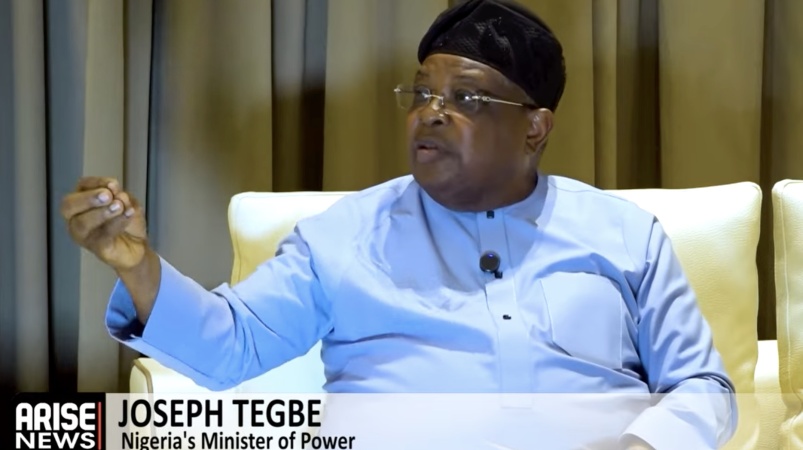
The Minister of Finance and Coordinating Minister of the Economy, Taiwo Oyedele, painted a rosy picture of the economy as he declared that economic indicators had continued to improve, with real Gross Domestic Product (GDP) growing by 4.43 per cent in the second quarter of 2026, compared with 4.23 per cent in the corresponding period of 2025.
Oyedele told the gathering of governors and certain members of the Federal Executive Council that inflation had declined for the fifth consecutive month to 14.06 per cent in October 2026, its lowest level since September 2020, while external reserves stood at $54.87 billion as of November 12, 2026.
According to the minister, Nigeria’s trade surplus increased from ₦10.2 trillion in the first half of 2025 to ₦20.1 trillion in the corresponding period of 2026, while net revenue distributed through the Federation Account Allocation Committee (FAAC) rose by 44 per cent, from ₦15.2 trillion in 2024 to ₦21.9 trillion in 2025.
The Finance Minister, however, admitted that the improving economic indicators had yet to translate sufficiently into relief for households and businesses, particularly in the areas of food prices, electricity costs, access to affordable credit and employment.
He expressed concern that food inflation remained elevated at 19.13 per cent in October, while high lending rates and energy costs continued to place pressure on businesses and household incomes.
The Council also considered two memoranda on disaster management and early childhood development, presented by the Minister of Budget and Economic Planning, Senator Atiku Bagudu.
The first involved the proposed $350 million Accelerating Resilience through Investment Systems and Engagement (ARISE-Nigeria) Project, a six-year World Bank-supported programme designed to strengthen the country’s capacity to anticipate, prepare for and respond to floods, droughts, fires and other natural disasters.
The programme will improve emergency operations centres, early warning systems, weather monitoring and disaster response financing at federal and state levels.
When operational, between five and 10 states are expected to participate in the initial phase, with selection based on disaster risk exposure, institutional readiness and commitment to emergency preparedness.
The second memorandum concerned Nigeria’s State-Led Early Childhood Development Programme, designed to improve children’s access to healthcare, nutrition, early learning and protection services across the 36 states and the Federal Capital Territory (FCT).
It will be financed from a proposed $500 million World Bank financing arrangement, with the Global Financing Facility indicating potential additional grant support of $30 million.
Under the programme, early childhood development hubs will connect primary healthcare facilities with childcare, preschool education and other essential social services, particularly in underserved communities.
State governors are expected to provide leadership for implementation, resource mobilisation and accountability, while existing institutions will coordinate service delivery.
On the proposed National Identity Management Commission (NIMC) Act 2026, the Council called for stronger collaboration between the commission and state governments to accelerate the registration of Nigerians and improve the integration of the National Identification Number (NIN) into public services.
The initiative is expected to strengthen public service delivery, improve tax administration, eliminate duplicate records and reduce fraud in government payrolls, pensions and social intervention programmes.
The NEC also urged state governments to fast-track identity registration and data capture to ensure that all Nigerians are covered by the national identity system.
In his opening remarks, the Chairman of the Council, Vice President Kashim Shettima, said Nigeria’s economic future and the lasting success of President Bola Tinubu’s reforms depended on building strong institutions.
This, he noted, entailed that ministries and the 36 states of the federation must take into consideration those affected before confronting their responsibilities.
He said: “While His Excellency, President Bola Ahmed Tinubu, GCFR, makes the difficult reforms to stabilise the economy, we must all participate in establishing institutions capable of sustaining the benefits of those reforms. This requires ministries and States to settle practical responsibilities without losing sight of the people affected. To achieve this, we must cooperate.
“We must allow a sound practice in one jurisdiction to inform decisions elsewhere, while respecting the differences in capacity and circumstance across the country. The quality of our cooperation will shape the inheritance we leave,” he stated.
VP Shettima urged Council members to consider the Nigerian who would depend on the decisions they make years from now. (Nigerian Tribune)