ADAD

Updating your news feed...
NEWS EXPRESS is Nigeria’s leading online newspaper. Published by Africa’s international award-winning journalist, Mr. Isaac Umunna, NEWS EXPRESS is Nigeria’s first truly professional online daily newspaper. It is published from Lagos, Nigeria’s economic and media hub, and has a provision for occasional special print editions. Thanks to our vast network of sources and dedicated team of professional journalists and contributors spread across Nigeria and overseas, NEWS EXPRESS has become synonymous with newsbreaks and exclusive stories from around the world.



.webp)

.webp)



Loading banners
Loading banners...

Nigeria has formally protested calls by an anti-immigrant group in South Africa for a ban on Nigerians entering the country, as the South African government distanced itself from the campaign and rejected the blanket criminalisation of Nigerian nationals.
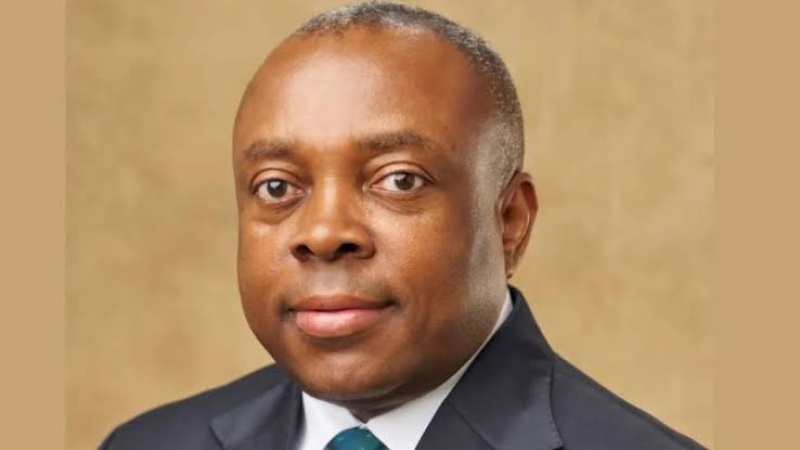
Nigeria’s High Commissioner to South Africa, Olufemi Fani-Kayode, conveyed the country’s concerns to South Africa’s Department of International Relations and Cooperation (DIRCO) following a protest in Pretoria by the March and March group, whose members accused Nigerians of involvement in drug trafficking and demanded restrictions on their entry into the country.
Fani-Kayode also communicated the development to Nigeria’s Ministry of Foreign Affairs in Abuja, while assuring Nigerians resident in South Africa that the mission was working with the host authorities to safeguard their welfare.
His Special Adviser on Media and Communications, Lizzy Okoji, confirmed the diplomatic communication to Daily Sun, although she declined to disclose its full contents.
“Ambassador Olufemi Fani-Kayode has formally expressed his concerns about these troubling sentiments in an official communication to the Director-General of DIRCO, the South African Ministry of Foreign Affairs, and communicated same to our Ministry of Foreign Affairs in Abuja,” Okoji said.
She urged Nigerians in South Africa to remain calm and take necessary precautions, stressing that the high commission was monitoring developments.
“We are studying the situation closely and will do all we can, in conjunction and collaboration with the South African authorities, to keep our citizens safe,” Fani-Kayode said.
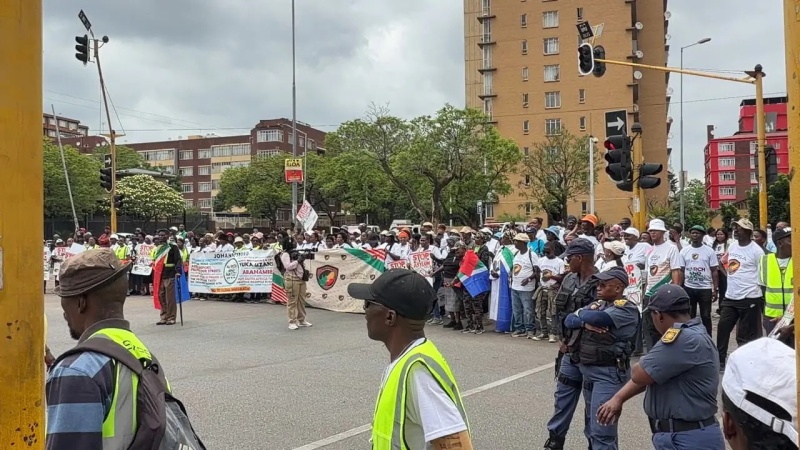
The diplomatic intervention followed a protest march in Pretoria by members of March and March, who demanded that the South African government prohibit Nigerians from entering the country over allegations of drug-related crimes.
The protesters, led by Jacinta Ngobese-Zuma, marched through Sunnyside, a Pretoria suburb with a substantial Nigerian population, sometimes referred to as Little Lagos.
Ngobese-Zuma questioned the concentration of Nigerians in the area and challenged the community’s association with Lagos.
“I am being told here that we have entered Sunnyside, the home of Nigerians. I am inviting Nigerians to come out let’s talk to each other. We want to know who gave you this place and called it Nigeria. Who gave you permission to call this place Lagos or whatever you call it?” she said.
The group’s legal officer, Xolani Zuma, went further, demanding an outright ban on Nigerian nationals.
“The state must ban Nigerians from South Africa. They must ban Nigerians until they stop selling drugs to our people. The rest of Africa we are fine, but we do not want Nigerians in South Africa anymore, that is what we are saying,” Zuma declared.
However, the South African government rejected the group’s position, insisting that the protest did not reflect its policy towards Nigerians or other foreign nationals.
Spokesperson to South Africa’s Minister of International Relations and Cooperation, Phindile Kunene, told *Daily Sun* that although the country’s constitution guaranteed the right to protest, demonstrations must remain peaceful and unarmed.
“The actions of March and March do not represent the position of the South African government.
“We do not condone the wholesale characterisation of Nigerians or nationals of any other country through a criminal lens,” Kunene said.
She acknowledged that South Africa had previously raised concerns about the involvement of some Nigerian nationals in criminal activities, including drug-related offences and wire fraud.
According to her, Minister of International Relations and Cooperation, Ronald Lamola, raised the concerns during discussions with a high-level Nigerian government delegation in Abuja in July 2026.
Kunene, however, stressed that law enforcement must target individuals suspected of criminal conduct rather than subject entire national communities to suspicion or collective punishment.
She said measures against criminal activities should be evidence-based and directed at offenders, without profiling the broader law-abiding Nigerian population in South Africa.
“We are committed to strengthening bilateral relations between our two nations,” she stated. (The Sun)