ADAD

Updating your news feed...
NEWS EXPRESS is Nigeria’s leading online newspaper. Published by Africa’s international award-winning journalist, Mr. Isaac Umunna, NEWS EXPRESS is Nigeria’s first truly professional online daily newspaper. It is published from Lagos, Nigeria’s economic and media hub, and has a provision for occasional special print editions. Thanks to our vast network of sources and dedicated team of professional journalists and contributors spread across Nigeria and overseas, NEWS EXPRESS has become synonymous with newsbreaks and exclusive stories from around the world.











Loading banners
Loading banners...

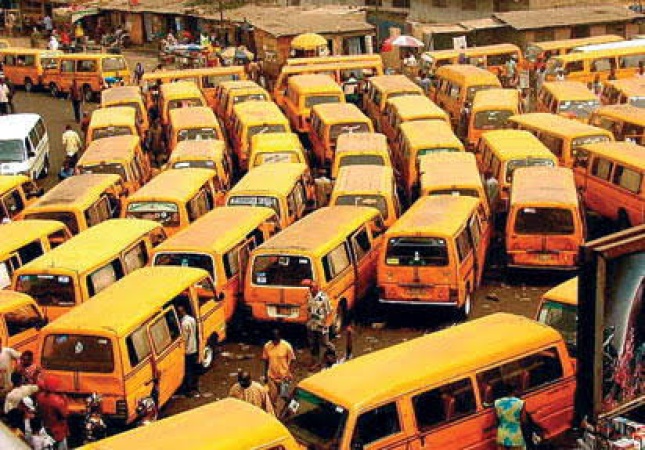
Commercial buses in Lagos
Commercial bus drivers in Lagos face daily demands for money from groups of men operating around bus stops and loading points, with disputes over the payments sometimes resulting in dangerous confrontations involving motorists, commuters and collectors.
A near-fatal incident witnessed along the Oshodi axis recently has renewed concerns about the activities of roadside touts and the risks they pose to road users.
The incident occurred when a commercial bus travelling from Secretariat, Alausa, to Oshodi, Toyota, and onward to Mile 2 stopped to drop off and pick up passengers.
As the vehicle stopped, some men approached the driver to demand money. Commercial drivers plying the route reportedly pay between N200 and N500 to about four different collectors at successive points in Oshodi, including when stopping to pick up or drop off passengers.
Trouble started when one of the touts demanded N500. The bus assistant requested N200 change but refused to release the money until he receives the change.
The disagreement escalated when the man held onto the bus as the driver attempted to move. The driver accelerated despite the extortionists grip, forcing him to run alongside the moving vehicle.
Moments later, another car nearly collided with the bus, leaving the man dangerously close to being crushed.
A commercial driver, Osinawata Onyeka, who operates along the Alausa Secretariat, Oshodi, Cele and Mile 2 routes, said roadside touts had persisted for more than 10 years, dating back to when he first arrived in Lagos.
He said drivers could hardly refuse to pay or challenge the collectors because the practice had become entrenched in the transport system.
According to him, drivers have learnt to comply to avoid confrontations, although the number of people demanding money along some routes has become excessive.
Onyeka said touts sometimes harassed drivers even when they had barely made any money, particularly during their first trips of the day or when they had insufficient fuel or passengers.
He added that payments to roadside touts, bus parks and other transport operators increased the cost of running commercial vehicles and ultimately affected fares paid by commuters.
He maintained that transport fares could be reduced if such extortions were properly checked.
Another commercial driver, Deji Olaniyi, who operates between Oshodi, Cele and Mile 2, said touts had become so familiar that even newcomers to Lagos quickly learn about them.
Olaniyi, who was born and raised in Lagos, said he knew about payments to bus park operators and agberos long before becoming a commercial driver.
He said motorists had little choice but to adapt to the existing system to avoid unnecessary trouble, describing the situation as unfortunate despite growing expectations for a more organised transport sector.
Reacting to the incident, Adenusi Patrick of Safety Beyond Borders, a non-governmental organisation, criticised the activities of touts, saying they caused unnecessary delays, financial losses and environmental pollution.
He said the collections forced commercial vehicles to spend more time on the roads, as drivers often had to settle the collectors before continuing their journeys.
According to him, the resulting delays contributed to traffic congestion, increased fuel consumption and heightened pollution, while confrontations sometimes exposed drivers to assault.
Patrick argued that the practice would be difficult to eradicate without firm government action, alleging that the continued activities of touts reflected the failure of authorities to effectively address the problem.
He also suggested that collective resistance by private motorists and transport operators could draw government attention to the situation.
Patrick, however, warned that allowing the practice to continue could entrench extortion as a livelihood for successive generations, with wider consequences for public safety and the transport system.
The Lagos State Ministry of Transportation, however, maintained that roadside extortions by unauthorised individuals were illegal.
The ministry’s Public Relations Officer, Bolanle Ogunlola, said only duly authorised members of recognised transport unions were permitted to collect legitimate and harmonised union dues from transport operators, and such payments must be made at designated motor parks.
He said: “Any collection of money from commercial drivers outside these approved arrangements, particularly by unauthorised individuals operating on the roads, is illegal and unacceptable.”
Ogunlola said the ministry, in collaboration with relevant transport union authorities, had sustained enforcement operations to identify, apprehend and sanction individuals involved in illegal roadside collections.
“Several of these impersonators have been arrested and prosecuted by the Ministry as part of ongoing efforts to eliminate the practice,” she added.
The Guardian also contacted the Lagos State Secretary of the National Union of Road Transport Workers (NURTW), Comrade Usman Olaniran Teslim, for the union’s position on the matter, but further efforts to obtain his comments were unsuccessful.
For commuters who depend on commercial transport daily, the incident raises questions about the regulation of roadside touts, the identification of authorised collectors and the protection of road users from confrontations over disputed payments.
A transparent and accountable system for collecting legitimate transport dues could help reduce unnecessary disputes, with drivers clearly informed about what they are required to pay, who is authorised to collect the money and where payments should be made.
The incident at Oshodi, in which a disagreement over N500 nearly cost a man his life, underscores the dangers of allowing unauthorised collections and confrontations to persist on busy roads.
With millions of Lagos residents relying on public transport for their daily activities, the safety of drivers, commuters and other road users must take precedence over disputed roadside levies. (The Guardian)