ADAD

Updating your news feed...
NEWS EXPRESS is Nigeria’s leading online newspaper. Published by Africa’s international award-winning journalist, Mr. Isaac Umunna, NEWS EXPRESS is Nigeria’s first truly professional online daily newspaper. It is published from Lagos, Nigeria’s economic and media hub, and has a provision for occasional special print editions. Thanks to our vast network of sources and dedicated team of professional journalists and contributors spread across Nigeria and overseas, NEWS EXPRESS has become synonymous with newsbreaks and exclusive stories from around the world.













Loading banners
Loading banners...

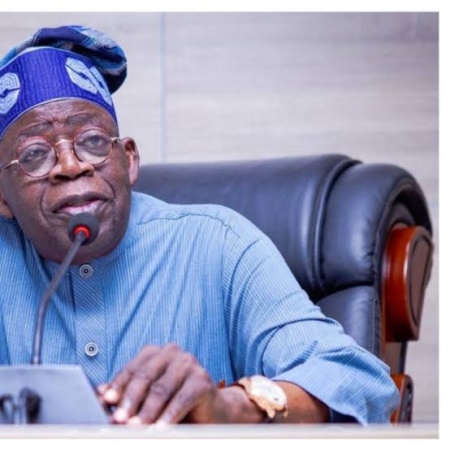
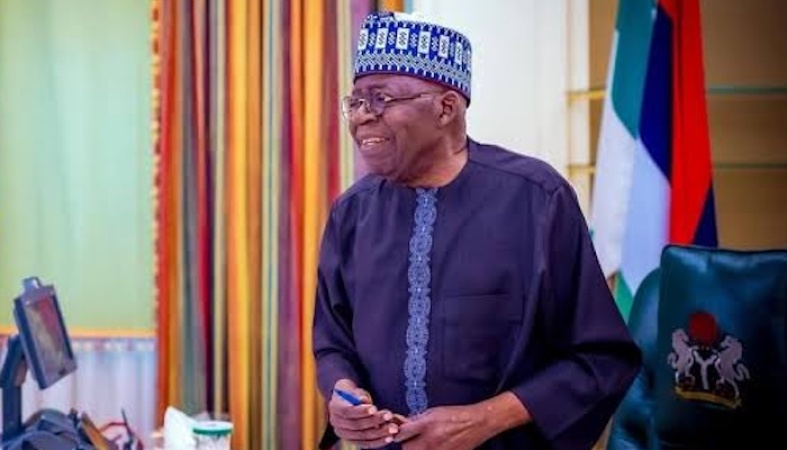
President Tinubu
By SUMAILA OGBAJE
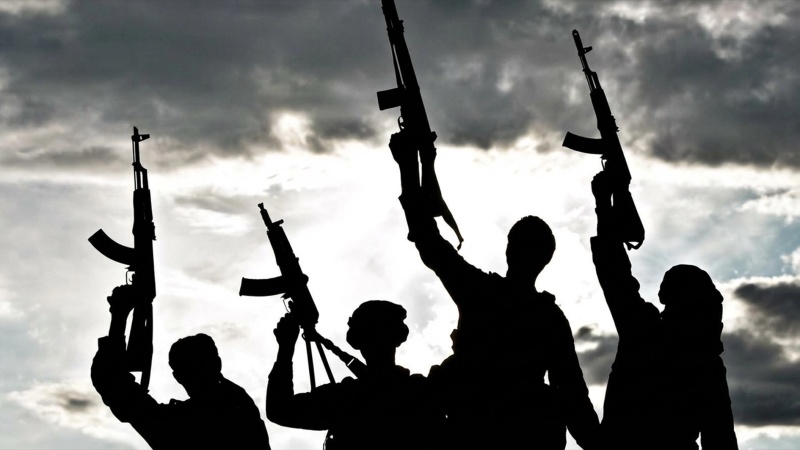
President Bola Tinubu says Nigerian security forces have killed or arrested four of eight identified senior global terrorist leaders, in what he describes as evidence of the country’s growing capacity to dismantle terrorist networks.
Tinubu, represented by the National Security Adviser (NSA), Malam Nuhu Ribadu, said this at the opening of the 2026 Chief of Defence Intelligence (CDI) Annual Conference, on Monday in Abuja.
He said the operational successes reflected sustained and coordinated pressure on terrorist organisations.
The President cited the elimination of senior Islamic State leader, Abu Bilal al-Minuki, in May 2026, and the arrest of Omar Hassan Ma’adou as notable examples of the gains recorded.
“Under this administration, four of eight identified senior terrorist leaders have been killed or arrested.
“These operations reflect sustained and coordinated pressure on terrorist groups,” he said.
Tinubu stressed that the immediate priority of his administration was to translate the operational gains into lasting security by sustaining pressure on terrorist leadership, logistics, financing and recruitment networks.
He noted that Nigeria’s security challenges, including terrorism, banditry, kidnapping, cyber threats and transnational organised crime, had become increasingly dynamic, interconnected and technology-driven.
“Addressing these asymmetric challenges require robust, anticipatory intelligence capable of providing timely support for strategic decisions,” he said.
The president also noted that insurgent groups continued to adapt their strategies and seek new areas of influence, requiring security agencies to remain ahead of their evolving tactics.
He emphasised the need to sustain coordinated operations against terrorist organisations, disrupt their support networks and deny them freedom of action.
He revealed that more than 1,000 convictions had been secured following over 2,000 terrorism-related trials in recent years.
He described the development as a significant demonstration of the administration’s commitment to ensuring accountability for terrorism and other security-related crimes.
Tinubu further revealed that incidents of illegal oil bunkering and vandalism of critical oil and gas installations in the Niger Delta had declined from 52 in the first quarter of 2026 to 21 in the second quarter and 17 in the third quarter.
He said the figures represented a 46.8 per cent reduction between the first and third quarters, attributing the improvement to sustained security operations and enhanced intelligence.
He said the government would sustain efforts to dismantle criminal and terrorist networks, protect vulnerable communities and strengthen national security ahead of the 2027 general elections.
“Every Nigerian must be able to live, work and exercise their democratic rights in safety,” he said.
On intelligence modernisation, the president said emerging technologies, including artificial intelligence, machine learning, cyber capabilities and unmanned systems, offered significant opportunities to improve intelligence gathering and operational effectiveness.
He said Nigeria needed a modern intelligence architecture capable of integrating technological innovation, human expertise and strategic partnerships.
Tinubu emphasised that artificial intelligence-assisted analysis, geospatial intelligence and unmanned surveillance should be integrated into intelligence operations to convert information into timely and actionable intelligence.
He cautioned that technological advancement must be accompanied by responsible oversight, stressing that artificial intelligence outputs must be subjected to verification and accountable human judgment.
He said the Federal Government was also prioritising data protection, cybersecurity and the modernisation of national databases to strengthen the protection of critical national infrastructure.
According to him, the objective is to place accurate, integrated and participatory intelligence at the foundation of a capability-based national security framework.
He called for stronger collaboration among the Armed Forces, Defence Intelligence Agency, National Intelligence Agency, Department of State Services, Nigeria Police Force and other relevant security institutions.
He said no single institution possessed all the information, technology, expertise and operational capabilities required to address contemporary security threats.
The president also highlighted the importance of international intelligence cooperation, disclosing that Nigeria had strengthened security relationships with the United States, United Kingdom, China, United Arab Emirates, Türkiye and neighbouring African countries.
He said the partnerships would continue to support intelligence sharing, training and technological cooperation, guided by Nigeria’s sovereignty and national interests.
Earlier, the Minister of Defence, retired Gen. Christopher Musa, commended intelligence personnel for their professionalism and contributions to national security.
Musa urged them to remain proactive, stressing that credible, timely and actionable intelligence was critical to successful military operations.
He also reaffirmed the federal government commitment to indigenous defence production, describing local manufacturing as essential to achieving sustainable military capabilities.
Similarly, the Chief of Defence Staff (CDS), Gen. Olufemi Oluyede, said intelligence remained fundamental to operational planning, strategic decision-making and effective military response.
Oluyede called for increased investment in artificial intelligence, advanced data analytics, geospatial intelligence and unmanned systems.
He said the armed forces would continue to prioritise intelligence integration, capacity development and technological innovation.
The CDS stressed the need to transform security operations from largely reactive responses to proactive, intelligence-led engagements capable of anticipating and disrupting threats before they materialised.
The conference, organised by the Defence Intelligence Agency, is themed, “Optimising Intelligence through Technological Innovations for Effective Strategic Operations in a Complex Security Environment”.
It also coincides with the 40th anniversary of the National Security Agencies Act, 1986. (NAN)