ADAD

Updating your news feed...
NEWS EXPRESS is Nigeria’s leading online newspaper. Published by Africa’s international award-winning journalist, Mr. Isaac Umunna, NEWS EXPRESS is Nigeria’s first truly professional online daily newspaper. It is published from Lagos, Nigeria’s economic and media hub, and has a provision for occasional special print editions. Thanks to our vast network of sources and dedicated team of professional journalists and contributors spread across Nigeria and overseas, NEWS EXPRESS has become synonymous with newsbreaks and exclusive stories from around the world.

















Loading banners
Loading banners...
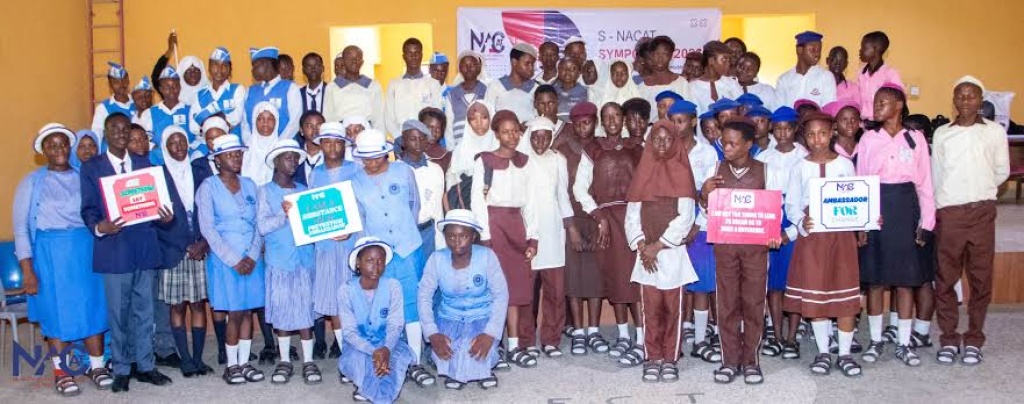
A cross section of participants
The Network Against Corruption and Trafficking (NACAT) on Wednesday, November 11, 2026, held the 2026 edition of its Student Network Against Corruption and Trafficking (S-NACAT) Symposium at Modern Secondary School, Maitama, Abuja, bringing together students from eight secondary schools to promote integrity, responsible citizenship and collective action against corruption and human trafficking.
The symposium, organised under the theme, “Building Responsible Young Citizens for a Better Nigeria,” and the sub-theme, “Young Voices, Stronger Communities: Standing Against Corruption and Trafficking,” provided a platform for students to deepen their understanding of corruption, human trafficking and exploitation, while exploring the roles they can play in addressing these challenges in their schools, families and communities.
The participating schools were Government Secondary School, Gosa; Government Secondary School, Kuje; Government Secondary School, Airport; Government Secondary School, Ushafa; Government Girls Secondary School, Dutse; Government Girls Secondary School, Wuse; Dorben College of Digital Technology; and the host institution, Modern Secondary School, Maitama.
In her welcome address, the Programme Manager of NACAT, Joy Tomo, said the symposium was more than an opportunity to bring students together for competitions and presentations, describing it as an avenue to create awareness, encourage meaningful conversations and remind young people of their responsibility in shaping the society they want to live in.
Tomo said the theme of the symposium reflected the shared responsibility of building a society where integrity, accountability, human dignity and respect for human rights are upheld, stressing that the values young people develop, the decisions they make and the actions they take today would significantly influence the kind of society Nigeria becomes in the future.
She noted that corruption and human trafficking remained serious challenges affecting individuals, families and communities, adding that although discussions around these issues often centred on government institutions, law enforcement agencies and policymakers, the importance of educating and engaging young people could not be overlooked.
According to her, “Young people must be equipped with the knowledge and values needed to recognise corruption, trafficking and exploitation, understand their consequences and take appropriate action against practices that undermine the well-being of individuals and society.”
She explained that this understanding informed NACAT’s establishment of the Student Network Against Corruption and Trafficking, popularly known as S-NACAT, an initiative designed to engage students, build their awareness of corruption and human trafficking, and encourage them to become responsible citizens who are willing to speak out and take positive action.
Tomo emphasised that the initiative was founded “on the belief that young people should not merely be taught about the problems confronting society but should also be actively involved in identifying and promoting solutions.”
She maintained that students did not have to wait until adulthood, occupy public offices or assume positions of authority before contributing to national development, noting that their voices and choices mattered even at their present stage of life.
The NACAT Programme Manager further explained that the symposium was structured to promote active student participation, critical thinking, confidence and collaboration through activities including inter-school debates, poetry presentations, spelling bee competitions, student engagement sessions and team-building exercises.
She said the activities were not simply organised to determine winners or award trophies and certificates but were intended to provide students with opportunities to express their ideas, challenge themselves intellectually, learn from one another and appreciate the importance of collective action in addressing societal challenges.
Addressing the students directly, Tomo urged them to see themselves as more than competitors, describing them as young people capable of positively influencing their schools, families and communities.
She encouraged them not to be afraid to ask questions, challenge harmful practices, stand up for what is right and use their voices responsibly, adding that the value of their participation should not be measured solely by whether they emerged winners in the day’s competitions.
According to her, the most important outcome was for every participant to leave the symposium with a stronger understanding of their responsibility in building a society founded on integrity, accountability and respect for human rights.
Tomo also called on teachers and school administrators to continue creating enabling environments where students could learn, freely express their views and develop the confidence required to become responsible leaders.
She stressed that the values of integrity, accountability and respect for others should not be restricted to classroom lessons but must also be demonstrated and reinforced through everyday actions and conduct.
She equally acknowledged the contributions of NACAT’s partner organisations, invited guests and other stakeholders, expressing appreciation for their support and commitment to investing in young people. She called for stronger partnerships to expand the reach and impact of the S-NACAT initiative.
Tomo concluded by reiterating that building a better Nigeria was not the responsibility of a single institution or generation but a collective duty requiring the commitment of every individual.
She explained that every honest decision, act of courage, voice raised against injustice and effort made to protect another person contributed to the kind of society Nigerians hoped to build.
The symposium also featured goodwill messages from representatives of the National Orientation Agency (NOA), Child and Youth Protection Foundation (CYPF), Federal Ministry of Youth Development, National Agency for the Prohibition of Trafficking in Persons (NAPTIP), Fasasi Foundation and Engaging Youth in Anti-Corruption and Cybercrime Education (EYACE).
The representatives used the opportunity to underscore the importance of engaging young people in efforts to promote responsible citizenship and address social challenges, particularly corruption, human trafficking and other forms of exploitation.
A major highlight of the symposium was the inter-school debate, spelling bee and poetry presentation, which provided participating schools with opportunities to demonstrate their knowledge, communication skills, creativity and understanding of the issues addressed by the programme.
At the end of the competitions, Modern Secondary School, Maitama, emerged winner of both the inter-school debate and spelling bee, while Government Secondary School, Kuje, took the top position in the poetry presentation.
Another major highlight was the announcement of scholarships for four outstanding students by the NACAT Chairman, Samson Tega who committed to paying their West African Examinations Council (WAEC) examination fees.
The scholarship beneficiaries were Onyemaechi Prosper Nmesoma, an SS3 student of Government Secondary School, Kuje; Osisanya Anjola Victoria, an SS2 student of Modern Secondary School, Maitama; Christopher Chrissy, an SS2 student of Modern Secondary School, Maitama; and Eze Rita, an SS3 student of Modern Secondary School, Maitama.
The scholarship support was aimed at recognising the students’ outstanding performance and providing assistance towards their educational advancement, with the NACAT Chairman undertaking responsibility for their WAEC fees.
The recognition of the four students added an educational support component to the symposium, complementing its broader objective of encouraging young people to embrace positive values, develop their abilities and contribute meaningfully to society.
The 2026 S-NACAT Symposium brought together students, school administrators, teachers, government representatives, civil society organisations and other stakeholders around a common platform for discussing the role of young people in promoting integrity and protecting their communities from corruption and human trafficking.
Through its inter-school competitions, stakeholder engagement and scholarship support, the programme reinforced NACAT’s commitment to youth participation, awareness creation and the development of a generation of responsible citizens willing to stand against corruption, trafficking and exploitation.
The symposium ended with a call for sustained collaboration among schools, parents, government institutions, civil society organisations and young people to strengthen the values of accountability, integrity and respect for human rights, while ensuring that students remain active participants in efforts to build a better Nigeria.