ADAD

Updating your news feed...
NEWS EXPRESS is Nigeria’s leading online newspaper. Published by Africa’s international award-winning journalist, Mr. Isaac Umunna, NEWS EXPRESS is Nigeria’s first truly professional online daily newspaper. It is published from Lagos, Nigeria’s economic and media hub, and has a provision for occasional special print editions. Thanks to our vast network of sources and dedicated team of professional journalists and contributors spread across Nigeria and overseas, NEWS EXPRESS has become synonymous with newsbreaks and exclusive stories from around the world.
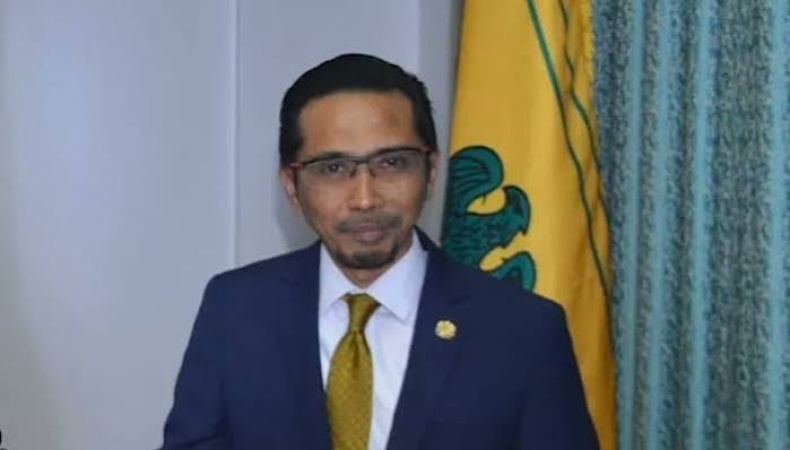
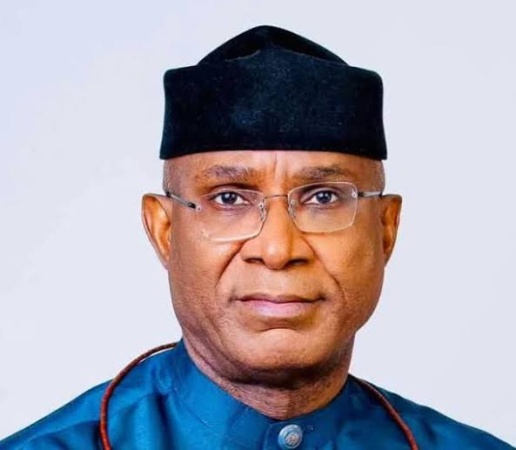
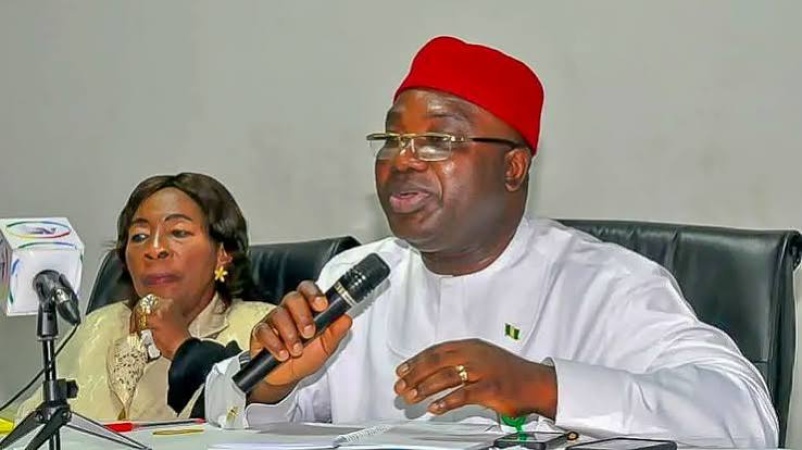
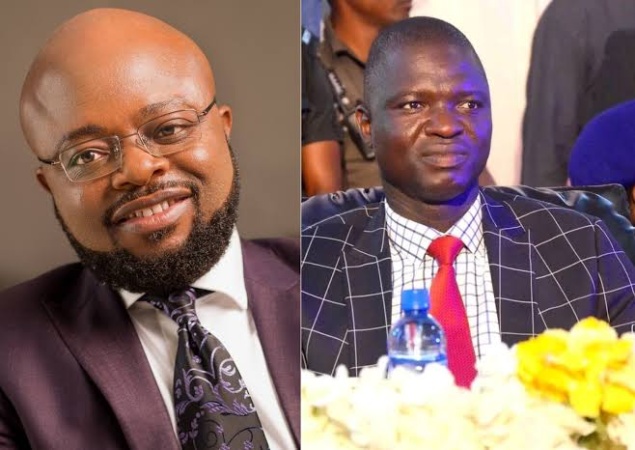
Ebonyi State Gov Francis Nwifuru and his main rival, Chief Ifeanyi Odii
Four years after a lopsided victory, Governor Francis Nwifuru faces a familiar rival in Ifeanyi Odii. But an unresolved debate over power sharing among senatorial zones could reshape the race. Correspondent OGOCHUKWU ANIOKE examines the factors that would shape the contest.
The 2027 governorship election in Ebonyi State is gradually taking shape, with Governor Francis Nwifuru of the All Progressives Congress (APC) seeking a second term and Chief Ifeanyi Odii of the People’s Democratic Party (PDP) preparing for another contest.
Both men met in the 2023 governorship election, which Nwifuru won with 199,131 votes to Odii’s 80,191. The candidate of the All Progressives Grand Alliance (APGA), Prof. Bernard Odoh, came third with 52,189 votes. The Supreme Court affirmed Nwifuru’s victory in January 2024.
Four years after that contest, the political landscape has shifted. Nwifuru is no longer a candidate campaigning to succeed his political mentor, former Governor David Umahi. He is now an incumbent seeking another four years in office, with his performance in government set to feature prominently in the campaign.
Odii, on the other hand, returns to the race with the experience of his previous outing and a renewed argument that the state requires a fresh approach to governance.
Beyond the two candidates, the upcoming election has revived debate over zoning and the Charter of Equity. This informal arrangement has influenced the distribution of high-ranking political offices in Ebonyi since its creation in 1996.
While Nwifuru’s supporters insist the governorship should remain in Ebonyi North for another four years, Odii’s backers argue that the electorate should be allowed to choose who governs the state without regional constraints.
The question is whether debates over zoning, the governor’s stewardship, and the opposition’s ability to build a unified front will shape the next election, just as they did in past contests.
Charter of Equity
During the struggle to create Ebonyi State, two major political blocs united to demand a state carved out of the old Abia and Enugu states: the Afikpo bloc and the Abakaliki bloc.
The Afikpo bloc comprises five local government areas: Afikpo North, Afikpo South (Edda), Ohaozara, Onicha, and Ivo, which now make up Ebonyi South Senatorial District.
The Abakaliki bloc comprises the eight local government areas that make up the Ebonyi North and Ebonyi Central Senatorial Districts.
Blocs were conscious of the need to accommodate shared interests in the distribution of political offices. This gave rise to an informal understanding that power should rotate between them.
Over time, that understanding evolved into a broader framework for rotating the governorship among the state’s three senatorial districts.
Dr Sam Egwu, from Ebonyi North, governed the state from 1999 to 2007. Chief Martin Elechi, from Ebonyi Central, succeeded him and served from 2007 to 2015. Umahi, from Ebonyi South, held office from 2015 to 2023.
Nwifuru, who hails from Ebonyi North, succeeded Umahi in 2023.
Although this sequence shows that all three senatorial districts have produced governors, disagreements persist over whether the arrangement requires power to remain in Ebonyi North for a continuous eight-year cycle, or whether the entire rotation began afresh with an open field.
Former Governor Elechi acknowledged in the build-up to the 2015 general election that while the founding fathers of the state discussed a Charter of Equity, they never completed its signing or legal ratification.
The absence of a legally binding document continues to generate friction over the interpretation of zoning whenever a governorship election approaches.
Supporters of Nwifuru argue that Ebonyi North must complete its two-term, eight-year cycle before power shifts to another district. They maintain that the rotation principle fosters equity and ensures no section of the state is shut out of executive leadership.
Odii and his supporters contend that zoning should not disqualify capable candidates. They emphasise the absence of any binding pact legally restricting the governorship to a specific senatorial district.
The dispute is not new. In the run-up to the 2023 election, similar arguments broke out over whether power should return to Ebonyi North after Umahi’s eight-year tenure representing Ebonyi South.
The critical difference today is that Nwifuru is an incumbent seeking re-election, lending immediacy to the zoning debate.
For the governor’s loyalists, a second term completes Ebonyi North’s rightful turn. For Odii’s camp, voters should decide the race strictly on the candidates’ scorecards, manifestos, and capacity to deliver.
The dispute has already sparked open confrontations between rival groups. In June 2026, the Ebonyi South Youth Assembly urged Odii to drop his bid, arguing that his ambition threatens the state’s established power rotation.
The controversy is expected to trail the campaign, as political stakeholders and community groups work to sway voters toward their respective interpretations of the Charter of Equity.
The 2023 contest
The 2023 governorship election offers crucial background for understanding the current political posture of both contenders.
Nwifuru entered that race as Speaker of the Ebonyi State House of Assembly and a key political ally of Umahi, who had defected from the PDP to the APC in 2020.
His emergence as the APC candidate came through a succession process heavily steered by Umahi’s political machinery. The APC subsequently retained power in the state, with Nwifuru defeating Odii and Odoh.
Odii, a businessman and philanthropist from Onicha Local Government Area in Ebonyi South, emerged as the PDP standard-bearer following a fiercely contested primary.
He campaigned on promises of rapid industrialisation, youth empowerment, economic expansion, and improved welfare. His platform presented him as an entrepreneur equipped to inject private-sector efficiency into public administration.
However, the PDP struggled to recover from the loss of state power after Umahi’s departure. The party also had to grapple with internal divisions and the logistical hurdle of converting historical presence into active electoral turnout.
The official tally gave Nwifuru victory by a margin of 118,940 votes, an outcome later affirmed by the courts.
For Odii, the defeat marked a setback rather than the end of his political aspiration. His return in 2027 provides a platform to re-examine the issues that drove the previous election and present a fresh pitch to the electorate.
For Nwifuru, the 2023 outcome secured his initial mandate. His task now is to convince voters that his performance justifies an extension.
Nwifuru’s track record
Nwifuru’s 2027 campaign will rely heavily on his record since taking office in May 2023.
His administration framed its development agenda around the “People’s Charter of Needs,” prioritising infrastructure, basic and tertiary education, healthcare delivery, agriculture, human capital development, and rural transformation.
Road construction has stood out as one of the administration’s flagship efforts. The government has pointed to extensive road projects across the state, ranging from rigid concrete pavements in rural communities to rehabilitated arterial routes in Abakaliki.
The administration has also emphasised overseas and local scholarship schemes, teacher recruitment exercises, infrastructural upgrades in public schools, inputs for farmers, and primary healthcare interventions.
These initiatives underpin the government’s claim that its first term has focused on meeting the direct needs of rural and urban communities.
The 2026 state budget, totalling about N884.87 billion, allocated approximately N749.49 billion to capital expenditure. This heavy capital allocation reflects the government’s drive to expand infrastructure and stimulate development. However, the degree to which these figures translate into durable assets and enhanced public services remains a central test.
While the administration frequently cites completed road mileage and major investments, we will scrutinise these claims alongside project monitoring data, budget implementation reports, and residents’ day-to-day realities.
Voters are likely to examine whether new roads are durable, whether remote communities have received fair project distribution, whether schools are staffed and equipped, and whether state hospitals are functioning effectively.
Similar checks apply to scholarship distributions, agricultural credit, and empowerment grants. Their true value rests not merely on the volume of beneficiaries announced, but on institutional transparency and lasting economic return.
Budget execution has also attracted critical attention. A July 2026 report by Premium Times, which reviewed state budget performance data, highlighted slow capital releases to the health sector in the first half of that fiscal year. Such disclosures place responsibility on the administration to clarify spending timelines and safeguard public service standards.
Supporters can point to visible construction sites and a clear development blueprint; critics can question whether implementation matches original campaign commitments.
2027 campaign will force both sides to articulate these records. Nwifuru must demonstrate what his administration has completed, account for pending projects, and outline his goals for an additional term.
Ultimately, his record will be evaluated not just by the volume of projects initiated or commissioned, but by their quality, geographic spread, and tangible impact on daily living conditions.
Odii: the challenger
Odii steps into the 2027 race from a different vantage point than he did in 2023.
No longer a first-time candidate introducing himself to voters; he is an experienced contender returning to challenge Nwifuru with an established political base.
His campaign continues to advance the “Anyi G’Emeya” agenda, which centres on economic diversification, industrial growth, commercial agriculture, job creation, and social welfare.
Odii argues that Ebonyi must open up to private capital and unlock commercial opportunities for its youthful demographic. His background in commerce remains the focal point of his argument that private-sector methods can modernise the state’s economy.
The central test for the PDP candidate lies in translating broad economic targets into workable implementation strategies.
Industrialisation demands more than policy declarations; it requires clear land administration, steady power, efficient transport networks, a skilled workforce, accessible capital, and reliable regulatory guarantees.
Likewise, commercial agriculture requires cold-chain infrastructure, processing hubs, functional commodity markets, affordable credit, and dependable feeder roads connecting rural farms to urban centres.
Odii will need to demonstrate how his proposed administration would finance these initiatives, identify sector-by-sector priorities, and establish verifiable performance benchmarks.
He must also confront the zoning question directly. His position remains that governorship elections should be determined by merit and universal suffrage rather than unwritten agreements.
While this perspective appeals to voters who reject rotational limits, it faces pushback from blocs that view power rotation as vital to balancing communal and senatorial interests.
The PDP must also resolve the organisational weaknesses laid bare in 2023, when Odii’s 80,191 votes trailed far behind Nwifuru’s total.
The party needs to show how it will expand its coalition, reinforce ward structures, and attract voters who backed the APC or third parties in the last cycle.
The 2027 contest will equally measure whether the PDP can maintain internal cohesion and run an issues-based campaign rather than relying strictly on opposition critique.
Odii’s challenge is to prove that his proposed model offers a workable, superior path forward.
While his business credentials and reform agenda form the foundation of his campaign, voters will look for clear policy roadmaps, reliable financing plans, and institutional mechanisms to back them up.
What lies ahead?
The 2027 Ebonyi governorship race will unfold against the backdrop of Nwifuru’s performance, the PDP’s push to reclaim power, and an unresolved dispute over zoning.
Nwifuru will rely on his executive scorecard to seek a renewal of his mandate. At the same time, Odii will attempt to convince the electorate that the state’s challenges call for a change in leadership.
The APC’s incumbency advantages and extensive statewide reach will play a major role in the outcome. In turn, the PDP’s organisational stamina, internal unity, and ability to expand its base will be critical factors.
Yet political alignments alone will not settle the contest. Voters will make their choices amid competing local interests, traditional party loyalties, economic pressures, and evaluations of candidate competence.
While the zoning debate will remain central because it touches on equitable power distribution among the three senatorial zones, it will share the stage with basic governance issues: roads, employment, classroom standards, functional hospitals, public security, and the cost of living.
For Nwifuru, the core challenge is whether his stewardship will convince the state to vote for continuity. For Odii, the test is whether his platform and political groundwork can prove he represents a viable alternative.
The 2023 election established Nwifuru as governor and Odii as his principal challenger. The 2027 contest offers both men a rematch, with the debate over rotational equity and executive performance set to anchor the campaign. (The Nation)