ADAD

Updating your news feed...
NEWS EXPRESS is Nigeria’s leading online newspaper. Published by Africa’s international award-winning journalist, Mr. Isaac Umunna, NEWS EXPRESS is Nigeria’s first truly professional online daily newspaper. It is published from Lagos, Nigeria’s economic and media hub, and has a provision for occasional special print editions. Thanks to our vast network of sources and dedicated team of professional journalists and contributors spread across Nigeria and overseas, NEWS EXPRESS has become synonymous with newsbreaks and exclusive stories from around the world.











Loading banners
Loading banners...

The Nigerian National Petroleum Company (NNPC) Limited has countered the claims by the Nigerian Independent System Operator (NISO), and the Federal Ministry of Power that operational constraints on gas transportation network was responsible for the recent decline in electricity generation.
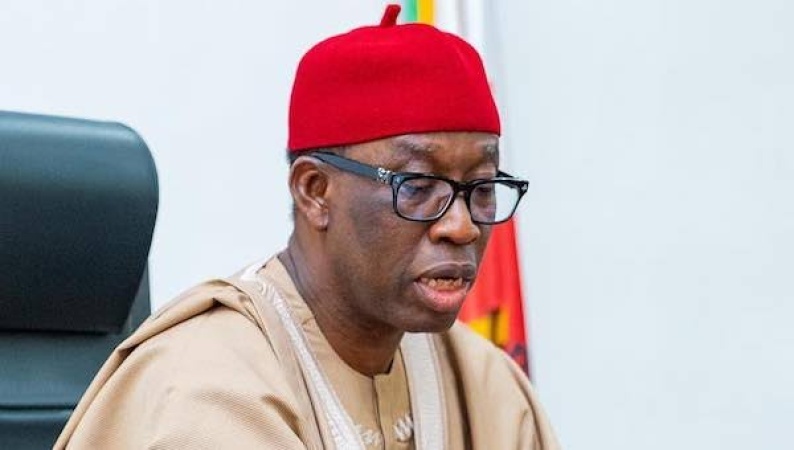
This is just as the Minister of Power, Mr. Joseph Tegbe, yesterday promised that electricity supply to Abuja, Lagos, Kwara and Oyo states, which were currently experiencing outages would improve within the next 24 hours.
The Transmission Company of Nigeria (TCN) has also rejected claims by Ikeja Electric (IKEDC), attributing several Band A feeder outages to “grid instability” and assigning responsibility to the transmission company.
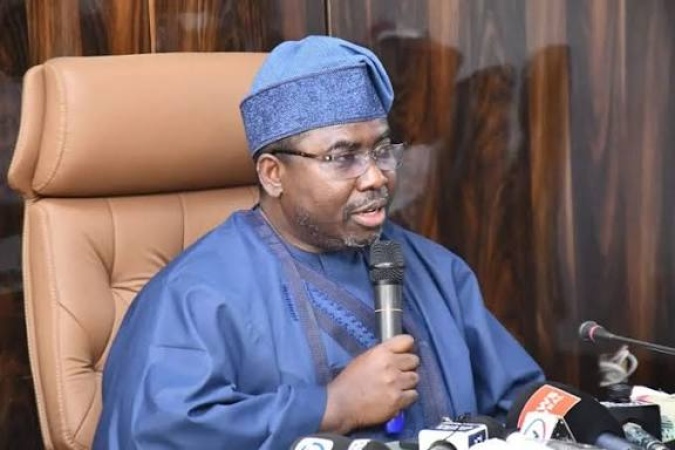
NNPCL’s Chief Corporate Communications Officer, Andy Odeh, said in a statement yesterday that the gas network operated by NNPC Gas Infrastructure Company Limited (NGIC), a subsidiary of the NNPC, remained available to support gas deliveries to power-generating stations nationwide.
“NGIC’s operational records do not indicate transportation-related constraints within its network that explain the current decline in electricity generation,” Odeh said.
NNPC’s clarification followed a November 5 statement by the NISO, which attributed the lower power generation partly to limited gas availability and reduced water inflows into hydroelectric stations.
Specifically, the system operator said the limited availability of “gas has constrained the capacity of affected thermal generating stations to operate at their available levels, while reduced water inflows into reservoirs have impacted the generation capacity of hydroelectric power stations”.
Tegbe also attributed the electricity supply shortfall to planned maintenance at the Egbin Power Station in Lagos and constraints in gas supply to some thermal power stations, which had reduced the amount of electricity available on the national grid.
“Grid operators have, therefore, implemented load shedding in some areas to manage the shortfall. Sabotage of key transmission lines has also restricted the use of alternative routes to supply some locations, especially Lagos,” the minister explained.
But the NNPC said the availability of its gas transportation infrastructure should be assessed separately from gas production, commercial supply arrangements, and actual deliveries to individual power plants.
The company said gas production volumes had grown by about 10 percent year-to-date in 2026, citing efforts to implement the federal government’s gas development and monetisation agenda.
“Gas supply availability is therefore not a challenge as NNPC remains committed to supporting efforts to improve electricity generation through safe, reliable and efficient gas supply and transportation,” it said.
The company said determining the cause of the power shortfall required a broader assessment of the gas-to-power value chain.
According to the oil firm, the review should cover the availability and operational readiness of generating units, plant maintenance schedules, and actual gas offtake, noting that these factors determine whether gas supplied to power plants can be converted into electricity.
“Gas production, commercial supply arrangements and actual deliveries to individual power plants must be assessed separately from the availability of transportation infrastructure,” the NNPC said.
The company called for a coordinated review of operational data by gas suppliers, transporters, power generators, and NISO to identify specific constraints and determine appropriate interventions.
Abuja, Lagos, Kwara, Oyo to Get Improved Supply in 24 Hours
In an update on the power situation, Tegbe said he was aware of the strain the outages had placed on households and businesses in the four affected areas.
Tegbe said his team was working to return the affected generating units to service in phases, with the first units expected to come back online within 48 to 72 hours, counting down from yesterday.
He said the ministry was also working with operators to improve gas supply and accelerate repairs to the damaged infrastructure.
Tegbe also applauded residents of the affected states for their patience.
“I thank everyone affected for their patience and will provide further updates as supply is gradually restored,” he stated.
The current outages, which have lasted several days, have hit the four states, leaving many households and businesses in extended blackout and forcing reliance on alternative power sources.
In the areas impacted by the power cuts, Discos had announced load shedding schedules, with many Band A customers complaining of sharp drops in supply hours.
The situation, the minister earlier said, was compounded by reduced generation from hydro stations due to low water levels, gas constraints to thermal stations, among others, which he stressed limited wheeling to the power distributors.
Meanwhile, the TCN has rejected claims by IKEDC attributing several Band A feeder outages to “grid instability”.
In a statement TCN issued yesterday, the transmission company said the attribution contained in IKEDC’s public notice of November 5 was “inaccurate and misleading.”
TCN said by virtue of Section 67 of the Electricity Act, 2023, the determination of the root cause of disturbances, shortfalls and interruptions on the national grid falls exclusively within the defined functions of the Nigerian Independent System Operator (NISO).
“IKEDC, like every other market participant, has no authority to make such determinations, and NISO has made none attributing the outages in IKEDC’s notice to TCN,” it said.
The company said NISO had already clarified the position in its public statement of November 5, attributing the current decline in power generation to constraints in gas supply to thermal power stations and reduced output from hydroelectric stations due to lower reservoir inflows.
According to TCN, NISO explained that the development reduced available generation, which in turn reduced energy allocated to Discos and led to fewer hours of supply and increased load shedding across distribution networks.
“The shortfall in supply to IKEDC’s customers is a consequence of reduced generation and the resulting allocation, not of any failure of TCN’s transmission network. TCN can only transmit the energy made available to it and cannot transmit energy that is not generated,” it said.
TCN said records for all feeders supplying IKEDC confirmed the picture painted by NISO. Of the interruptions recorded on November 1 and 2, it said 68 per cent were frequency-control load shedding arising from low generation, 26 per cent were due to IKEDC’s non-compliance with load allocation by the National Control Centre (NCC) of NISO, or to faults and works on IKEDC’s own network, while the remaining 6 per cent were TCN planned maintenance, switching or a line limitation.
“None of the recorded interruptions was a TCN equipment fault or trip,” it added.
Of the 46 interruptions recorded on the 33kV feeders named in IKEDC’s notice, TCN said 29 were frequency-control load shedding arising from low generation and 14 were recorded against IKEDC – nine for non-compliance with load allocation and five for faults or trips on its own network.
According to the TCN, the other three were scheduled for maintenance on the Ogba-Alimosho line on November 1.
TCN urged IKEDC and other Discos to “desist forthwith from making unfounded claims about the causes of supply shortfalls to their customers,” saying such claims misinformed customers, undermined public confidence and obscured the real challenges to be resolved by the relevant stakeholders. (THISDAY)