ADAD
Updating your news feed...

NEWS EXPRESS is Nigeria’s leading online newspaper. Published by Africa’s international award-winning journalist, Mr. Isaac Umunna, NEWS EXPRESS is Nigeria’s first truly professional online daily newspaper. It is published from Lagos, Nigeria’s economic and media hub, and has a provision for occasional special print editions. Thanks to our vast network of sources and dedicated team of professional journalists and contributors spread across Nigeria and overseas, NEWS EXPRESS has become synonymous with newsbreaks and exclusive stories from around the world.













Loading banners
Loading banners...

Electricity grid
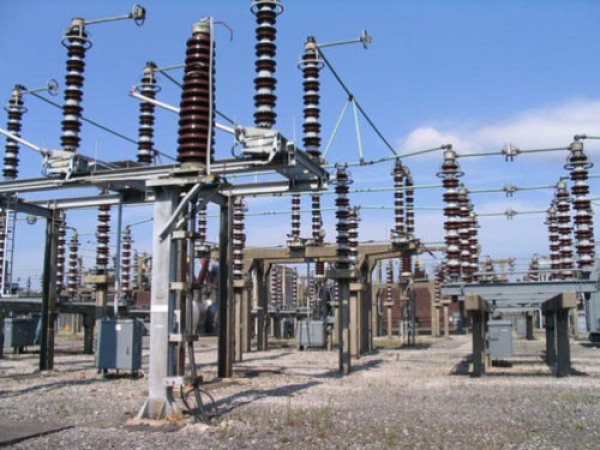
Nigeria’s electricity supply crisis is worsening as inadequate gas supply to thermal power stations and declining output from hydroelectric plants constrain electricity generation, leaving households and businesses across the country with little or no supply.
The latest development has heightened concerns about the reliability of the national grid, as consumers continue to lament prolonged outages, forcing many households and businesses to depend increasingly on alternative electricity sources.
The Minister of Power, Joseph Tegbe, has acknowledged the complaints from consumers, saying preliminary assessments showed that the disruptions were not the result of any major or systemic failure of the national grid but were linked to maintenance and operational issues across parts of the power ecosystem, alongside declining electricity generation.
In a statement issued yesterday, the Ministry said the affected areas included Lagos, Abuja, Ogun, Kwara and Oyo, acknowledging the inconvenience caused to households, businesses and public institutions.
He said: “The Federal Ministry of Power has noted the concerns of Nigerians in some parts of the country that have experienced reduced electricity supply in the past few days, especially Lagos, Abuja, Ogun, Kwara and Oyo States. These are areas that had recently enjoyed noticeable improvements in power supply before the current downtimes.”
He attributed the disruptions to maintenance and operational issues in parts of the electricity value chain, as well as constraints in gas supply to thermal power stations and reduced output from hydroelectric stations due to lower water inflows into reservoirs.
He distinguished the latest deterioration from a major grid collapse, while acknowledging that multiple operational and generation constraints are affecting electricity delivery.
The Minister of Power, Joseph Tegbe, mentioned that he has consequently begun engagements with the Transmission Company of Nigeria (TCN), the Nigerian Independent System Operator (NISO) and Distribution Companies (DisCos) to address the problems.
The Minister noted that he is working with the operators to resolve the operational constraints behind the downtime, accelerate ongoing maintenance and restore normal electricity supply.
He added that he had also engaged the relevant institutions to ensure that Nigerians were kept informed as efforts to restore supply progressed.
However, the Ministry did not provide a specific timeline for the restoration of normal supply, despite assuring consumers that the identified challenges were being addressed.
The development comes as NISO separately identified inadequate gas supply to thermal generating stations and reduced water inflows into hydroelectric reservoirs as the major factors responsible for the current decline in electricity generation
ISO, in a statement yesterday, identified gas supply constraints and reduced water inflows into hydroelectric reservoirs as the major factors responsible for the current decline in electricity generation.
According to the operator, limited gas availability has constrained the capacity of affected thermal generating stations to operate at their available levels, while reduced water inflows have affected the generation capacity of hydroelectric power stations.
He explained that the combined constraints had reduced the volume of electricity available for distribution, resulting in shorter hours of supply and increased load shedding across distribution networks.
“Consequently, the reduction in available generation has affected the quantum of electricity allocated to Distribution Companies (DisCos) for onward supply to consumers, thereby resulting in reduced hours of electricity supply and increased load shedding across distribution networks, with the level of impact varying according to available generation and the corresponding allocations to individual DisCos,” NISO stated.
According to NISO’s real-time generation dashboard, NIGGRID, at 3 p.m. yesterday, showed a total generation of 2,556.06 megawatts (MW), as reported by 15 generating companies (GenCos).
The plant-by-plant figures showed that several generating stations recorded zero output at the time of the report, while others operated at varying levels.
The available generation was reflected in the allocations to distribution companies, which stood at a combined 2,926MW in the figures obtained by The Guardian.
Abuja Disco received 633MW, the highest allocation, followed by Ibadan Disco with 391MW and Port Harcourt Disco with 320MW. Benin Disco received 264MW, Eko Disco 256MW, Enugu Disco 253 MW, and Ikeja Electric 249MW.
Kaduna Disco received 167MW, Kano Disco 173MW, Jos Disco 146 MW, and Yola Disco 74MW.
The pressure on electricity generation is also reflected in the latest gas supply figures released by the Nigerian Midstream and Downstream Petroleum Regulatory Authority (NMDPRA).
The authority’s September 2026 Midstream and Downstream Petroleum Sector Fact Sheet showed that average daily gas utilisation by power plants declined by four per cent to 0.518 billion cubic feet, equivalent to 518 million standard cubic feet per day (mmscf/d), compared with August.
The decline occurred alongside a 6.7 per cent reduction in domestic natural gas supply to 2.066 billion cubic feet daily, from approximately 2.21 billion cubic feet in August.
Gas-based industries also recorded a nine per cent decline in average daily gas utilisation during the period, while commercial gas consumption increased by three per cent.
The figures underline the pressure on domestic gas availability, particularly for the electricity sector, which depends heavily on thermal generating stations to sustain national grid supply.
The supply deterioration has also drawn criticism from economist and political commentator Pat Utomi, who said Nigerians should not be forced to invest in alternative electricity systems to compensate for the failure to provide reliable public power.
Utomi argued that solar energy should complement, rather than replace, dependable electricity supply, noting that households and businesses were spending their hard-earned money on solar panels, inverters and batteries to secure basic electricity.
“Solar power is not a substitute for a reliable electricity supply; Nigerians should not have to spend their hard-earned money installing solar panels, buying inverters and purchasing batteries simply to enjoy a basic service that the government is supposed to provide.”
He said small and large-scale businesses were struggling, industries were operating below capacity, while households were spending more on fuel to keep their lights on.
The latest constraints have also renewed concerns about the ability of distribution companies to meet their electricity supply obligations.
In Lagos, Ikeja Electric has apologised to customers on Band A feeders over its inability to meet the minimum 20 hours of electricity supply stipulated under the service-based tariff arrangement.
The company had earlier informed customers across its network that reduced hours of electricity supply resulted from a shortfall in the amount of power allocated to its network from the national grid.
Meanwhile, a few weeks ago, the DisCo had stated: “We wish to inform customers across the Ikeja Electric network that the reduced hours of electricity supply are due to a shortfall in the amount of power currently allocated to our network from the national grid.”
The company said it was engaging relevant stakeholders to improve available supply and would distribute the electricity received from the grid as efficiently and equitably as possible.
The Ibadan Electricity Distribution Company (IBEDC), in a notice yesterday, apologised to customers over its inability to deliver the estimated hours of electricity supply on affected feeders.
The company attributed the disruptions to forced outages and load shedding by the Transmission Company of Nigeria (TCN), as well as forced and planned outages, overcurrent and earth faults on its own network. It also cited disconnection for non-payment as one of the reasons for the affected feeders. (The Guardian)