ADAD
Updating your news feed...

NEWS EXPRESS is Nigeria’s leading online newspaper. Published by Africa’s international award-winning journalist, Mr. Isaac Umunna, NEWS EXPRESS is Nigeria’s first truly professional online daily newspaper. It is published from Lagos, Nigeria’s economic and media hub, and has a provision for occasional special print editions. Thanks to our vast network of sources and dedicated team of professional journalists and contributors spread across Nigeria and overseas, NEWS EXPRESS has become synonymous with newsbreaks and exclusive stories from around the world.







.webp)









Loading banners
Loading banners...

The Federal Government is mulling the deployment of mobile Compressed Natural Gas (CNG) refuelling stations in rural communities.
The initiative is expected to extend the benefits of the country’s gas transition programme beyond transportation by providing farmers with cheaper energy for irrigation and other agricultural activities.
Chairman and Chief Executive Officer of the Presidential CNG Initiative and Electric Vehicles (Pi-CNG & EV), Ismaeel Ahmed, unfolded the plan at the Abuja roundtable on “Promise to Proof: The Renewed Hope Conversation.”
Ahmed spoke on “Fuel That Works: Reliable Energy, Affordable Transport and Fair Prices for Every Household and Business” at the event organised by the ruling All Progressives Congress (APC) and the Progressive Strategy Roundtable.
He revealed that Pi-CNG has so far facilitated approximately 143,000 vehicle conversions and attracted investments estimated at $2.6 billion.
Ahmed told the gathering that the mobile refuelling stations were being explored as an alternative to permanent CNG stations in remote locations considered commercially unattractive by private investors.
The Pi-CNG said that engagements with state governments, particularly in the North, revealed growing demand for gas-powered agricultural equipment by farmers to minimise rising energy costs.
Citing Jigawa State, he stated that the government drew the Pi-CNG ‘s attention to more than two million farmers who could potentially benefit from affordable gas-powered irrigation systems.
According to him, mechanical irrigation pumps can service approximately three hectares of farmland, compared with about one hectare typically covered by solar-powered alternatives.
He explained that although solar irrigation technology offers opportunities for cleaner energy adoption, some farmers prefer mechanical pumps because of their greater coverage and operational capacity.
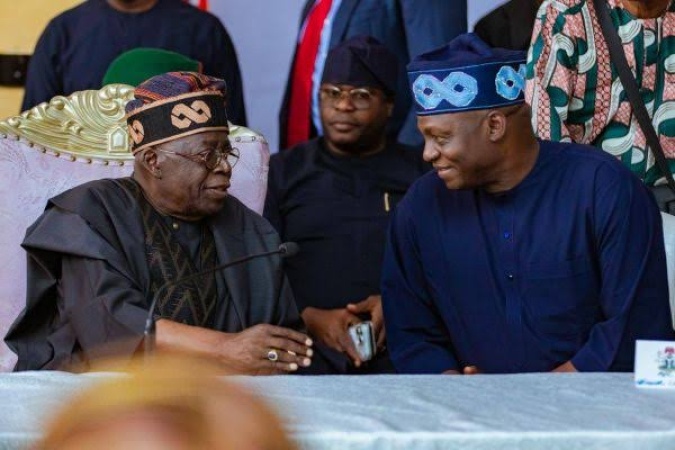
Ahmed, who said that President Bola Tinubu authorised the initiative to intensify the expansion of CNG infrastructure nationwide, said delays in obtaining regulatory approval remain a major obstacle.
He appealed to the Nigerian Midstream and Downstream Petroleum Regulatory Authority (NMDPRA) to accelerate the licensing of CNG refuelling stations.
The Pi-CNG chief also reaffirmed the Tinubu administration’s interest in promoting domestic electric vehicle production, battery manufacturing and vehicle assembly.
Ahmed explained that lithium development remained under the supervision of the Ministry of Solid Minerals Development.
Other presentations at the roundtable highlighted the government’s efforts to address electricity shortages, strengthen domestic refining capacity and improve energy affordability.
Rural Electrification Agency (REA) Managing Director Abba Aliyu said that the government plans to establish 1,350 mini-grids under a $750 million electrification project targeting underserved communities.
Aliyu said the agency is strengthening electricity-access mapping and least-cost electrification planning to identify communities best served through mini-grids, captive power systems and other decentralised energy solutions.
He explained that the strategy was designed to narrow electricity-access gaps and extend reliable power to communities beyond the immediate reach of conventional distribution infrastructure.
Presenting the operations of the Niger Delta Power Holding Company (NDPHC), Abdullahi Kassim disclosed that the company operates 10 power plants with a combined generation capacity of 4,000 Megawatts.
He also outlined the firm’s contributions to electricity transmission and distribution, industrial power development, solar energy deployment and community infrastructure projects.
Chairman of the Nigerian Electricity Regulatory Commission (NERC), Musiliu Oseni, acknowledged persistent concerns over electricity tariffs and service delivery.
Oseni put the estimated cost of electricity at approximately N200 per kilowatt-hour, explaining that customer tariff classifications are linked to the duration and reliability of supply.
He said the commission is pursuing improvements through additional generation capacity, mini-grid investments, debt recovery measures and net billing arrangements.
According to him, installed electricity generation capacity had increased by approximately 780 Megawatts.
Although electricity supply to Band A customers had improved, Oseni admitted that overall service delivery remained below expectations.
Responding to complaints about arbitrary electricity disconnections, he clarified that mass disconnections were prohibited under existing regulations.
He outlined channels through which consumers could seek redress.
He also addressed possible compensation arrangements for customers who independently finance improvements to electricity distribution infrastructure.
On petroleum supply, the NMDPRA representative, Mustapha Lamorde, disclosed that the Port Harcourt, Warri and Kaduna refineries, with a combined installed capacity of approximately 445,000 barrels per day, remain shut down.
He said that the government was engaging international technical expertise to resolve operational challenges affecting the facilities.
Lamorde added that more than 26 refineries had been licensed nationwide, while a pre-start-up safety review was recently conducted for the 30,000-barrel-per-day Ebenco Modular Refinery in Koko, Delta State, ahead of its commencement of operations. (The Nation)