ADAD
Updating your news feed...

NEWS EXPRESS is Nigeria’s leading online newspaper. Published by Africa’s international award-winning journalist, Mr. Isaac Umunna, NEWS EXPRESS is Nigeria’s first truly professional online daily newspaper. It is published from Lagos, Nigeria’s economic and media hub, and has a provision for occasional special print editions. Thanks to our vast network of sources and dedicated team of professional journalists and contributors spread across Nigeria and overseas, NEWS EXPRESS has become synonymous with newsbreaks and exclusive stories from around the world.
















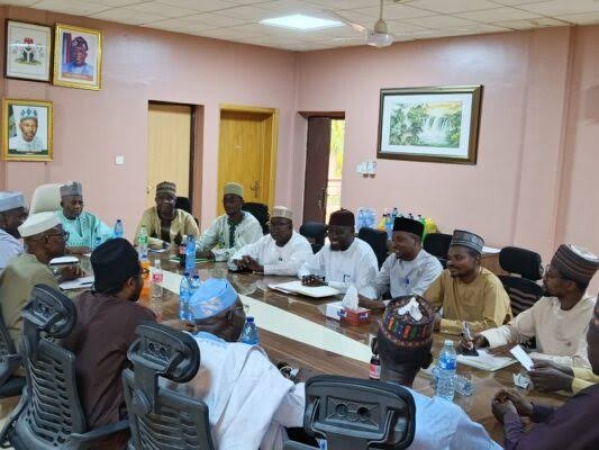









Members of the Ebenezer Christian Relief Initiative during a press briefing in Makurdi
The Ebenezer Christian Relief Initiative has rejected the Federal Government’s proposed pilot ranching programme in Benue State, citing persistent insecurity, displacement of residents and the need to protect ancestral lands and existing state laws.
The Chairman of the initiative, Rev Akpen Leva, stated this during a press briefing in Makurdi, where he called on the Federal Government to suspend the proposed programme until security improved and adequate consultations were held with the state government and affected communities.
Christian group rejects FG’s pilot ranching plan in Benue, cites insecurity
Leva, who spoke on Thursday in Makurdi, said the initiative was not opposed to lawful livestock development but insisted that any ranching policy must respect the rights of landowners, farming communities and the existing legal framework regulating livestock management in the state.
“We address you today with deep concern and firm displeasure over the persistent security challenges confronting Benue State and the Federal Government’s proposed pilot ranching initiative in the state.
“As Christian leaders and advocates for peace, justice, and human dignity, we believe that any policy affecting our people must take into account their safety, constitutional rights, existing laws, and lived realities.”
He maintained that the implementation of the programme without the consent of affected communities could heighten tensions, deepen mistrust and worsen the plight of residents already displaced by insecurity.
According to him, recent attacks in Logo, Ukum and Katsina-Ala Local Government Areas (LGAs) reportedly claimed more than 100 lives, including four mobile police personnel, while property worth millions of naira was destroyed.
He insisted: “The Ebenezer Christian Relief Initiative reiterates its total and unequivocal rejection of the Federal Government’s proposed pilot ranching programme in Benue State under the present circumstances.
“We do not have land in Benue to give for ranching,” he said, stressing that policies affecting land and livelihoods must be developed through transparent and genuine consultations with the state government, traditional rulers, community leaders, farmers and other stakeholders.
The cleric expressed the group’s solidarity with Governor Hyacinth Alia, commending him for reportedly maintaining that there was no land available in the state for the proposed pilot ranching programme during his recent thank-you tour.
He urged Governor Alia to remain firm in protecting the interests of Benue residents while pursuing lawful and peaceful approaches to addressing security and development challenges.
Leva, therefore, called on the Federal Government to engage the state government in meaningful dialogue and ensure that any livestock-related policy introduced in Benue complied with existing laws and reflected the wishes of affected communities.
Lamenting the humanitarian consequences of insecurity, the cleric said repeated attacks had claimed lives, destroyed homes and farmlands, and deprived many residents of their livelihoods, forcing them to flee their ancestral communities.
While he noted that about 10 LGAs were affected, with some communities currently no-go areas, the cleric said displaced persons urgently needed food, shelter, healthcare, clean water and other essential services, adding that government at all levels must implement practical measures to restore security and facilitate their safe and voluntary return home.
The chairman further expressed concern over alleged discrepancies between casualty figures released by security agencies and accounts provided by eyewitnesses and affected communities following attacks in the state.
While acknowledging that gathering and verifying information during security operations can be difficult, Leva said accurate and transparent casualty reporting was essential for public confidence, accountability and justice.
He urged security agencies to provide timely, regular and credible updates, clearly distinguishing between confirmed deaths, injured persons, missing persons and cases yet to be verified.
He also called for impartial investigations whenever substantial discrepancies emerged and urged media organisations to verify casualty figures and other security-related information before publication, particularly where official accounts differed from reports from affected communities.
He, however, cautioned against suppressing credible information or overlooking the experiences of victims, saying responsible journalism should promote accountability without exaggeration, inflammatory language or the circulation of unverified claims.
The cleric also appealed to traditional rulers, security agencies, community leaders, religious institutions and civil society organisations to work together to address the insecurity threatening communities across Benue State.
He called for stronger security measures, improved early-warning systems, effective implementation of existing laws and cooperation among stakeholders to prevent further attacks and protect vulnerable communities.
Describing the situation and the number of losses as a threat to the identity, faith and ancestral heritage of affected communities, Leva urged stakeholders to unite against violence and actions that could lead to further displacement and loss of land.
He also appealed to the international community, humanitarian organisations and Nigerians at home and abroad to support affected communities through humanitarian assistance, documentation of abuses and advocacy for justice and accountability.
The initiative reiterated its call on the Federal Government to reconsider and suspend the proposed pilot ranching programme in Benue until security was restored, displaced residents could return safely to their communities, and meaningful consultations were concluded.
Leva said the protection of lives, property, farmlands and ancestral homes must take precedence over any livestock development initiative, adding that sustainable solutions to the state’s challenges must be based on respect for existing laws, community rights and lasting peace.
Also speaking to our correspondent after the briefing, some members of the initiative, Rev Mike Angou, Dr Abigail Gire and Rev Jonathan Terkaa, called on the Federal Government to take decisive action to end the prolonged killings and insecurity in Benue State, arguing that the delay in addressing the crisis had allowed the situation to persist.
Angou expressed concern that certain interests appeared to be receiving greater protection than the lives of affected communities, urging the government to prioritise citizens’ safety over commercial interests. He also warned that continued insecurity would prevent displaced residents from returning to their farms, undermine agricultural production and worsen food shortages in the country.
Gire, on her part, urged the Federal Government to implement Benue State’s existing law prohibiting open grazing and promoting ranching rather than introducing new arrangements, arguing that the existing legislation should first be tested and strengthened where necessary before alternative measures were considered.
Speaking, Rev Jonathan Terkaa, a religious leader from Kwande LGA, said persistent insecurity had displaced residents from communities stretching from the Anyiase area to Jor Wata for 16 years, preventing them from returning to their homes and engaging in farming.
Terkaa expressed concern that the proposed ranching policy could be established in areas from which the original inhabitants had been displaced by attacks, warning that such a plan should not be considered without addressing the plight of the displaced residents. (The Sun)