ADAD
Updating your news feed...

NEWS EXPRESS is Nigeria’s leading online newspaper. Published by Africa’s international award-winning journalist, Mr. Isaac Umunna, NEWS EXPRESS is Nigeria’s first truly professional online daily newspaper. It is published from Lagos, Nigeria’s economic and media hub, and has a provision for occasional special print editions. Thanks to our vast network of sources and dedicated team of professional journalists and contributors spread across Nigeria and overseas, NEWS EXPRESS has become synonymous with newsbreaks and exclusive stories from around the world.







.webp)





Loading banners
Loading banners...

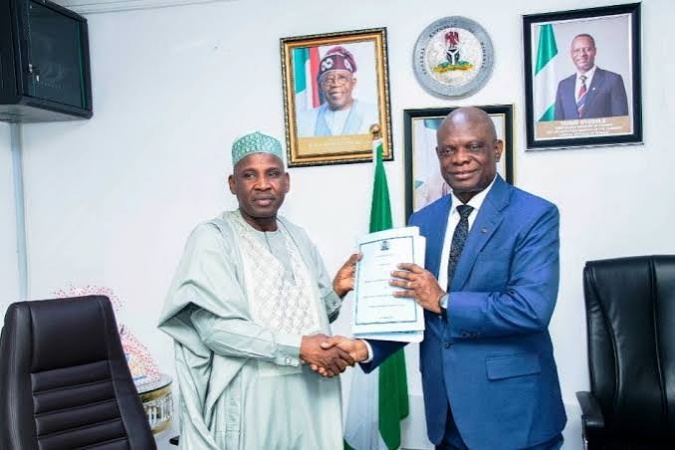
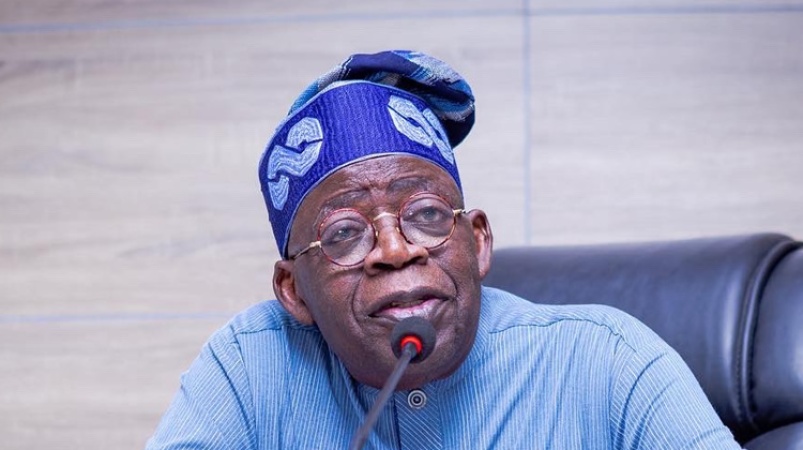
Chairman, National Tax Policy Implementation Committee, Mr Joseph Tegbe
Nigeria’s power sector recorded losses of about N150 billion in the second quarter (Q2) of 2026, exceeding regulatory targets. This has prompted the federal government to consider payment assurance guarantees to prevent further accumulation of sector debts, currently estimated at N3.3 trillion.
The government is also pushing to resolve the long-standing Mambila hydropower crisis on presidential order, while setting an ambitious target of 270 gigawatts of electricity generation by 2060 to meet future industrial and technology-driven demand.
Special Adviser to the President on Power, Dr Rilwan Babalola and the Minister of Power, Mr. Joseph Tegbe disclosed this on Wednesday in Lagos at the Leadership Summit of the Nigeria Energy Exhibition and Conference 2026.
Babalola said in Q2, more than a third of energy delivered to distribution companies (Discos) was not paid for, with aggregate technical, commercial and collection (ATC&C) losses at 30-40 per cent depending on Disco, doubling the regulator’s target.
Of the total generation, he said only a portion of that hits Nigerian homes and businesses because of leakages along the whole value chain. The gap is not a shortage of capacity. He, however, blamed the gap on shortage of performance and of planning rather than shortage of capacity.
He said Nigeria has over 13,000 megawatts installed generation capacity but generates 4,000-5,000MW daily, with much capacity built without rigorous demand analysis.
“A sector that has total losses of about 40 per cent is a sector that is struggling. The best practice in the world is between five and 10 per cent. 10 per cent is of concern; five per cent is manageable.
“In that one quarter, losses above target cost the market approximately N150 billion every quarter, and too little of what is collected finds its way back to the generators and the gas suppliers,” Babalola added.
He noted that 21 per cent of power on transformers was never billed and 20 per cent of billed energy not collected.
He said President Bola Tinubu had approved a power sector reset and restoration blueprint to complement the Minister’s action plan, focusing on foundation – market design, conduct and structure – while the Minister focuses on superstructure.
“Performance before expansion means three things: Close both circuits. Make every naira in the chain visible and accountable. And only then building a foundation can carry the weight,” Babalola said.
He further said execution would be through four commitments: measure first plant by plant, feeder by feeder; fix chain end-to-end on loss reduction, metering, collection and remittance; prove then scale on defined corridors; and complete market via bilateral contracting with large industrial anchors.
Tegbe, speaking on “Powering the Nation: Nigeria’s Roadmap to Grid Stability, Investment, Energy Security”, said reliable electricity was central to Tinubu’s resolve.
“Every serious reform needs a leader that is willing to take his political part. Under President Bola Tinubu, reliable electricity is central,” Tegbe added.
He unveiled a three-phase roadmap: stabilise June 2026-February 2027, scale March 2027-June 2028, transform from 2028 onwards, anchored on five milestones.
On debts, he said government has paid N1.23 trillion of N3.3 trillion legacy debt and was blocking leakages.
“Currently, we’re also working to resolve the legacy sector debt. Currently estimated at N3.3 trillion. We’ve paid N1.23 trillion out of it,” Tegbe explained, adding that options include, “structured settlements, payment assurance mechanisms, legally permissible net off arrangements for eligible obligations.”
On Mambila, he said President Tinubu has directly ordered its resolution.
“on Wednesday we discussed Mambila and Mr. President told me, ‘Minister, go fix Mambila,” Tegbe said, noting 21 dams discovered along Sokoto-Badagry expressway will also be developed into hydro projects while small hydro supports agricultural corridors.
He noted that technical audits of entire power infrastructure have commenced to avoid throwing money at wrong things, prioritisingthree energy zones – Lagos-Ogun corridor accounting for 50 per cent demand, Benin-Edo-Port Harcourt, and Abuja-Kaduna-Kano – with Lagos-Ogun and Abuja as proof of concept.
“The corridor approach is important because we can’t address a 50-year problem across a nation as big as Nigeria overnight,” he said.
He announced initiatives such Grid Asset Management Company (GAMCO) and Renewable Asset Management Company (RAMCO) to link stranded capacity to creditworthy demand.
“There’s no reason why I cannot evacuate from Alaoji today and using an IPT or reconducted lines to serve Agbara where the demand is needed. The whole concept is about optimisation,” he said.
He noted plans to strengthen and improve performance of the Transmission Company of Nigeria (TCN), Nigerian Independent System Operative (NISO) and the Nigeria Bulk Electricity Trading Plc (NBET), warning them that “it is no more business as usual”
He encouraged generation and distribution companies to embrace bilateral contracting to prevent available power from being stranded and wasted.
For the future, Tegbe said Nigeria was eying 270GW by 2060 despite current 4-5GW struggle, citing United States AI-driven gap of 357GW and global transformer supply constraints where 60 per cent of production is blocked by Elon Musk.
“Our plan still remains 2060, we’re looking at 270 gigawatts for Nigeria… US today says they have a gap of 357 gigawatts just due to AI and data alone,” Tegbe said.
He added that electricity was not destination but foundation, saying, for “a shoe manufacturer in Aba who can quote a delivery date with confidence, an agro-processor in Kano who can preserve value after its harvest.” (Arise News)