ADAD
Updating your news feed...

NEWS EXPRESS is Nigeria’s leading online newspaper. Published by Africa’s international award-winning journalist, Mr. Isaac Umunna, NEWS EXPRESS is Nigeria’s first truly professional online daily newspaper. It is published from Lagos, Nigeria’s economic and media hub, and has a provision for occasional special print editions. Thanks to our vast network of sources and dedicated team of professional journalists and contributors spread across Nigeria and overseas, NEWS EXPRESS has become synonymous with newsbreaks and exclusive stories from around the world.







Loading banners
Loading banners...

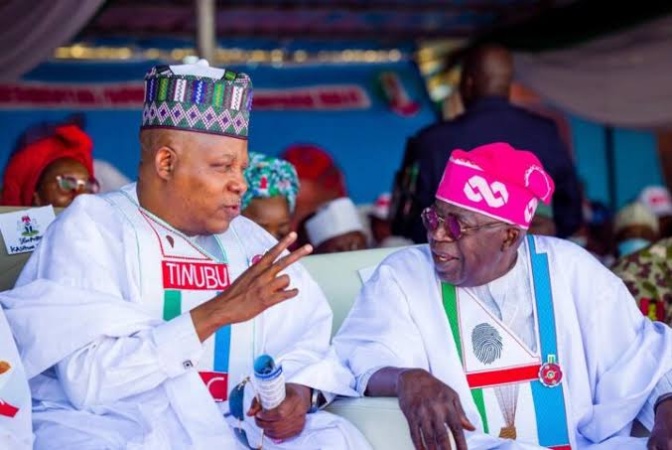
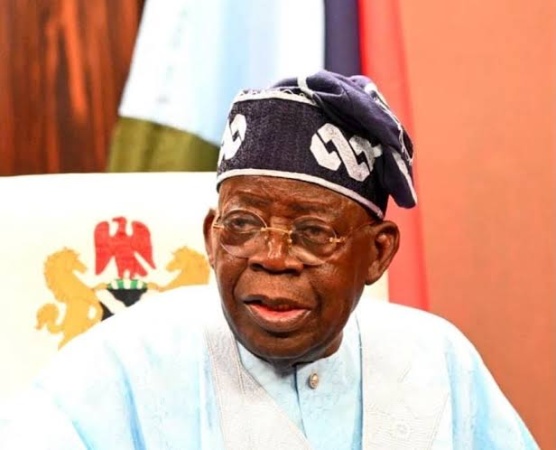
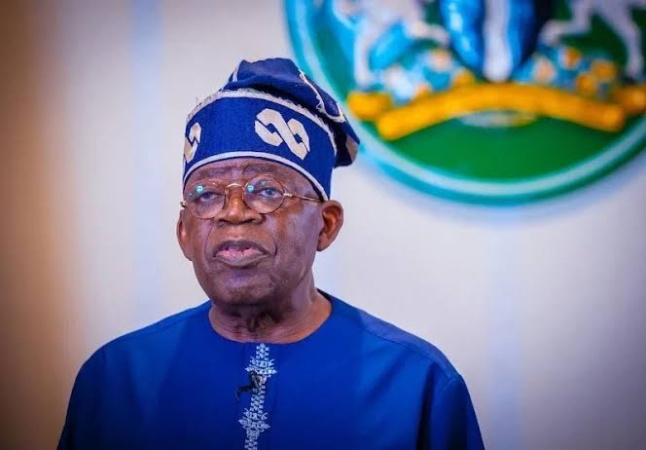
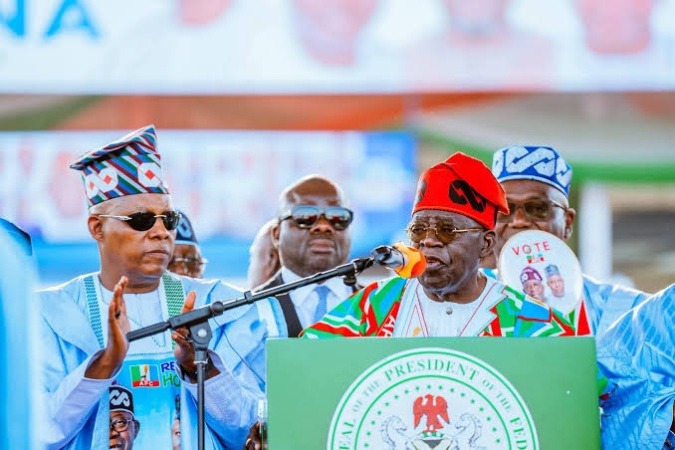
Tinubu and Shettima
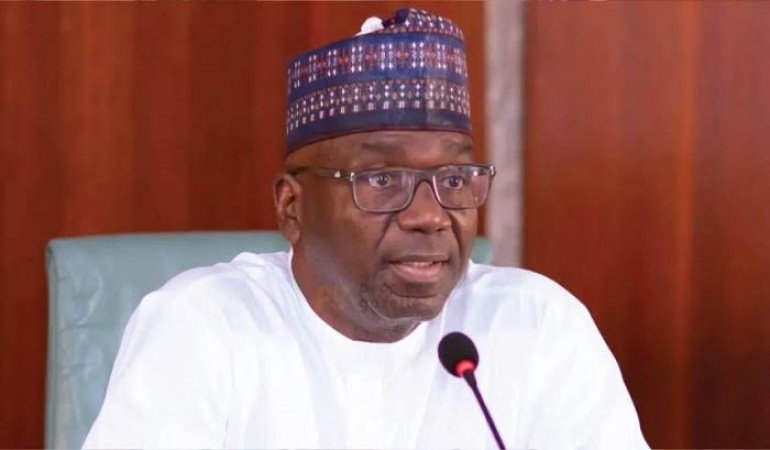
Vice President Kashim Shettima has predicted victory for President Bola Tinubu’s political camp in the next election, while attacking a presidential candidate who wants the government to bring back fuel subsidy.
Shettima urged Nigerians to support the continuation of Tinubu’s economic reforms, warning that reversing the policies for political reasons could harm the country’s economy.
Speaking at the Nigerian Economic Summit, he said: “Hopefully, we are going to support continuity, support for economic progress, support for the Nigerian nation.” He added that he believed his political camp would win the election.
The Vice President criticised an unnamed presidential candidate for proposing a return to fuel subsidies, saying Nigeria could not afford to return to the old system. “One of the leading presidential candidates is advocating a return to the subsidy scheme,” he said.
Shettima argued that President Tinubu took difficult decisions because the country needed them, even though the policies had caused hardship for many Nigerians.
He said delaying such decisions would have made the problem harder and more costly to solve. “He chose to forfeit the applause of the moment for the enduring gains of generations yet unborn,” Shettima said.
The Vice President also questioned the presidential aspirant’s ability to manage Nigeria’s economy, citing the candidate’s background in sanitation. “He doesn’t have the skill set to govern a modern economy,” he said.
However, Shettima praised Peter Obi for saying he would not restore fuel subsidy if elected President. “I respect Peter Obi for having the courage to say that he is not going to restore the fuel subsidy,” he said.
The Vice President also accused some political opponents of using figures he described as doubtful to criticise the government instead of offering better policies.
He urged Nigerians, especially business leaders and other influential people, to take the country’s political future seriously instead of staying silent.
Quoting political thinker Frantz Fanon, he said: “Every onlooker is either a coward or a traitor.”
Shettima said Nigerians must decide whether to support the continuation of the current economic reforms or risk reversing the administration’s policies.
He also called on future governments to maintain policies that support economic growth, regardless of which political party wins an election.
“Administrations can come and go; I am the 17th vice president of Nigeria. Well, more vice presidents of Nigeria will come after I leave. But the Nigerian nation has to be sustained,” he said.
He added that Nigeria’s progress depends on a stable economic policy that won’t change simply because of political interests.
Defending the removal of the fuel subsidy, Shettima said the former system placed a heavy burden on government finances.
He described It as a “subsidy scam” and a “subsidy industry” that consumed public money.
According to him, Nigeria faced a serious economic crisis when Tinubu became President, making difficult decisions necessary to prevent the situation from worsening.
Shettima also compared Nigeria’s petrol prices with those in neighbouring countries to support his argument against restoring the subsidy.
He said petrol sold for about $0.85 per litre in Niger Republic, equivalent to ₦1,148.36, while the price in Benin Republic was about $1.28, or ₦1,729.39.
In Cameroon, he put the price at $1.44 per litre, equivalent to about ₦1,945.45, compared with ₦1,309 in Nigeria.
He argued that Nigeria’s petrol price was still lower than the prices he quoted for the three countries.
Shettima also recalled that Nigeria consumed about 67 million litres of petrol daily under the former system.
He claimed that cheap Nigerian fuel had affected neighbouring countries, citing the closure of a refinery in Cameroon as an example.
The Vice President urged Nigerians to consider the cost of the fuel subsidy before supporting calls to restore it.
On the economy, Shettima said the Tinubu administration’s reforms were beginning to show results in areas such as economic growth, investment, oil production and trade.
He cited figures from the National Bureau of Statistics showing Nigeria’s economy grew by 3.89 per cent in the first quarter of 2026, up from 3.13 per cent in the same period of 2025.
He said non-oil activities accounted for 96.08 per cent of the economy, while manufacturing grew by 3.29 per cent and the oil sector by 2.67 per cent.
According to him, the figures showed that the economy was recovering and becoming less dependent on oil.
However, he said economic growth figures alone were not enough if Nigerians did not see improvements in their daily lives. “Our ambition must outgrow favourable statistics,” he said.
Shettima said the government wanted to turn the economic recovery into better living conditions and more jobs for young people, farmers, manufacturers, entrepreneurs and innovators.
He said stabilising the economy was only the first step. The government also needed to create an environment where businesses could invest, expand and employ more people.
He added that Nigeria must not only create jobs but also improve work quality and make better use of its available workers.
The Vice President said roads, electricity and other infrastructure should be judged by how much they help businesses and the economy. He also said schools should equip students with skills they could use to find jobs and improve productivity.
On investment, Shettima said Nigeria attracted $10.37 billion in capital importation in the first quarter of 2026, up 83.83 per cent from the same period in 2025.
He said the money included investments in financial markets and direct investments in businesses.
Shettima said the government would continue to make it easier for businesses to operate by reducing unnecessary rules, improving transparency and making its policies more predictable.
He added that the tax reforms were designed to create a fairer system that could fund public development while giving businesses more certainty.
The government was also reforming the electricity market to improve power supply and attract investment in electricity generation, transmission, distribution and alternative energy.
In the oil sector, Shettima said crude oil and condensate production reached 1.735 million barrels per day in June 2026, marking four consecutive months of growth.
He said the government wanted to use the improvement to expand local refining, gas processing, petrochemicals and manufacturing.
According to him, Nigeria needed to process more of its natural resources at home instead of relying mainly on exporting crude oil and other raw materials.
Shettima said the government was taking a similar approach to agriculture by connecting farmers to storage facilities, processing centres and markets.
He said the government was also working to expand irrigation, provide better farming equipment, improve access to finance and develop rural infrastructure.
The Vice President said food output had reached its highest level in 74 months, which he described as a sign of progress.
In the solid minerals sector, he said Nigeria needed to move beyond digging minerals out of the ground and exporting them in raw form. He said the country should process more minerals locally, use them in industries, and export finished products.
Shettima also called for increased exports of agricultural produce, manufactured goods, processed minerals and digital services.
He said Nigeria recorded exports worth ₦21.17 trillion in the first quarter of 2026, while imports stood at ₦13.62 trillion, leaving a trade surplus of ₦7.55 trillion.
However, crude oil accounted for 52.9 per cent of total exports, while non-oil exports were valued at ₦3.19 trillion.
He said Nigeria needed to earn more from products other than crude oil to reduce its dependence on oil revenue.
The Vice President also spoke about the growth of Nigeria’s technology industry, saying five of Africa’s nine unicorns were Nigerian. Unicorns are privately owned companies valued at $1 billion or more.
He said young Nigerians had shown that they could compete internationally in technology, financial services and the creative industries.
Shettima said Nigeria’s large population and natural resources could make it much more prosperous if the country maintained sound policies and showed the commitment needed to implement them.
He noted that Nigeria was projected to become the world’s third most populous country by 2050, adding that the country needed to turn its growing population into an advantage by creating jobs and expanding economic opportunities.
The Vice President also urged business leaders and government officials to work together to grow the economy.
Referring to the book Gambling on Development by Caster Ndakwo, he argued that countries progress when leaders and business owners put economic growth ahead of personal interests.
He urged participants at the Nigerian Economic Summit to turn their discussions into practical solutions that would improve the economy.
Shettima said the government’s Renewed Hope development programme was designed to connect national development plans with the needs of communities across 8,809 wards and 774 local government areas.
He said Nigeria could not develop properly without strong communities and projects that reached people at the grassroots.
He praised the Nigerian Economic Summit Group for bringing government officials, business leaders, workers, academics, civil society groups and development partners together to discuss the country’s economic challenges.
Shettima said the government needed private-sector support to create jobs, expand industries and improve living standards.
He admitted that much work remained to be done, adding that the country’s economic recovery must lead to real benefits for Nigerians rather than improvements in figures alone. (The Nation)