ADAD
Updating your news feed...

NEWS EXPRESS is Nigeria’s leading online newspaper. Published by Africa’s international award-winning journalist, Mr. Isaac Umunna, NEWS EXPRESS is Nigeria’s first truly professional online daily newspaper. It is published from Lagos, Nigeria’s economic and media hub, and has a provision for occasional special print editions. Thanks to our vast network of sources and dedicated team of professional journalists and contributors spread across Nigeria and overseas, NEWS EXPRESS has become synonymous with newsbreaks and exclusive stories from around the world.
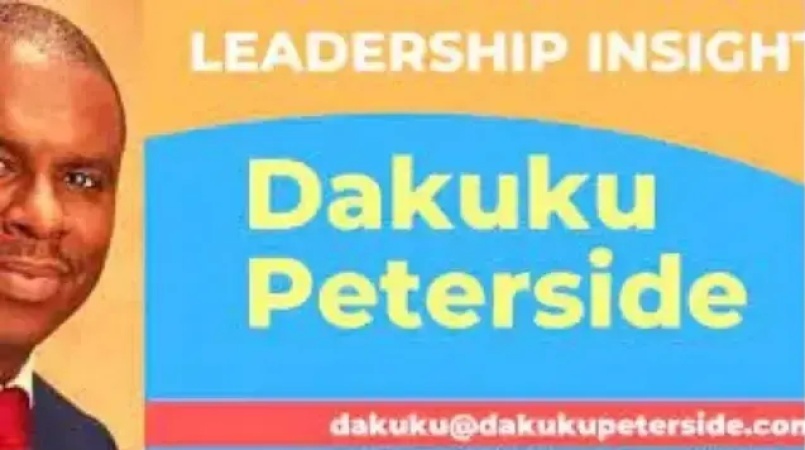

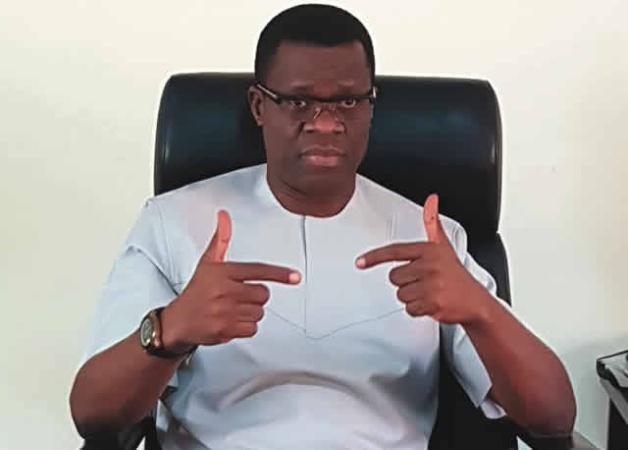


Chairman of the Kebbi State Pilgrims Welfare Agency, Faruk Enabo
The Chairman of the Kebbi State Pilgrims Welfare Agency, Faruk Enabo, last week donated vehicles, 225 motorcycles and other empowerment items to All Progressives Congress (APC) leaders, political coordinators and support groups across the state.
The donations have raised questions about the propriety of a public office holder making substantial contributions to political activities and compliance with the Electoral Act 2026, which sets limits on donations to political candidates.
The donation package includes vehicles for coordinators across the state’s 21 local government areas, the three serving senators, eight members of the House of Representatives, the APC state chairman and the party’s Kebbi Central Zonal Vice Chairman.
He said the 225 motorcycles were given to APC ward chairmen to improve communication and grassroots political mobilisation.
Reports on the donations listed 60 saloon cars and two jeeps among the vehicles provided.
Based on the supplied market estimates, with each saloon car costing at least N6 million, the 60 cars would be worth no less than N360 million, excluding the jeeps and other items.
The 225 motorcycles were estimated to cost at least N337.5 million based on an estimated cost of N1.5 million per motorcycle.
The estimated value of the donations by the Kebbi State Pilgrims Welfare Agency chairman has exceeded the N500 million limit set by the Electoral Act for individual contributions to election campaigns.
Section 88(8) of the Electoral Act 2026 says an individual or other entity shall not donate to a candidate more than N500,000,000.
Section 88(10) provides a penalty for individuals who knowingly exceed the donation limit.
It says: “An individual who knowingly acts in contravention of subsection (8) is liable on conviction to a fine of five times the amount donated in excess of the limit placed by the Commission.”
Enabo, while presenting the items, dismissed claims that funds belonging to the pilgrims agency or the state government were used to finance the donations.
He said the donations were funded through legitimate business activities and personal resources, with support from the governor and other individuals.
“I was able to purchase all these vehicles and motorcycles through the support of the governor and other individuals.
“Some people have alleged that pilgrims’ funds were used, but I wish to state categorically that the funds belonging to pilgrims remain intact and are properly accounted for,” he said.
“I want people to know that no kobo was taken from the pilgrim welfare agency. The proceeds are from my personal income, either through contract or investment. I’m not a poor man,” he added.
Giving an account of the agency’s financial operations for the 2027 Hajj, Enabo disclosed that it collected N27.9 billion from intending pilgrims and remitted N25.7 billion to the National Hajj Commission of Nigeria (NAHCON).
He said the balance was used to cover pilgrims’ Basic Travelling Allowance and other local Hajj operational expenses.
Lawyers, CSO call for probe
Lawyers have called for public officials to be held accountable for their actions and urged anti-graft agencies to investigate Enabo’s donations.
Kabiru Bala, a lawyer, said the circumstances surrounding money or items given to a political party or candidate should be examined to determine whether they amounted to donations under the law.
Bala said the donor’s position as a public office holder also raised questions about the source of the resources used and whether the expenditure was consistent with the person’s declared assets.
He called on anti-corruption agencies, including the Economic and Financial Crimes Commission (EFCC), the Independent Corrupt Practices and Other Related Offences Commission (ICPC) and the Code of Conduct Bureau, to investigate the circumstances surrounding the donations.
Another lawyer, Tobechukwu Okoroma, expressed concern about what he described as the ineffective enforcement of laws when politicians are involved, saying public officials do not always appear to be held accountable.
According to him, public pressure could help compel public officials to comply with the law.
He called for stronger public accountability and a system that ensures the law applies equally, regardless of a person’s social or political status.
Victoria Adaji, a lawyer, said the Electoral Act 2026 does not explicitly define in-kind donations or provide a legally binding framework for valuing non-monetary contributions, such as campaign vehicles, billboards, printing equipment and broadcast airtime.
According to her, the absence of clear definitions and valuation rules could allow donors to describe high-value campaign support as logistical assistance or temporary equipment loans rather than donations subject to statutory limits.
Okechukwu Nwanguma, Executive Director of the Rule of Law and Accountability Advocacy Centre (RULAAC), said the donations raised questions about transparency, campaign financing and the boundary between public office and partisan political interests.
“A public officeholder’s political affiliation does not authorise the use of public funds, assets or influence to finance a party,” he said.
Nwanguma added that Sections 91, 93 and 94 of the Act also address contributions of assets, their commercial value and financial reporting.
“Giving vehicles instead of cash does not remove the need for scrutiny,” he said.
He said the authorities needed to establish the independently assessed value of the donated vehicles and motorcycles and which campaigns they were intended to support before determining whether the statutory donation ceiling had been breached.
Nwanguma noted that Enabo had reportedly attributed the donations to legitimate business activities and personal resources rather than government or pilgrims’ funds, but said the explanation should be independently verified.
He urged the INEC to examine compliance with political financing rules and called on relevant anti-corruption agencies to investigate if evidence raised concerns about the diversion of public resources.
He also said the Code of Conduct Bureau should examine any relevant asset-declaration or conflict-of-interest issues.
“A large donation alone does not prove corruption. Equally, calling it ‘personal generosity’ does not settle legitimate questions.
“Public office demands openness, and the same standards must apply regardless of the party involved,” Nwanguma said. (Daily Trust)