ADAD
Updating your news feed...

NEWS EXPRESS is Nigeria’s leading online newspaper. Published by Africa’s international award-winning journalist, Mr. Isaac Umunna, NEWS EXPRESS is Nigeria’s first truly professional online daily newspaper. It is published from Lagos, Nigeria’s economic and media hub, and has a provision for occasional special print editions. Thanks to our vast network of sources and dedicated team of professional journalists and contributors spread across Nigeria and overseas, NEWS EXPRESS has become synonymous with newsbreaks and exclusive stories from around the world.



.webp)

Loading banners
Loading banners...

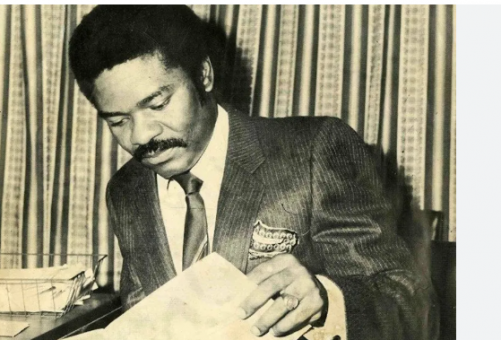
Forty years after the assassination of a co-founder of Newswatch news magazine, Mr. Dele Giwa, his colleague at the publication, Mr. Ray Ekpu, has accused Nigeria’s justice system of failing to deliver justice for the late journalist.
He said decades of efforts by the slain journalist’s colleagues and associates to secure accountability have yielded no result.
Ekpu spoke yesterday in Lagos at the presentation of Dele Giwa’s book, Granite Journalism, a collection of the late journalist’s writings published to commemorate the 40th anniversary of his assassination.
“Since his death, we in Newswatch and some members of the media community have fought tooth and nail to get justice for him, but there has been no success,” he said.
Giwa, the founding Editor-in-Chief of Newswatch, was killed by a parcel bomb delivered to his Ikeja residence on October 19, 1986. His assassination remains unresolved.
In marking the 40th anniversary, Media Rights Agenda (MRA) yesterday urged the Federal Government to comply with and fully implement the judicial order directing it to investigate the circumstances surrounding the killing of Newswatch Editor-in-Chief, Mr. Dele Giwa.
In a statement in Lagos marking the 40th anniversary of the killing of Mr. Giwa on October 19, 1986, through a parcel bomb delivered to him at his residence in Ikeja, Lagos, the organisation described the government’s failure as a “shameful reminder of the entrenched culture of impunity for attacks against journalists in Nigeria”.
Ekpu said Giwa’s colleagues had worked for years with the late human rights lawyer, Chief Gani Fawehinmi, to pursue justice but encountered obstacles that frustrated their efforts.
The eminent journalist said the failure to obtain justice had left the journalist’s associates with little choice but to entrust the matter to God, stressing that this was not an attempt to avoid the struggle but a recognition of the difficulties they faced.
The book presentation sought to preserve Giwa’s professional legacy beyond the circumstances of his death.
Reviewing the collection, TheCable founder, Simon Kolawole, said public attention to Giwa’s assassination had sometimes overshadowed his exceptional contribution to Nigerian journalism.
The online publisher described the book as a necessary correction, stressing that Giwa should be remembered as an outstanding journalist, compelling storyteller, and writer of uncommon ability.
Edited by Ekpu, the collection brings together 74 articles written by the late Giwa, two interviews and 16 tributes by journalists and writers. It features his published writings in the Daily Times, Sunday Concord, and Newswatch.
Kolawole praised Giwa’s ability to transform ordinary experiences into compelling narratives through lucid prose, humour, and close observation. He cited an account of Giwa’s experiences in the United States, where difficult factory jobs eventually informed his decision to return to Nigeria, as an example of his talent for drawing wider social meaning from personal experiences.
Beyond his literary gifts, Kolawole said Giwa’s writings reflected strong convictions about press freedom, censorship, political power and professional ethics.
In one essay, Giwa argued that journalists should serve as carriers of information rather than become persecutors.
His writings on political reporting also challenged journalists to move beyond reproducing speeches and campaign promises to scrutinise candidates, assess their programmes and help voters make informed decisions.
Kolawole said those arguments remained relevant to Nigerian journalism, particularly the need for reporting that holds public officials accountable and equips citizens to make informed choices.
He acknowledged that Giwa could be combative and uncompromising in his judgments but said these qualities reflected his passionate engagement with society.
The collection also preserves Giwa’s writings on international politics, race relations and freedom of expression, illustrating the range of his interests and the continuing relevance of his work.
Also, MRA’s Deputy Executive Director Ayode Longe said the anniversary should not just be treated merely as an occasion to remember an accomplished journalist and celebrate his contributions to journalism in Nigeria but to also serve as a moment for renewed public scrutiny of the failure to deliver justice and the lack of concrete action by the government and the police towards ensuring accountability.
He said: “Forty years is far too long for the assassination of a journalist of Dele Giwa’s stature to remain unresolved. His killing must not be reduced to a recurring anniversary in Nigeria’s media calendar, accompanied by tributes and expressions of outrage but without meaningful progress towards accountability.”
Longe recalled that on February 16, 2024, MRA secured judgment at the Federal High Court in Abuja, in a case it brought against the Attorney-General of the Federation in which the court ordered the Federal Government to investigate Mr. Giwa’s murder, along with other unresolved killings of other journalists and directed the government to ensure the prosecution of the perpetrators.
The rights activist said the Federal Government had not demonstrated any progress or reported on any concrete steps it has taken to establish the facts, identify those responsible, and pursue accountability in accordance with the law.
He described the government’s attitude as a contemptuous disregard for a valid and subsisting judicial order.
Longe urged the Attorney-General of the Federation (AGF), the Nigeria Police Force (NPF), and all other relevant authorities to provide a clear account of the steps taken to implement the court’s order, including the status of the investigation, the investigative measures undertaken and the plans for pursuing prosecution where the evidence and applicable law warrant it.
Arguing that the passage of time does not extinguish the state’s responsibility to pursue accountability for an unlawful killing, Longe urged the authorities to explore all lawful investigative avenues, including a systematic review of historical investigation files, witness accounts, documentary evidence and any other material that may assist in establishing the circumstances of the assassination.
According to him, where appropriate and feasible, modern forensic and investigative techniques and tools should be leveraged.
Longe stressd that the failure to resolve the Giwa case after four decades sends a damaging message about the safety of journalists in Nigeria and the consequences of violence against those who exercise their right to freedom of expression. (The Nation)