 ADAD
ADADUpdating your news feed...

NEWS EXPRESS is Nigeria’s leading online newspaper. Published by Africa’s international award-winning journalist, Mr. Isaac Umunna, NEWS EXPRESS is Nigeria’s first truly professional online daily newspaper. It is published from Lagos, Nigeria’s economic and media hub, and has a provision for occasional special print editions. Thanks to our vast network of sources and dedicated team of professional journalists and contributors spread across Nigeria and overseas, NEWS EXPRESS has become synonymous with newsbreaks and exclusive stories from around the world.

Loading banners
Loading banners...

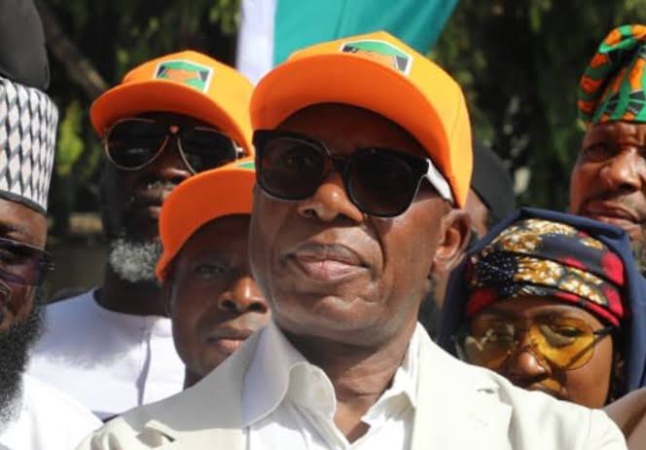
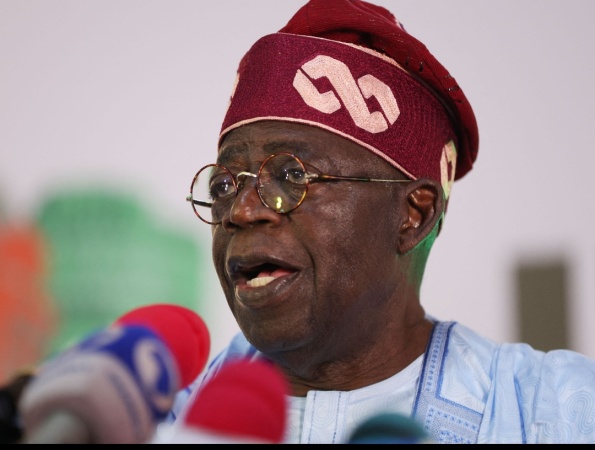
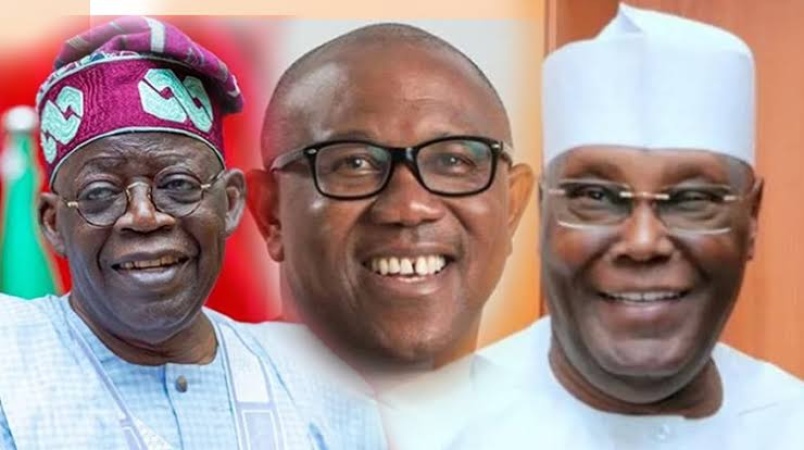
Frontline presidential candidates, President Bola Tinubu APC, Atiku Abubakar ADC and Peter Obi
The release of the Independent National Electoral Commission’s final candidate lists has significantly revved up the nation’s political temperature, which has been shaped for months by defections, alliances, horse-trading and shifting calculations.
The roll call includes President Bola Tinubu, who is seeking four more years, veteran presidential contenders returning, governors defending their turf, lawmakers fighting to retain their seats and new challengers determined to break through.
What has played out through backroom manoeuvres and shifting allegiances for several months has now moved into the open. Names are now attached to tickets, giving firmer shape to ambitions negotiated through broken alliances and unlikely friendships.
Though INEC has labelled the list it released last weekend ‘final’, from feelers so far, “final” may not mean the last word. Protests over omissions, disputed nominations, correction requests and threats of litigation could still alter some candidacies before polling day.
For now, the field includes Tinubu, former Vice President Atiku Abubakar, Peter Obi and 15 other presidential candidates; 17 governors seeking fresh mandates; eight serving governors bidding for Senate seats; and 246 members of the House of Representatives seeking re-election. Former office-holders and thousands of challengers are also seeking comebacks or breakthroughs.
It is the Nigerian political class on parade: those who have power and want to keep it, those who once had it and want it back, and those who believe their turn has come.
The presidential field comprises 18 candidates, while the Senate list contains 1,303 contenders for 109 seats. Across the 28 states holding governorship elections, 420 candidates are seeking the top executive office.
The federal legislative contests cover 109 Senate seats and 360 House seats across the 36 states and the Federal Capital Territory. The FCT elects one senator and two House members; it has neither a governor nor a State House of Assembly.
Presidential and National Assembly elections are scheduled for January 16, 2027, followed by governorship and State Assembly elections on February 6.
Tinubu is seeking renewal of the mandate he won in 2023, Atiku is in pursuit of the presidency that has repeatedly eluded him, while Obi is back after a campaign that disrupted established voting patterns and made him a leading figure in national opposition politics. Omoyele Sowore is also returning, alongside familiar contenders and less-known challengers hoping to overturn established calculations.
The ages recorded in INEC’s presidential list range from 35 to 79, a 44-year gap between the youngest contender and Atiku. The spread captures the meeting of old political hands pursuing unfinished business and younger candidates seeking an opening.
Publication has given the tickets formal recognition, but bargaining will continue as parties court regional blocs, manage bruised interests and seek alliances capable of turning nominations into votes.
Seventeen governors first elected in 2023 are seeking another four years. They are Alex Otti of Abia, Umo Eno of Akwa Ibom, Hyacinth Alia of Benue, Bassey Otu of Cross River, Sheriff Oborevwori of Delta, Francis Nwifuru of Ebonyi, Peter Mbah of Enugu, Umar Namadi of Jigawa, Uba Sani of Kaduna, Abba Kabir Yusuf of Kano and Dikko Radda of Katsina.
Others are Nasir Idris of Kebbi, Umar Bago of Niger, Caleb Mutfwang of Plateau, Ahmad Aliyu of Sokoto, Agbu Kefas of Taraba and Dauda Lawal of Zamfara.
Only 28 states will elect governors in the general election. Anambra, Bayelsa, Edo, Ekiti, Imo, Kogi, Ondo and Osun operate off-cycle governorship timetables. The separate calendars apply to their governorship elections; presidential, National Assembly and State Assembly contests remain part of the general-election cycle.
Across the 28 states, 420 candidates are seeking governorship seats, an average of 15 per state. Akwa Ibom has the largest field with 20, followed by Rivers and Taraba with 19 each. Cross River has the smallest, with eight.
For the 17 incumbents, the contest will test their records as well as their promises. They must persuade voters that their stewardship warrants another mandate, while opponents argue for change.
Eight serving governors are seeking Senate seats: Ahmadu Fintiri of Adamawa, Bala Mohammed of Bauchi, Muhammadu Inuwa Yahaya of Gombe, Hope Uzodimma of Imo, AbdulRahman AbdulRazaq of Kwara, Abdullahi Sule of Nasarawa, Dapo Abiodun of Ogun and Mai Mala Buni of Yobe.
Former governors have long used the Red Chamber to extend their careers and influence after executive office. Success would move these contenders from the command structure of Government House to the collective politics of the legislature.
Uzodimma’s bid is distinctive because Imo operates an off-cycle timetable and his second governorship term extends beyond the 2027 general election. His Senate ambition therefore differs from those of governors whose final terms end in May 2027.
The bids underline the Senate’s attraction as a destination for political figures seeking continued relevance. If several succeed, the next National Assembly will gain more former governors.
The House of Representatives has a large contingent of incumbents seeking re-election. Daily Sun’s count of INEC’s final list shows that 246 of the 360 serving members, or 68.3 per cent, are seeking another mandate. They are joined by at least 20 former members pursuing comebacks, alongside first-time candidates hoping to win a place in Abuja.
Speaker Tajudeen Abbas and Deputy Speaker Benjamin Kalu are among the return seekers, alongside other established figures in the Green Chamber.
For some, victory would extend long parliamentary careers; for others, the election is a fight for survival after defections, shifting alliances and bruising nomination contests.
The incumbents must defend their records while challengers persuade voters that fresh representation offers a better prospect. With only 360 seats available, the contest will produce far more disappointed contenders than winners.
The lists expose a persistent imbalance: women constitute almost half of Nigeria’s registered electorate, yet men overwhelmingly dominate the contest for political office.
Figures announced by INEC put female registered voters at 49,900,497, representing 48.25 per cent of the 103,428,715 people on the register. Male voters number 53,528,218, or 51.75 per cent.
That near balance disappears among those seeking the highest offices. Only two of the 18 presidential candidates are women, while women account for just 25 of the 420 governorship candidates– 5.95 per cent of the field.
The contrast is stark. Women form a formidable electoral constituency, but their strength as voters has yet to translate into comparable access to party tickets and elective office.
Nigeria’s registered electorate has grown by almost 10 million since the last general election. INEC’s announced total of 103,428,715 registered voters represents an increase of 9,959,707 over the 93,469,008 registered ahead of the 2023 polls, a rise of about 10.7 per cent.
The electoral infrastructure, however, retains the same nationwide totals of 8,809 wards and 176,846 polling units used in 2023. The additional voters must, therefore, be accommodated within the existing structure, placing greater demands on the distribution of personnel, materials and accreditation equipment.
Lagos remains the largest electoral reservoir, with 7,488,633 registered voters, followed by Kano with more than 6.5 million and Kaduna with over 4.6 million. Katsina and Rivers follow, while Oyo, Delta, Benue, Ogun and Bauchi are also among the states with the largest registers.
Ekiti has the smallest register among the states, with 1,055,708 voters, followed by Bayelsa with 1,200,691. For presidential contenders, large voting populations offer only part of the route to victory. The constitutional requirements combine the national vote tally with geographical spread, making support beyond familiar strongholds central to the contest.
That requirement explains the calculations over running mates, regional alliances and defections. Candidates need large numbers of votes, but also a coalition broad enough to carry them across the electoral map.
Beyond the struggle for tickets and political survival lies INEC’s more consequential task: delivering transparent, credible, free and fair elections that strengthen confidence in the ballot.
The commission must do more than publish lists, deploy materials and announce winners. Its conduct must assure voters that their choices will be respected and that the rules apply equally to every contender.
Too many Nigerian elections have moved from polling units to tribunals and appellate courts, with disputes lasting months and sometimes changing who occupies public office. Courts remain an essential safeguard, but democracy is better served when a credible process establishes the winner clearly and litigation is an exception rather than a routine continuation of the contest.
INEC’s task is to make the ballot speak clearly enough to reduce the need for judges to determine who won. That requires neutrality and consistent procedures, from the deployment of personnel and technology through accreditation, voting, counting, collation and declaration.
Unexplained departures from the rules invite suspicion, while failures of transparency deepen mistrust. The larger register also demands practical readiness. Voters must be able to find their polling units, complete accreditation and cast ballots without avoidable obstacles. Results must be handled through procedures the public can follow and scrutinise.
Success will be measured not merely by elections held and winners announced, but by whether Nigerians leave the process confident that their votes counted, the rules were fairly applied and those taking office derive their mandates from freely cast and transparently counted votes.
The expectation is a process that restores confidence in electoral choice and reduces the phenomenon of political mandates effectively settled in court. The final lists have turned months of manoeuvring into a crowded contest with clear stakes: power for the contenders and a broad range of choices for voters.
But the field will matter only if Nigerians can choose freely and see those choices accurately reflected in the result. Parties will continue to seek alliances, candidates will court fresh support and those bruised in nomination battles will decide whether to reconcile, defect, litigate or work against former allies. The publication of names has sharpened the contest; it has not ended the politics.
On January 16 and February 6, the calculations will confront the choices of the electorate. That is INEC’s decisive test. (The Sun)




