 ADAD
ADADUpdating your news feed...

NEWS EXPRESS is Nigeria’s leading online newspaper. Published by Africa’s international award-winning journalist, Mr. Isaac Umunna, NEWS EXPRESS is Nigeria’s first truly professional online daily newspaper. It is published from Lagos, Nigeria’s economic and media hub, and has a provision for occasional special print editions. Thanks to our vast network of sources and dedicated team of professional journalists and contributors spread across Nigeria and overseas, NEWS EXPRESS has become synonymous with newsbreaks and exclusive stories from around the world.





















Loading banners
Loading banners...

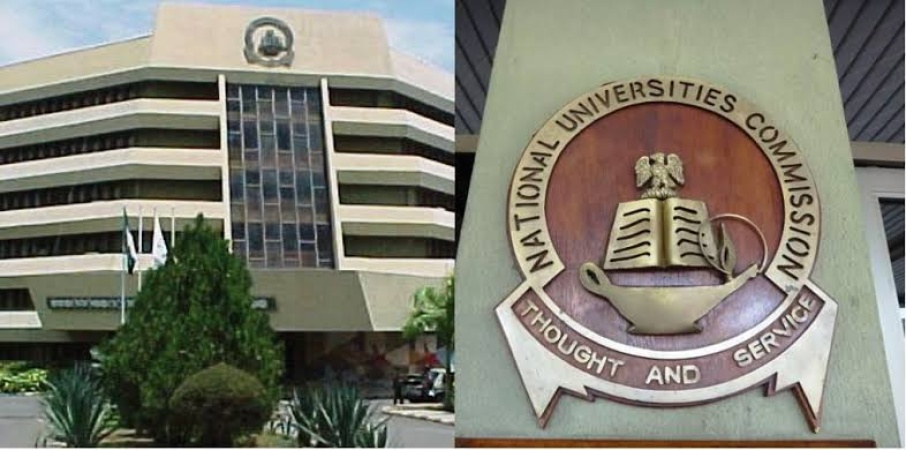
The National Universities Commission (NUC) has sanctioned two universities for violating its guidelines on the conferment of honorary doctorate degrees, eight months after warning institutions against the indiscriminate award and misuse of the titles.
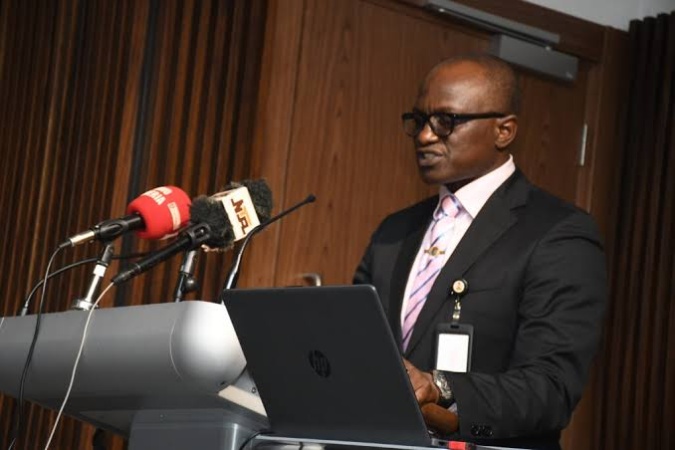
The Executive Secretary of the commission, Prof. Abdullahi Ribadu, disclosed this on Tuesday in Abuja at the opening of the 2026 NUC Retreat with Vice-Chancellors of Nigerian universities.
Although Ribadu did not name the affected universities or disclose the sanctions imposed, the action signals the commission’s resolve to enforce its guidelines on honorary degrees.
In February, the Commission warned against the growing incidence of indiscriminate conferment and misuse of honorary doctorate degrees, threatening sanctions against institutions that violated its guidelines and individuals who abused the titles.
The commission’s latest action comes as it intensifies efforts to strengthen regulatory compliance, institutional governance, research innovation and digital transformation across the Nigerian University System.
Speaking at the retreat, Ribadu urged vice-chancellors to embrace ethical leadership, strengthen institutional governance and forge strategic partnerships to improve the quality and global competitiveness of Nigerian universities.
“The Commission under my leadership has continued to strengthen its operational guidelines towards ensuring quality and relevance of University education, including the development of new Guidelines for the Award and Use of Honorary Doctorate Degrees with sanctions for defaulting Universities. Already, we have sanctioned two universities”, he said.
He highlighted key initiatives, including the deployment of the e-NUC platform to automate the commission’s operations, the development of a National Artificial Intelligence Roadmap and Policy Framework, and the introduction of accreditation software to improve transparency and efficiency.
Ribadu also emphasised the need to strengthen research commercialisation, urging universities to translate research findings into practical solutions, marketable products and innovations capable of addressing national development challenges.
He called on university leaders to commit to measurable actions that would advance university education, improve institutional performance and position Nigerian universities to compete globally.
The two-day retreat, themed “Enhancing Regulatory Compliance, Governance, Leadership, and Partnership in the Nigerian University System,” brought together vice-chancellors, strategic partners and NUC management to tackle emerging challenges in university education.
It also sought to strengthen regulatory compliance, promote effective governance and establish a common roadmap for the sustainable development of the Nigerian university system.
Declaring the event open, the Minister of State for Education, Prof. Suwaiba Ahmad, said the retreat was timely, given the rapid transformation of university education globally through artificial intelligence, digital learning, data analytics, research and innovation, changing funding models and increasing demands for graduate employability and international competitiveness.
She commended the Executive Secretary of the National Universities Commission (NUC) and his management team for reviving the retreat after several years, describing it as an important platform for strengthening engagement between the university regulator and institutional leaders.
Ahmad said the increasing influence of emerging technologies on higher education required universities to develop appropriate policies to address academic integrity, ethics, data protection and the responsible use of artificial intelligence.
She stressed that the challenges confronting the Nigerian University System could not be addressed through isolated institutional efforts or regulatory directives alone, calling for sustained collaboration among the NUC, university proprietors, governing councils, senates, staff, students, the private sector and development partners.
“The challenges confronting higher education cannot be fully addressed through isolated institutional efforts or regulatory directives alone. Therefore, there is the need to strengthen compliance with regulatory directives to fast-track optimal growth and development of the Nigerian University System,” she said.
According to her, the retreat’s theme reflects the need to strengthen the pillars essential to the sustainability, credibility and global competitiveness of Nigerian universities.
The minister described universities as centres of knowledge creation, research, innovation, character development and human capital formation, noting that their quality directly affects national productivity, economic prosperity and stability.
She urged vice-chancellors to uphold transparency, accountability and due process in financial management, procurement, recruitment, promotion, admissions and examinations, while establishing clear institutional visions and measurable performance targets.
Ahmad also called for stronger consultative platforms between the NUC and university leaders to facilitate policy dialogue, share experiences, disseminate regulatory directives and develop collective responses to emerging challenges in the sector.
She emphasised that the retreat must go beyond discussions to produce practical and measurable outcomes, expressing support for a communiqué outlining agreed policy actions and institutional commitments, backed by post-retreat monitoring and feedback mechanisms.
“We have convened here not merely to identify difficulties, but to exchange experiences, examine emerging regulatory and policy issues, identify practical solutions, and agree on actions that can be implemented,” she said.
The minister expressed confidence that the recommendations would provide a practical roadmap for improving governance, regulatory compliance and the overall quality of university education in Nigeria.
In their separate goodwill messages, the Registrar, Joint Admissions and Matriculation Board (JAMB), Prof. Segun Aina; Executive Secretary, Tertiary Education Trust Fund (TETFund), Arc. Sonny Echono; and Director-General, National Youth Service Corps (NYSC), Brig.-Gen. Olakunle Nafiu, reaffirmed the need for stronger collaboration among education sector agencies to improve the quality, governance and development of the Nigerian university system.
The event also featured the unveiling of the Benchmark Statement on Student Support Facilities and Services for Nigerian Universities, aimed at strengthening the provision and quality of support services for students across the Nigerian University System. (The Guardian)




