Updating your news feed...

NEWS EXPRESS is Nigeria’s leading online newspaper. Published by Africa’s international award-winning journalist, Mr. Isaac Umunna, NEWS EXPRESS is Nigeria’s first truly professional online daily newspaper. It is published from Lagos, Nigeria’s economic and media hub, and has a provision for occasional special print editions. Thanks to our vast network of sources and dedicated team of professional journalists and contributors spread across Nigeria and overseas, NEWS EXPRESS has become synonymous with newsbreaks and exclusive stories from around the world.













Loading banners
Loading banners...

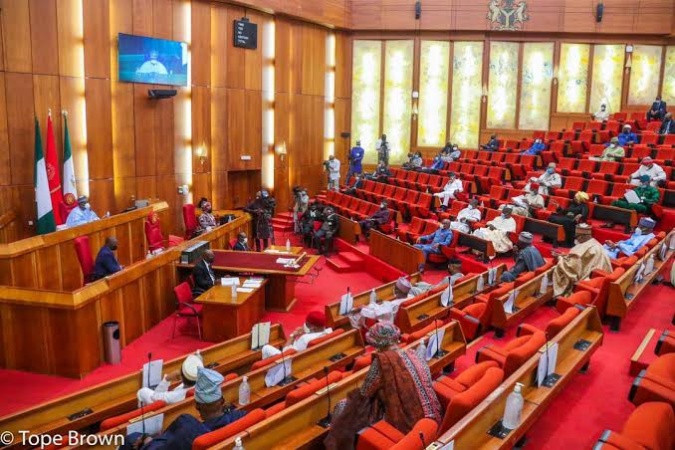
File photo: Senate in session
By MARYAM AHMADU-SUKA
The National Assembly has pledged to support policies aimed at reviving Nigeria’s automotive industry and reducing the country’s dependence on imported vehicles.
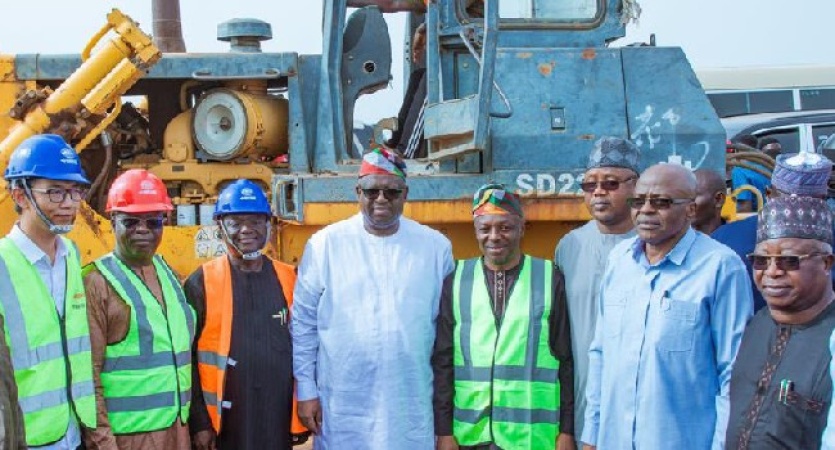
Sen. Francis Fadahunsi, Chairman, Senate Committee on Industry, made the commitment on Wednesday during an inspection of the facilities of PAN Nigeria Ltd. In Kaduna.
Fadahunsi said the continued influx of foreign-used vehicles was undermining local manufacturing and contributing to pressure on the nation’s foreign exchange reserves.
He said Nigeria had the capacity to produce vehicles locally, adding that the country should no longer allow its market to be dominated by imported vehicles when local manufacturers could meet part of the demand.
“Nigeria has become a dumping ground, so we have to reject it,” he said.
The senator, a retired Customs officer, said his experience had exposed him to the economic implications of excessive vehicle importation.
He urged the Federal Government to strengthen its support for local manufacturers and encourage Nigerians to patronise vehicles produced within the country.
Fadahunsi said the committee’s inspection showed that Nigerian engineers had the technical capacity to develop vehicles and other means of transportation suited to the country’s environment and economic realities.
He said the PAN facility, which covers nearly 300,000 square metres, remained a valuable national asset with the potential to create thousands of jobs if fully operational.
According to him, the company has the capacity to employ more than 3,000 workers when operating at full capacity.
He also noted that PAN’s training facilities had produced about 12,000 artisans, including mechanics, forklift operators and other technical personnel.
Fadahunsi appealed to President Bola Tinubu to give greater attention to the automotive sector, saying stronger government patronage would stimulate production, create jobs and conserve foreign exchange.
“Mr President, you should know the gravity of this, the drain on our foreign reserve caused by this particular product,” he said.
He also assured stakeholders that the National Assembly would work to accelerate the passage of the proposed National Automotive Industry Bill 2026.
He said the legislation would provide a stronger framework for protecting local investments and addressing challenges confronting vehicle assembly and manufacturing in Nigeria.
“We pledge our cooperation with you and assure you that we will do everything within our powers to accelerate legislation on the Bill,” he said.
Earlier, the Managing Director of PAN Nigeria Ltd., Mrs Taiwo Oluleye, urged the National Assembly to urgently enact the proposed legislation.
Oluleye said the automotive industry needed consistent policies and adequate protection to attract investment and compete favourably with imported vehicles.
She said PAN, established in 1972 and which commenced operations in 1975, had an installed annual production capacity of 90,000 vehicles.
According to her, the company’s production capacity has, however, been affected by rising operational costs, foreign exchange challenges, high interest rates and policy inconsistencies.
She said PAN had transformed from a single-brand assembly plant into a multi-brand facility producing SUVs, sedans, buses and pick-ups.
Oluleye said some of the company’s buses had also been converted into ambulances.
She recalled that PAN had previously achieved about 40 per cent local content when the industry enjoyed a more favourable policy environment, compared with less than four per cent currently.
The managing director said the proposed legislation would help protect investments in existing assembly plants and address the disparity between manufacturers investing in local production and importers of completely built vehicles.
“We appeal to you by this visit that you review and legislate. The legislation of this policy will protect investment and develop local production as opposed to importation of vehicles,” she said.
Oluleye described the automotive sector as a “gold mine”, saying its development would stimulate activities in steel, aluminium, plastics, rubber, finance, ICT, logistics, engineering and research.
She said the industry also had the potential to support Nigeria’s industrialisation and position the country to benefit from the African Continental Free Trade Area.
According to her, Nigeria could become a major vehicle-exporting hub in Africa if it improves local content and provides an enabling environment for manufacturers.
Also speaking, the Director-General of the National Automotive Design and Development Council (NADDC), Mr Oluwemimo Osanipin, said the inspection had demonstrated Nigeria’s capacity to meet a significant portion of its vehicle needs through local production.
“What we have seen here is evidence that we have the capacity,” Osanipin said.
He said PAN’s 90,000-unit annual installed capacity, alongside other automotive facilities, particularly in Lagos, could provide substantial capacity to meet domestic demand if fully utilised.
The NADDC boss said the council was working to address major challenges in the sector, including legislation, patronage and access to credit.
He said the Federal Government’s Nigeria First policy had created an opportunity to strengthen local manufacturing.
Osanipin added that NADDC was collaborating with the Credit Corporation to expand vehicle financing beyond cars and motorcycles.
He said improved legislation, government patronage, access to affordable credit and protection of local investments would help reposition the automotive industry and reduce dependence on imported vehicles.
The News Agency of Nigeria (NAN) reports that the delegation also inspected the facilities of Dangote Peugeot Automobiles Nigeria (DPAN), where various vehicles are assembled. (NAN)