Updating your news feed...
NEWS EXPRESS is Nigeria’s leading online newspaper. Published by Africa’s international award-winning journalist, Mr. Isaac Umunna, NEWS EXPRESS is Nigeria’s first truly professional online daily newspaper. It is published from Lagos, Nigeria’s economic and media hub, and has a provision for occasional special print editions. Thanks to our vast network of sources and dedicated team of professional journalists and contributors spread across Nigeria and overseas, NEWS EXPRESS has become synonymous with newsbreaks and exclusive stories from around the world.








Loading banners
Loading banners...

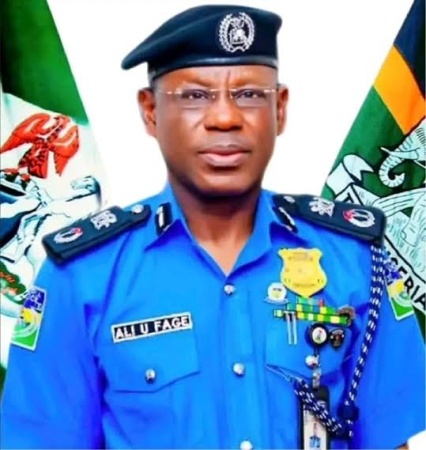
INEC Chairman, Prof Joash Amupitan
The credibility of Nigeria’s 2027 elections will depend on more than what happens at polling units, with stakeholders warning that weak institutions, unverified results, legal gaps and AI-generated falsehoods could distort voters’ choices.
The warnings came yesterday at the 22nd All Nigeria Editors Conference, organised by the Nigerian Guild of Editors in Enugu, where editors and key stakeholders examined the challenges confronting Nigeria’s electoral process ahead of the 2027 general elections.
The theme of the conference was: ‘The Ballot, the Media and the Task of Keeping Democracy Alive’.
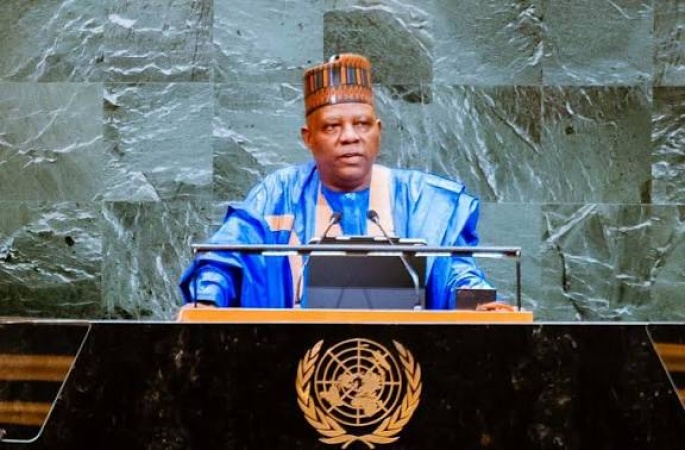
Vice President Shettima said the media had a responsibility to ensure that the ballot gave citizens a voice, adding that this could only be meaningful when voters had access to credible information on which to base their choices.
He described the media as the “fourth estate of the realm”, saying journalists and editors had a responsibility to interrogate power, inform citizens, shape public debate and preserve the nation’s institutional memory.
“That responsibility has become even more demanding in the age of artificial intelligence,” Shettima said, referring to the conference sub-theme, “When Lies Look Real: Detecting and Debunking AI Disinformation Before, During and After Election.”
He said the ability of technology to produce convincing falsehoods at unprecedented speed had made professional journalism more important.
“The editor remains a crucial gatekeeper between information and manipulation,” he said.
Shettima charged the media to continue scrutinising the government while also telling the full story of the administration’s progress.
Former Archbishop of the Catholic Archdiocese of Abuja, John Cardinal Onaiyekan, lamented the declining quality of elections in Nigeria since 1999, saying the country appears to be moving backwards rather than making progress.
Onaiyekan, however, said President Bola Tinubu had assured Nigerians of the independence of the Independent National Electoral Commission (INEC) in conducting the 2027 general elections.
He said Nigerians were now looking to the electoral commission to “provide the change” needed to improve the country’s elections.
Onaiyekan, who traced the history of democracy in Nigeria, said that although much of the country’s political history had been dominated by military rule, the activities of electoral stakeholders had also contributed to the poor quality of elections.
He said elections were designed to choose leaders at all levels and assess their performance, adding that Nigeria’s electoral process was guided by the Constitution, laws enacted by the National Assembly and INEC rules and regulations.
“The purpose is to ensure free, fair and credible elections, to make sure that the will of the people is correctly ascertained. We must insist on the primary position of the people who cast their votes,” he said.
The cleric said it was difficult to establish that Nigeria had made progress in conducting elections since 1999.
“In fact, it seems that the quality of the elections has been reducing from one election to another, and this is not good news at all,” he said.
He identified the “do-or-die” attitude of politicians and the determination to win elections at all costs as major threats to the democratic process.
Onaiyekan also criticised the poor implementation of constitutional provisions such as Federal Character and State of Origin, as well as the growing practice of zoning.
According to him, zoning has promoted elite rivalry rather than addressing the interests of people at the grassroots.
He also identified challenges within INEC, saying the commission’s problems were partly linked to its establishment and to government control.
Onaiyekan called for an improved legal framework for elections, but said credible elections could still be conducted under the existing laws if they were implemented sincerely.
“Even with our deficient electoral laws, we can still conduct free, fair and credible elections if the rules are followed with sincerity of purpose,” he said.
He also advocated a special election tribunal dedicated exclusively to resolving electoral disputes with minimum delay, saying a free press was essential to genuine democracy.
Chairman of the occasion and Obi of Onitsha, Igwe Alfred Achebe, urged the conference to work against the erosion of truth in public life, particularly amid the growing use of artificial intelligence.
Achebe said technology had transformed the production and spread of falsehood, making it increasingly difficult to distinguish fabricated content from genuine information.
He cited the ability of AI to clone the voice of a governor, create videos of candidates in places they had never visited and produce images of violence that never occurred.
Enugu State Governor, Peter Mbah, called for a constructive relationship between government and the media, saying both institutions served the Nigerian people.
He said the government had a responsibility to be accountable and transparent, while journalists had a duty to establish facts and report the truth.
Mbah urged journalists to strengthen investigative journalism and avoid sensationalism.
He also challenged editors to independently scrutinise his administration’s claims about its efforts to transform Enugu into an economic gateway for the South-East.
President of the NGE, Eze Anaba, said the conference was convened at a critical period as Nigeria approaches another election cycle.
He said credible information was essential to enable citizens to make free, critical and informed choices.
Anaba urged editors to uphold independence, fairness, accuracy and courage in the discharge of their duties despite the economic pressures confronting the media industry.
INEC cautions media against publishing privately collated results
The Independent National Electoral Commission cautioned media organisations against publishing or amplifying privately collated election results ahead of the 2027 general elections.
The commission warned that such reports could create conflicting narratives and undermine confidence in officially declared results.
INEC Chairman, Prof. Joash Amupitan, gave the warning while speaking at the All Nigeria Editors Conference.
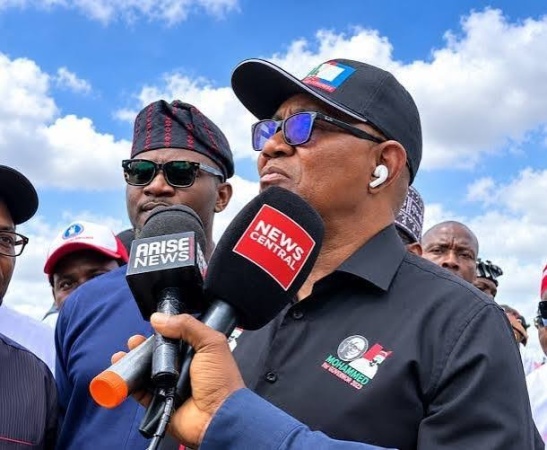
His position came against the backdrop of recent comments by the presidential candidate of the Nigeria Democratic Congress (NDC), Peter Obi, that his team would establish an independent system to transmit results from polling units to the party’s situation room during the 2027 elections.
Obi had said the system would operate alongside INEC’s official transmission process, with the aim of ensuring that votes counted and recorded at polling units were accurately transmitted.
However, NDC chieftain, Victor Umeh, subsequently clarified that the party was not planning a parallel result-declaration system, explaining that its agents would transmit results after they had been counted, declared, and entered into the prescribed result forms for independent collation in the party’s situation room.
Amupitan, while addressing more than 500 media decision-makers, proprietors and editors at the conference, urged editors to ensure that their platforms did not become channels for unverified election figures.
He said: “Let’s resist premature result declarations. Under the Electoral Act, statutory authority to declare election results rests exclusively with INEC.
“Amplifying unverified, privately collated figures published by political actors on social media creates conflicting public narratives that undermine official outcomes. We should use our platforms to educate citizens on spotting synthetic content, fake letterheads, and algorithmically generated rage-bait.”
Osigwe decries legal hurdles facing BVAS, IReV in election petitions
The former President of the Nigerian Bar Association (NBA), Mazi Afam Osigwe, raised concerns over the legal and evidentiary challenges created by the use of technology in Nigeria’s electoral process, particularly the Bimodal Voter Accreditation System (BVAS) and the Independent National Electoral Commission (INEC) Result Viewing Portal (IReV).
The senior lawyer said that while technology was introduced to strengthen the electoral process, the existing legal framework had created difficulties for litigants seeking to use electronically generated electoral evidence to challenge election results.
He particularly questioned the practical requirements for producing BVAS devices as evidence in election petitions, noting that the demands could be difficult to meet within the limited period prescribed for filing and determining election disputes.
Osigwe said, “So if you’re challenging a state-wide election and an issue concerns BVAS from every polling unit, you must physically go and carry the BVAS from every polling unit. And yet the court is not a bit hesitant to set time limits.”
He said such requirements could defeat the objective of deploying technology to make elections and the resolution of electoral disputes more efficient.
The former NBA president also called for greater evidentiary recognition of IReV, arguing that the portal should have a defined role in election litigation even if it was not regarded as the primary evidence of an election.
“I’m not saying it should be the primary evidence, but first of all, some recognition should be given to it,” he said.
Osigwe also criticised the treatment of evidence obtained through subpoenas, particularly in petitions arising from the 2023 general elections.
According to him, petitioners are required to file their evidence within 21 days, creating difficulties where relevant documents or testimony are obtained subsequently through subpoenas.
“Why do we call it a subpoena? Why didn’t they say they are your witnesses?” he asked, referring to the presidential election petitions filed by Atiku Abubakar and Peter Obi.
He said the approach had weakened the usefulness of subpoenas, particularly where petitioners required documents held by INEC or other public institutions.
Beyond technology, Osigwe said the difficulties surrounding election petitions had contributed to what he described as the “judicialisation of the electoral process”, with courts increasingly determining electoral outcomes.
“The courts have gradually and increasingly usurped the role of the voters in determining the representatives of the people,” he said.
He attributed the high number of election petitions partly to the difficulty of proving electoral malpractice, while also expressing concern about the independence of INEC and weaknesses in the electoral legal framework.
He urged editors and journalists to continue scrutinising INEC, the courts and political actors, stressing that the media had an important role to play in ensuring that votes cast by Nigerians translated into legitimate political mandates.
Jigawa gov urges editors to strengthen fact-checking against AI disinformation
For his part, Jigawa State Governor, Umar Namadi, urged editors to strengthen fact-checking and verification systems to combat the growing threat of artificial intelligence-driven disinformation to democracy.
The governor warned that AI tools could generate and manipulate text, images, audio and video so convincingly that falsehoods could appear genuine, particularly before, during and after elections.
He said credible elections depended not only on the ballot box but also on citizens having access to accurate information to make informed choices.
The governor called on media organisations to invest in newsroom fact-checking, verification, media literacy and the ethical use of technology.
He described editors as the final line of defence for accuracy, fairness and responsible publishing, urging them to prioritise truth and responsible journalism over the race to break news first.
He also advocated sustained collaboration between government and the media to strengthen digital literacy and public awareness.
The governor called for fair enforcement of existing laws against harmful falsehoods while protecting legitimate expression and press freedom.
According to him, such measures were necessary to protect public trust, national cohesion and the resilience of Nigeria’s democracy. (The Guardian)