Updating your news feed...
NEWS EXPRESS is Nigeria’s leading online newspaper. Published by Africa’s international award-winning journalist, Mr. Isaac Umunna, NEWS EXPRESS is Nigeria’s first truly professional online daily newspaper. It is published from Lagos, Nigeria’s economic and media hub, and has a provision for occasional special print editions. Thanks to our vast network of sources and dedicated team of professional journalists and contributors spread across Nigeria and overseas, NEWS EXPRESS has become synonymous with newsbreaks and exclusive stories from around the world.








Loading banners
Loading banners...

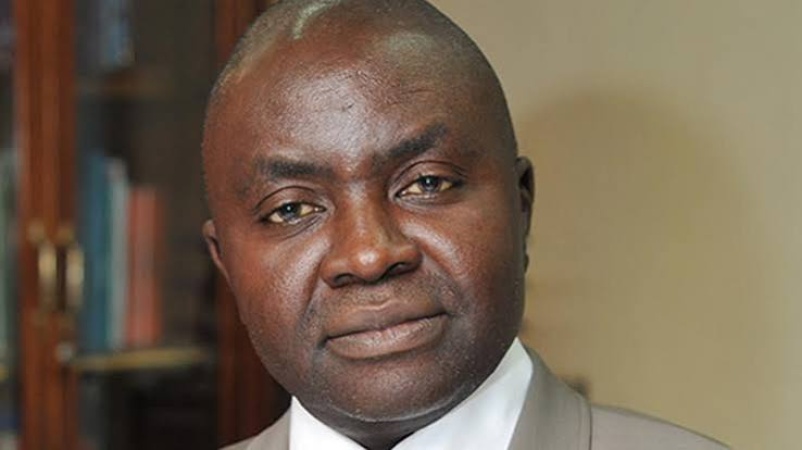
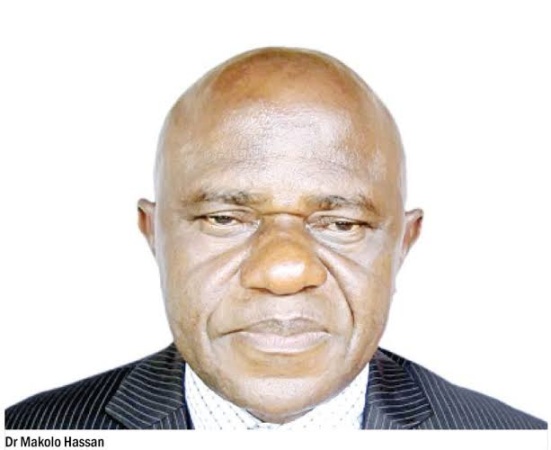
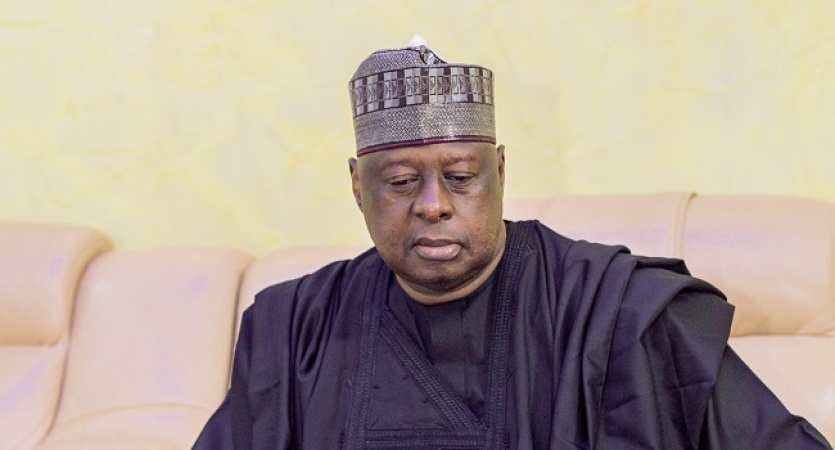
NASU National President Hassan Makolo
In this interview with CHRISTIAN APPOLOS, National President of the Non-Academic Staff Union of Educational and Associated Institutions (NASU), Comrade Hassan Makolo, speaks on the delayed implementation of the June 29 Agreement between the Federal Government and university-based non-teaching staff unions, its implications for workers and the possibility of renewed industrial action.
What is the current situation regarding the implementation of the June 29 Agreement between the Federal Government and non-teaching staff unions in universities?
The agreement has been signed, and that itself is the product of a long struggle because the issues date back to 2009 and have only recently been reviewed. Workers are partly happy that the agreement has been reached, but the major challenge now is implementation.
As we speak, the government is yet to release the funds required for implementation. Some universities that have been able to make payments have done so in fragments, using their internally generated revenue (IGR), but that cannot amount to even 30 percent of what is required.
We have just learnt that the government has released funds for the implementation of the agreement with academic staff. The Minister of Education has also promised that the non-teaching staff would be attended to within a couple of weeks. We are hoping that this promise will yield something positive.
When exactly was that promise made, and has the government formally communicated it to NASU and SSANU?
It is a fresh promise. I saw it online about three or four days ago when the news of the release of funds for the academic staff was announced. At a function, the minister reportedly said that the money for the academic staff had been released and appealed to the non-teaching staff to give him a couple of weeks, after which their own funding would be addressed But there has been no official communication to NASU on that promise. We stumbled on it online.
Was any specific timeline agreed upon when the June 29 agreement was signed?
No. Agreements of this nature do not necessarily have a specific implementation timeline. What is important is the agreement itself and the date when it becomes due for renegotiation. However, considering how long workers waited for this agreement to be reviewed, you would expect the government to put the necessary mechanism in place to ensure that implementation begins immediately after signing.
What does the delay in funding mean for workers who have already waited for years?
Workers are still restless. Even with whatever improvement the agreement may bring, the economic situation remains very difficult.
For those who own cars, for instance, the money can hardly cover the cost of fuelling them adequately. If you dedicate it to fuel alone, it is gone, without considering school fees and the many other responsibilities workers have.
This is also a period when families are paying school fees. So, you can imagine the pressure on workers.
If the government knows that funds will be required, there should have been a mechanism in place before the agreement was signed so that immediately after signing, the money would be available. Otherwise, if workers are asked to wait and continue agitating for what has already been agreed upon, it becomes very unfortunate.
Some universities have resorted to using their IGR to make payments. Is that sustainable?
No. Most of the universities that have been able to pay have sourced money from their IGR, but that cannot amount to even 30 per cent of what is required. Universities have other responsibilities. They need money to run their institutions, provide facilities and attend to several other needs. You cannot expect them to solve everything from their IGR, particularly an obligation arising from an agreement reached at the federal level. That is why we are saying clearly that the government needs to release the money.
The government has repeatedly said it has successfully brought an end to strikes in tertiary institutions. Can it make such a claim when agreements with workers are still awaiting implementation?
My take is that nobody in the government has the capacity to declare that there will be no more strikes. The government has never declared a strike. It is workers and their leadership that declare industrial action. You cannot sit in your comfort and say, “No more strike.” What do you mean by “no more strike”?
Workers are agitating, and tomorrow the membership may say that because of one issue or another, we have to down tools. You cannot crucify them for that.
What the government should be saying is that it is doing everything possible to ameliorate the suffering of workers and address the outstanding issues. That is what they should be saying, rather than boasting that this is the end of strikes.
In union struggle, we say, “Aluta continua, victory asata.” From one problem, you move to another. The government cannot just say that because it has addressed one aspect of the problems, everything has been resolved.
If the government fails to release the funds within the period mentioned by the minister, what should workers expect?
It is a corporate action. Whatever has to do with non-teaching staff, especially NASU and SSANU, we have a marriage of togetherness. If within a few weeks the government does not make good its promise, the unions may need to review the situation and take appropriate decisions.
So, another round of industrial action cannot be ruled out?
What I am saying is that workers and their leadership are the ones that determine when there will be industrial action. If workers are agitating over unresolved issues and the government does not address those issues, the unions will have to look at the situation and make appropriate decisions.
Nobody wants industrial action for the sake of it. But you cannot sign an agreement with workers and then leave the financial aspect hanging indefinitely.
Beyond the monetary benefits, what other issues do you believe the government must address in the tertiary education sector?
The issue is not only about what workers will receive. We must also talk about proper funding of educational institutions. Have we adequately tackled that? You don’t just address one aspect and feel that you have done everything. We are talking about the institutions where these workers operate. If the institutions are not properly funded, it will affect everybody — the workers, the students and the entire education system.
The government says increased revenue is now available following the removal of fuel subsidy. Should more of that revenue be devoted to education?
As it stands today, TETFund and the money released to universities through Needs Assessment are doing a lot for the educational sector. If the government can devote more resources to education, the problem of inadequate funding will reduce drastically.
Go to schools today, especially state universities that many governors tend to neglect. You will see that some of the institutions have utilised the little support they receive through TETFund and Needs Assessment very well. You can see beautiful structures on the ground. So, if individuals can fund universities, why can’t the government do more to fund the universities?
Would you therefore support greater investment in existing universities rather than establishing more institutions?
Absolutely! If you cannot adequately fund the institutions you already have, why politicise the opening of more universities instead of taking care of the ones on the ground? The educational sector needs more money, whether it comes from savings from subsidy removal or other sources.
Today, governors are happy because a lot of money has been apportioned to them following the removal of subsidy. Let other segments equally benefit from it because the subsidy has been removed.
What would such investment mean for workers and students?
When fuel subsidy was in place, workers could at least manage their cars and other responsibilities. Now that the subsidy has been removed, it is difficult for workers to drive those cars on the road because of the cost of fuel. So, if workers cannot directly benefit from the proceeds of subsidy removal, let educational institutions benefit from it. If universities are properly funded, the benefits will transcend the workers. Students will have access to better facilities and adequate equipment, while the entire educational system will improve.
What should the government do now to prevent the situation from degenerating into another industrial crisis in the tertiary education sector?
The government should release the money and implement the agreement. There is no point signing an agreement with workers and leaving the financial aspect hanging. There should have been a mechanism in place before the agreement was signed so that immediately after the signing, the necessary funds would be available.
Workers have waited for this agreement for a long time. What we need now is implementation. If the government does what it has promised and releases the funds, it will go a long way towards ameliorating the suffering of workers and sustaining industrial peace in the tertiary institutions. (Nigerian Tribune)