Updating your news feed...
NEWS EXPRESS is Nigeria’s leading online newspaper. Published by Africa’s international award-winning journalist, Mr. Isaac Umunna, NEWS EXPRESS is Nigeria’s first truly professional online daily newspaper. It is published from Lagos, Nigeria’s economic and media hub, and has a provision for occasional special print editions. Thanks to our vast network of sources and dedicated team of professional journalists and contributors spread across Nigeria and overseas, NEWS EXPRESS has become synonymous with newsbreaks and exclusive stories from around the world.





















Loading banners
Loading banners...

By BONIFACE AKARAH
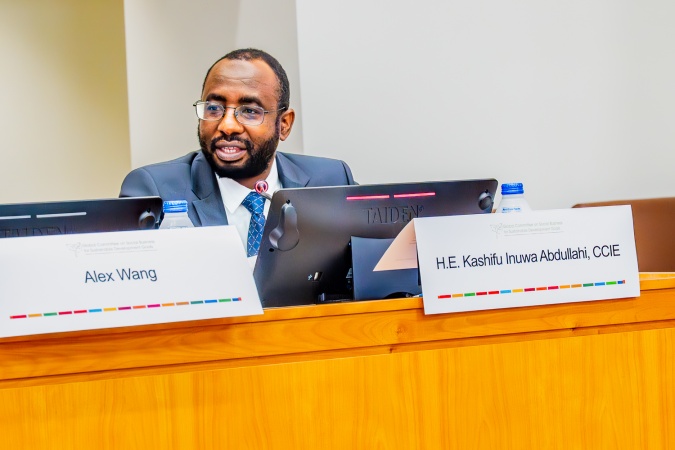
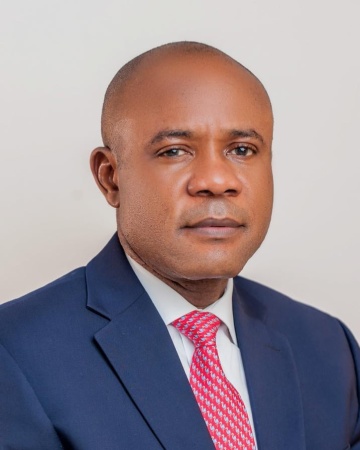
The Director-General/CEO of the National Information Technology Development Agency (NITDA), Kashifu Inuwa Abdullahi, has called for an inclusive approach to artificial intelligence (AI) that goes beyond expanding access to technology and gives people the ability to understand, shape and create value from it.
Abdullahi made the call during a high-level dialogue on technology, innovation and social business for sustainable and inclusive development, where he joined global leaders including United Nations General Assembly President Dr. Khalilur Rahman, Timor-Leste President José Ramos-Horta, Bhutan Prime Minister Dasho Tshering Tobgay, Brazil’s Minister of Development and Social Assistance Wellington Dias, and Pakistan’s Minister of State Bilal Bin Saqib.
The programme also featured Professor Muhammad Yunus, 2006 Nobel Peace Laureate and founder of Grameen Bank, with the session welcomed by Yunus Centre Executive Director Lamiya Morshed and co-moderated by Dominique V. Dauster and James Chau.
In his keynote, Abdullahi said the global conversation around AI should move beyond simply making the technology available and focus on three key principles: Representation, Access and Agency.
He argued that AI systems should reflect the data, languages, cultures, contexts and values of the people they are designed to serve, while empowering citizens to understand and build with the technology rather than simply consume AI-generated services.
“Inclusive AI requires representation and access—and access must mean agency, not just consumption,” Abdullahi said.
Using agriculture as an example, the NITDA chief described how AI could give a Nigerian farmer access to expertise that might otherwise be unavailable, including information on weather, soil conditions, crop challenges and market opportunities.
He said the real value of AI should ultimately be measured by its impact on people’s lives.
“The promise of AI is not that every Nigerian becomes an AI expert. It is that AI can put expertise within the reach of every Nigerian,” he stated.
Abdullahi identified four foundations for Nigeria’s approach to an inclusive AI future: CONNECT, SKILL, COMPUTE and CREATE.
He referenced initiatives aimed at expanding connectivity through Project BRIDGE, building digital and technical skills through programmes including DL4ALL, 3MTT and TVET, strengthening sovereign cloud and AI capabilities, and creating an environment where entrepreneurs can develop sustainable solutions to societal problems.
On digital sovereignty, Abdullahi said Nigeria’s objective was not to isolate itself technologically but to build the capacity to ensure that AI systems understand Nigerian data, context and nuances, operate within Nigerian law and reflect the country’s culture and values.
He also called for shared responsibility among government, technology companies and citizens.
According to him, government should provide infrastructure, policy clarity and regulatory certainty while protecting citizens, while global technology companies should move beyond simply selling technology in Africa.
He urged such companies to “build with Africa” by investing in computing capacity, transferring knowledge, developing talent, supporting African datasets and languages, and partnering with African innovators and researchers.
Abdullahi also encouraged young Nigerians to see AI as a tool for increasing their capabilities and productivity.
A central part of his address was the need to retain human accountability as AI becomes increasingly involved in decisions affecting health, livelihoods, rights and public services.
“We can delegate tasks to machines. We cannot delegate accountability,” he said.
The NITDA DG challenged policymakers, technology companies and innovators to consider two questions whenever an AI system is developed: who is represented in the intelligence being created, and who has the agency to shape that intelligence and create value from it.
In his closing remarks, Abdullahi said Nigeria’s AI ambition should be measured not only by technological advancement but by its contribution to human development.
“The defining achievement of the AI age should not be that we created machines capable of extraordinary intelligence. It should be that we used that intelligence to unlock extraordinary human possibility; for everyone,” he said.
Through NITDA, Abdullahi said Nigeria remained committed to developing an AI ecosystem in which representation creates relevance, access creates opportunity and agency enables Nigerians to become creators rather than merely consumers of the AI economy.