Updating your news feed...
NEWS EXPRESS is Nigeria’s leading online newspaper. Published by Africa’s international award-winning journalist, Mr. Isaac Umunna, NEWS EXPRESS is Nigeria’s first truly professional online daily newspaper. It is published from Lagos, Nigeria’s economic and media hub, and has a provision for occasional special print editions. Thanks to our vast network of sources and dedicated team of professional journalists and contributors spread across Nigeria and overseas, NEWS EXPRESS has become synonymous with newsbreaks and exclusive stories from around the world.

.webp)
.webp)
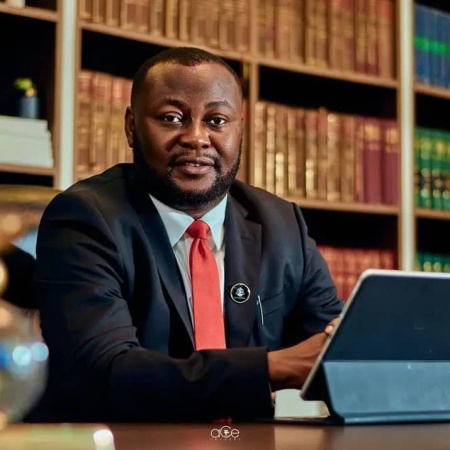
By AMB/Dr AYIBAEMI KEN-FASHOLA
Salutations
Introduction:
What Are We Really Celebrating?
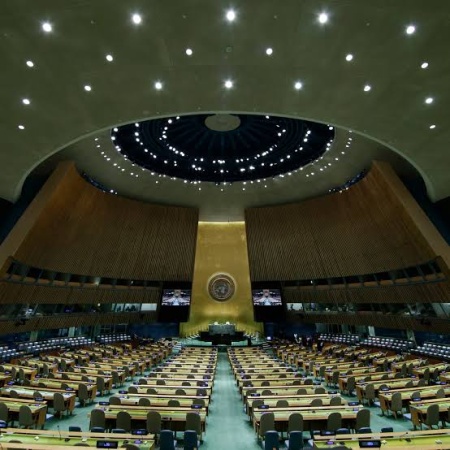
Today, 21 September 2026, the world observes the International Day of Peace, a United Nations observance established in 1981 and permanently fixed on 21 September in 2001 as a day of non-violence, global ceasefire, and awareness. The United Nations has chosen this year's theme, “Investing in Peace: For Everyone, Everywhere, Every Day,” with particular emphasis on the everyday architects of peace—ordinary citizens, community leaders, volunteers, advocates and institutions that build peace from the ground up. The anticipated achievement is not merely another ceremonial declaration that we love peace, but a transformation in the way we understand and practise it: from peace as the absence of war to peace as the presence of safety, dignity, justice, opportunity, dialogue, inclusion and human respect in everyday life.
I. PEACE: MORE THAN THE SILENCE OF GUNS
Ladies and gentlemen, there is a fundamental intellectual error in the way peace is sometimes understood.
We often define peace by what is absent: no war, no fighting, no riot, no shouting, no protest, no confrontation.
But silence is not necessarily peace.
A prisoner may be silent because he is afraid.
A citizen may remain silent because speaking truth attracts consequences.
An employee may tolerate injustice because challenging the system could cost him his livelihood.
A community may stop protesting because the people have become exhausted, not because their grievance has disappeared.
A poor family may avoid confrontation because it cannot afford the consequences of conflict.
Therefore, we must distinguish between peace and pacification.
Pacification says: “Stop making trouble.”
Peace asks: “What created the trouble in the first place and how can we appropriately, deliberately, and effectively mitigate the issues so exposed?”
Pacification may suppress the symptom.
Peace addresses the wound.
That distinction is central to this year's theme.
The United Nations itself describes peace as more than the absence of war; rather, as a lived condition of safety, dignity and opportunity, sustained by cooperation and participation.
So, when we say “Invest in Peace,” the question is not merely:
How much money are we spending to prevent violence?
The deeper question is:
What are we investing in that makes violence unnecessary, injustice unacceptable, and peaceful coexistence worthwhile?
II. WHY “INVEST” IN PEACE?
The choice of the word investment is profoundly important.
Investment suggests that peace is not accidental.
Investment suggests resources.
Investment suggests planning.
Investment suggests patience.
Investment suggests that something valuable is expected in return.
If we invest in education, we expect knowledge.
If we invest in infrastructure, we expect productivity.
If we invest in healthcare, we expect healthier citizens.
Therefore, if we invest in peace, what should we expect?
We should expect security, productivity, social cohesion, economic growth, political stability, institutional legitimacy and human flourishing.
Peace is therefore not simply a moral aspiration.
Peace is economic infrastructure.
A farmer cannot farm efficiently in an environment of insecurity.
A business cannot plan confidently where violence can destroy its premises.
A student cannot concentrate where kidnapping is a daily fear.
An investor cannot confidently commit capital where institutions are unpredictable.
A citizen cannot participate meaningfully in democracy where intimidation determines political behaviour.
The World Bank's April 2026 assessment captures part of this paradox: Nigeria has made progress in macroeconomic stabilization, but household incomes have not fully recovered and poverty remains high.
The lesson is important:
Macroeconomic stability is necessary, but peace must eventually be experienced in the kitchen, classroom, marketplace, workplace and neighbourhood for it to make any form of sense.
III. THE NIGERIAN PARADOX:
WE WANT PEACE, BUT DO WE ALWAYS CREATE THE CONDITIONS FOR IT?
This brings us to our beloved homeland.
Nigeria is not without peace initiatives.
We have governments, security agencies, traditional institutions, religious bodies, civil society organisations like the Global Peace Foundation, Peace and Human Rights Initiative, Universal Peace Federation, and the Institute of Chartered Mediators and Conciliators (to mention but a few prominent ones), community associations, conflict-resolution mechanisms and countless individuals working for stability, including my humble self.
Yet the Nigerian citizen frequently confronts another reality.
There is the reality of economic hardship.
The reality of unemployment and underemployment.
The reality of insecurity.
The reality of unequal access to opportunity.
The reality of political exclusion, thuggery, godfatherism, and unlevel playing grounds.
The reality of corruption.
The reality of institutional distrust.
The reality of taxation without a corresponding perception of service.
The reality of citizens confronting multiple demands on limited incomes.
The reality of political competition sometimes becoming a struggle for access to state resources rather than a contest over competing visions of development.
The World Bank estimates that poverty remained widespread in Nigeria in 2025, while food inflation disproportionately affected poorer households.
The IMF likewise reported in June 2026 that poverty was around 63 percent at the national poverty line and that an estimated 27 million Nigerians faced food insecurity in late 2025.
(World Bank data + 1)
And this creates a profound peace question:
How do you tell a hungry person to be patient without simultaneously giving that person a credible reason to believe that tomorrow will be better?
Dont get me wrong or that attacking me before I land.
It is not an argument against peace.
It is an argument for a deeper definition of peace and a deeper thought process and agenda setting.
IV. THE DIFFICULT QUESTION: WHY SHOULD PEOPLE CHOOSE PEACE?
Here is where I want to become deliberately uncomfortable.
Why should a person choose peace when peace appears to demand that he surrender truth?
Why should a person choose peace when fairness appears unavailable?
Why should the disadvantaged remain peaceful when the advantaged appear to prosper through connections?
Why should a citizen respect institutions that the citizen believes do not respect him?
Why should a young person reject political thuggery when political violence sometimes appears to provide immediate money, identity, protection or access?
Why should a businessperson patiently comply with every legitimate demand when he perceives that different agencies can impose overlapping levies, charges and regulatory burdens?
Why should the ordinary citizen remain calm when the cost of survival keeps increasing and racing out of reach; even in death?
These are not questions to encourage violence.
They are questions that serious peacebuilding must answer.
Because if peace requires people to accept injustice indefinitely, then what we have constructed is not sustainable peace.
We have constructed a social pressure cooker.
V. PEACE WITHOUT JUSTICE: CAN IT LAST?
There is a dangerous temptation to confuse order with justice.
A society can be orderly and still be unjust.
A society can be quiet and still be angry.
A society can have no visible riot and still contain enormous quantities of resentment.
You can see this practically play out even in as lowly as secondry school old students associations, with no pecuniary or otherwise benefits.
This is why peace cannot be built by simply asking the aggrieved to keep quiet.
Consider three ordinary examples.
Example One: The Taxpayer
Imagine a small business owner who pays federal taxes, state taxes, local charges, licensing fees, market levies, regulatory fees and other legitimate or disputed demands (like those from community touts emboldened by the weaponisation).
If the citizen receives visible infrastructure, security, sanitation, electricity, roads, access to justice and an enabling business environment, taxation can be understood as a contribution to the social contract.
But where taxation is experienced primarily as extraction while public services remain inadequate, the psychological meaning changes.
The citizen begins to ask:
“What exactly am I investing in?”
That question is fundamentally a question about social peace.
Example Two: The Police and the Citizen
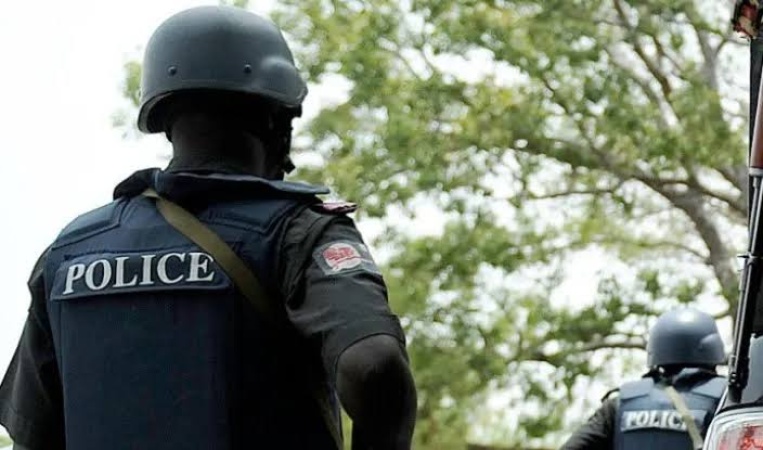
The police are indispensable to peace. Without legitimate law enforcement, society becomes vulnerable to criminality and violence.
But policing itself must command legitimacy.
An Afrobarometer survey published in 2025 reported that 70% of Nigerian respondents said most or all police officials were involved in corruption; among respondents who had sought certain public services, substantial proportions reported paying bribes in interactions involving police assistance or avoiding problems with police. These are citizens' reported perceptions and experiences, not a claim about every police officer.
(Re: Afrobarometer)
That distinction matters.
Because the problem is not the existence of the police.
The problem is what happens when an institution established to protect citizens becomes, in the eyes of citizens, an institution they must sometimes protect themselves from.
The answer is not to abolish authority.
The answer is to make authority lawful, accountable, professional and trustworthy.
That is peacebuilding.
Example Three: Politics and the Disenfranchised Citizen.
Democracy is supposed to provide peaceful mechanisms for disagreement.
But what happens when citizens believe that political power is inaccessible except through money, patronage, intimidation or political connections?
What happens when young people become instruments in political contests?
What happens when political thuggery is rewarded while civic responsibility receives little recognition?
The danger is profound.
When citizens lose faith in peaceful channels for achieving legitimate political change, frustration searches for alternative channels.
That is why credible elections, civic participation, accountability and equal protection under law are not merely democratic luxuries.
They are peace infrastructures that should be brought to bear realistically on the systems.
VI. THE INSTITUTIONAL DIMENSION OF PEACE
We must therefore confront a difficult proposition:
Institutions can either manufacture peace or manufacture grievance.
A police institution that protects impartially builds peace.
A judiciary that delivers justice without fear or favour builds peace.
A tax authority that applies transparent rules builds peace.
An electoral institution that inspires confidence builds peace.
A church leadership that picks the right candidate for Knighthood, instead of tribe, "nmamadu", or outright cash influence builds peace.
A government that explains difficult economic reforms honestly builds peace.
A legislature that represents citizens builds peace.
A traditional institution that mediates disputes fairly builds peace.
A religious institution that refuses to weaponise identity builds peace.
A media institution that informs without deliberately inflaming society builds peace.
A citizen who refuses to spread inflammatory misinformation builds peace.
The National Human Rights Commission's recent reporting underscores the scale of the challenge: its 2025 human-rights dashboard recorded millions of complaints and identified insecurity, communal conflict, governance deficits and rights violations among major drivers of harm and declining public trust.
(Re: National Human Rights Commission)
The lesson is straightforward:
Peace cannot be delegated entirely to security agencies.
It must be produced by the entire architecture of society.
VII. THE LOOSENING END OF THE MAT
And this brings me to a particularly Nigerian metaphor.
Sometimes we find ourselves sleeping at the loosening end of the mat, neither completely inside nor completely outside; all because we tend to tilt towards the greater good of pursuing peace.
We are not at war, but we are not entirely at peace.
We have democracy, but many citizens question the quality of their representation.
We have taxation, but public services remain inadequate in many places.
We have security institutions, but insecurity persists.
We have laws, but enforcement is more often than not, uneven.
We have elections, but political distrust remains.
We have economic reforms, but the immediate burden can fall heavily on households and the ordinary people.
We have enormous national wealth, but widespread poverty remains.
We have an abundance of human talent, but insufficient opportunities for millions.
So we are neither fully in nor fully out.
We are at the loosening end of the mat.
And the academic question becomes:
How do we achieve sustainable peace under circumstances in which the citizen is simultaneously expected to obey, sacrifice, pay, endure, remain patient and remain peaceful, while the institutions responsible for justice, opportunity and protection are themselves struggling to earn sufficient trust?
That, ladies and gentlemen, is the real peace question.
VIII. METHINKS: INVEST IN THE CONDITIONS THAT MAKE PEACE RATIONAL
If we are serious about the theme “Investing in Peace: For Everyone, Everywhere, Every Day,” then our investment must have several dimensions.
1. Invest in Justice:
Peace without justice is fragile.
Citizens must have meaningful access to remedies when their rights are violated.
Accountability must not depend on social status.
The law must be capable of restraining both the powerful and the powerless.
2. Invest in Economic Dignity
A person does not need to become wealthy before enjoying dignity.
But citizens need realistic opportunities to work, earn, trade, educate their children and plan their futures.
Peace is strengthened when people believe that legitimate effort can produce legitimate reward.
3. Invest in Young People
Nigeria's young population should not be treated as a wasted generation of unserious yahooists, as an electoral crowd, or a reservoir of political manpower.
Young Nigerians must become positive and productive economic participants, innovators, entrepreneurs, professionals, civic actors and peacebuilders.
4. Invest in Institutions
Institutions must be stronger than individuals.
The police must be professional.
Tax administration must be transparent.
Churches and Mosques must look in the mirror and challenge themselves if they have not become worse than the society itself.
Electoral administration must inspire confidence.
The judiciary must remain independent.
Public expenditure must be accountable.
When institutions work, citizens have less reason to seek private solutions to public problems.
5. Invest in Genuine Dialogue
Dialogue is not weakness.
Dialogue is the mechanism through which competing interests discover that coexistence is possible.
But dialogue must not become a euphemism for telling the weaker party to surrender or used as an indirect tool of oppression and suppression.
Genuine dialogue must permit disagreement without intimidation of any kind.
It must allow truth to be spoken; and taken into account.
It must allow grievances to be sincerely documented to avoid similar mistakes in the near future.
It must permit compromise without demanding surrender of dignity.
6. Investing in Truth:
There can be no durable peace built upon deliberate falsehood.
We must learn to disagree without destroying one another.
Peace does not require us to agree on everything.
It requires us to recognise that disagreement does not automatically make the other person an enemy.
IX. FROM “PEACEKEEPING” TO “PEACEBUILDING”
There is an important conceptual difference between keeping peace and building peace.
Peacekeeping attempts to prevent conflict from becoming violent.
Peacebuilding asks why the conflict emerged.
Peacekeeping may separate two fighting parties.
Peacebuilding asks why they were fighting.
Peacekeeping may put a police officer between two angry groups.
Peacebuilding asks what grievance produced the anger.
Peacekeeping can create temporary space.
Peacebuilding must use that space to construct something better.
That is precisely why the 2026 theme is so significant.
The United Nations calls attention to everyday architects of peace—people who bridge divides and build stability through ordinary acts and local action. The Secretary-General has similarly emphasised investment in sustainable development, health, education, social protection, human rights, dignity, institutions people can trust, dialogue and negotiation.
(Re: United Nations)
X. WHAT DOES “EVERYONE, EVERYWHERE, EVERY DAY” MEAN FOR NIGERIA?
It means peace begins before the international conference.
It begins at home.
It means a father should not teach his child that strength means intimidating weaker people.
It means a mother should not have to choose between feeding her children and paying essential bills.
It means a police officer should understand that authority is a responsibility, not a personal entitlement.
It means a citizen should not offer a bribe and then complain that corruption exists.
It means a politician should not weaponise poverty.
It means a political party should not transform unemployed young people into instruments of intimidation.
It means a tax authority should distinguish revenue mobilisation from revenue harassment.
It means government should understand that compliance is easier when citizens perceive fairness.
It means the media must resist turning every disagreement into a war and making money from headlines.
It means religious leaders must not only preach human dignity alongside doctrine, they must also walk the talk and stop being hypocrites.
It means traditional rulers must mediate rather than inflame.
It means employers must recognise the dignity of workers.
It means workers must honour the obligations attached to employment.
It means citizens must learn that protest can be legitimate without becoming destructive.
It means government must learn that criticism is not necessarily rebellion.
And it means all of us must understand:
Peace is not the responsibility of the person who is suffering alone. Peace is a shared responsibility between the sufferer, the institution, the community and the State.
XI. THE GREAT CONTRADICTION
Perhaps the greatest contradiction in peacebuilding is this:
Everybody wants peace, but not everybody wants to pay the price of justice.
We want peaceful communities, but sometimes tolerate inequality.
We want peaceful elections, but sometimes tolerate political intimidation.
We want peaceful streets, but sometimes tolerate impunity.
We want peaceful workplaces, but sometimes exploit workers.
We want peaceful families, but sometimes refuse to forgive.
We want peaceful nations, but sometimes glorify violence when it serves our interests.
Therefore, investing in peace requires something deeper than funding.
It requires moral investment.
It requires institutional investment.
It requires intellectual investment.
It requires economic investment.
It requires political investment.
And above all, it requires human investment.
XII. A NEW SOCIAL CONTRACT FOR PEACE
Nigeria needs a social contract in which the citizen says:
“I will obey the law because the law protects me.”
And government says:
“I will exercise authority because authority is entrusted to me, not because I own you.”
The taxpayer says:
“I will contribute because I can see the public value of my contribution.”
And government says:
“I will account for what you contribute.”
The police officer says:
“I will protect you without discrimination.”
And the citizen says:
“I will cooperate with lawful authority.”
The politician says:
“I will compete for power without destroying my opponent.”
And the citizen says:
“I will hold you accountable without becoming your enemy.”
That is the beginning of a mature peace architecture.
XIII. PEACE IS NOT SURRENDER:
Let us finally resolve the difficult question with which we began.
Should we choose peace even when peace seems to undermine truth, integrity, fairness, equity and immediate justice?
Methinks that we must redefine what we mean by choosing peace.
Choosing peace does not mean choosing silence over truth.
It does not mean choosing obedience over justice.
It does not mean accepting corruption because confrontation is uncomfortable.
It does not mean abandoning legitimate rights.
It does not mean asking victims to reconcile with perpetrators without accountability.
It does not mean telling the poor to endure indefinitely.
Peace is not surrender.
Peace is the disciplined pursuit of justice without turning every injustice into an excuse for destruction.
Peace says:
I will speak, but I will not destroy.
I will resist injustice, but I will not become unjust.
I will demand accountability, but I will not dehumanise my opponent.
I will disagree, but I will not make an enemy of everyone who disagrees with me.
I will pursue change, but I will not destroy the society I want to improve.
That is not weakness.
That is civilisation and something our politicians need to learn, understand, and imbibe as we negotiate another political election season.
XIV. OUR CHARGE: BECOME INVESTORS IN PEACE:
Distinguished ladies and gentlemen,
On this International Day of Peace, let us not merely celebrate peace.
I admonish us all to finance it with our conduct.
Let us finance it with honesty.
Let us finance it with justice.
Let us finance it with responsible citizenship.
Let us finance it with education.
Let us finance it with employment and opportunity.
Let us finance it with accountable institutions.
Let us finance it with tolerance.
Let us finance it with courage.
Let us finance it with truth.
Let us finance it with compassion.
And let us finance it with the determination to leave behind a Nigeria in which the next generation does not have to choose between peace and justice, because they will understand that genuine peace is itself an expression of justice.
The United Nations reminds us that peace is shaped not only in diplomatic conference rooms but in neighbourhoods, schools, homes and everyday interactions.
So the challenge before us is simple, but profound:
What are you investing in today that will make peace more possible tomorrow within your internal and external environment?
Not somebody else's.
You.
Not somewhere else.
Here.
Not someday.
Today.
Because if peace belongs only to governments, it will always be fragile.
If it belongs only to the non governmental organisations or institutions, it might lack the impetus or legitimate audacity to be fulfilled.
We must all own it.
If peace becomes a culture of everyone, everywhere, every day, then peace ceases to be merely an aspiration.
It becomes a way of life.
And perhaps that is the Nigeria we should begin building, not a Nigeria where everybody agrees, but a Nigeria where disagreement does not destroy us; not a Nigeria without grievances, but a Nigeria with credible ways of resolving them; not a Nigeria where the powerful are merely quiet, but a Nigeria where the powerless are heard; not merely a Nigeria without war, but a Nigeria where justice, dignity, opportunity, and human worth make peace worth choosing.
Happy International Day of Peace 2026.
INVEST IN PEACE — FOR EVERYONE, EVERYWHERE, EVERY DAY.
I COME IN PEACE.
(N/B: Forgive me if I was lengthy, but I hope it was worth provoking your heart into action?).
Thank you.
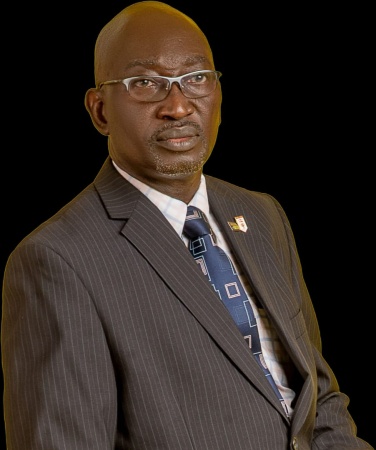
Being a Lecture to Mark the 2026 United Nations International Day of Peace delivered by: Amb/Dr Ayibaemi Ken-Fashola, KJW. Amb/Dr Ayibaemi Ken-Fashola, KJW is a UN Peace Ambassador, former Chairman of Global Peace Foundation Advisory Council in Nigeria and still serves on its board, former National Deputy President of the Institute of Chartered Mediators and Conciliators and a life member, and several other organisations. (drkenfash@gmail.com)