Updating your news feed...
NEWS EXPRESS is Nigeria’s leading online newspaper. Published by Africa’s international award-winning journalist, Mr. Isaac Umunna, NEWS EXPRESS is Nigeria’s first truly professional online daily newspaper. It is published from Lagos, Nigeria’s economic and media hub, and has a provision for occasional special print editions. Thanks to our vast network of sources and dedicated team of professional journalists and contributors spread across Nigeria and overseas, NEWS EXPRESS has become synonymous with newsbreaks and exclusive stories from around the world.










Loading banners
Loading banners...

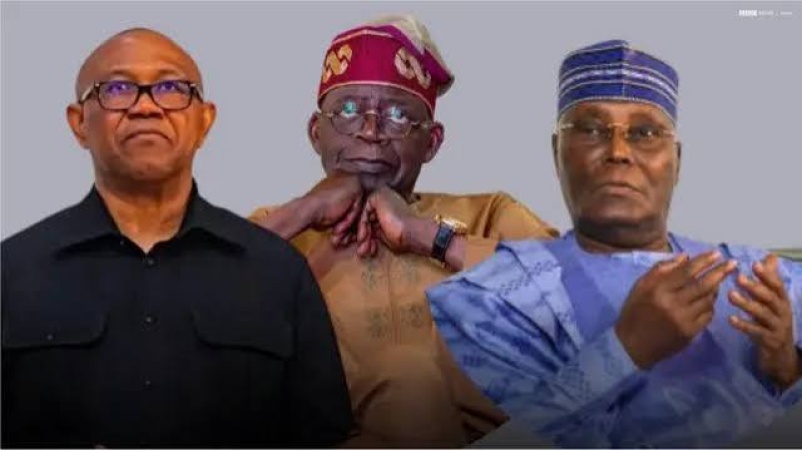
Obi, Tinubu, Atiku
The ruling party’s grip, the Atiku Abubakar Northeast factor and the Obi-Kwankwaso coalition have turned the race for northern votes into a contest the opposition risks losing to itself. Deputy Political Editor RAYMOND MORDI examines the battle for the Northwest, the Northeast and the North-Central ahead of the 2027 general election.
Across the 19 states of northern Nigeria, the arithmetic that has decided presidential contests for a generation is splintering into volatile sub-regional battles. The monolithic voting bloc once courted by party barons no longer votes as one. Ahead of the 2027 general election, the region that delivered decisive pluralities to successive commanders-in-chief is splitting across three distinct geographic zones, multiple political vehicles, and sharp generational divides.
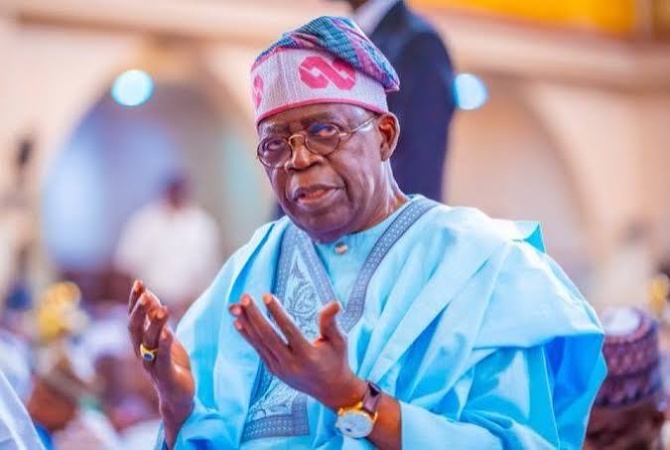
President Bola Ahmed Tinubu enters the campaign defending an electoral mandate from a position of formidable institutional strength. The ruling All Progressives Congress (APC) has assembled an overwhelming sub-national base, bringing the great majority of state governorships under its banner through electoral outcomes, targeted political engineering, and high-profile defections from a fractured opposition. In operational terms, this structure hands the ruling party sweeping control over state-level administrative resources, the distribution of ward patronage, and the localised logistics coordinated by sitting chief executives.
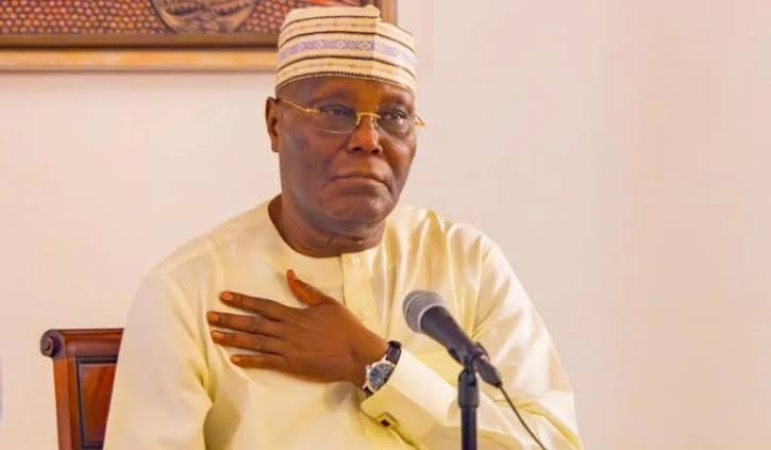
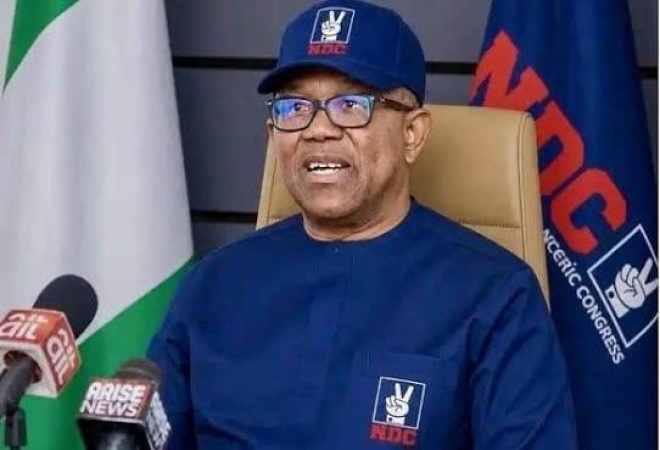
Yet this fortification confronts an opposition landscape that has restructured itself rather than conceded defeat. The traditional dual-monopoly long exercised by the APC and the People’s Democratic Party (PDP) has collapsed under the weight of factional crises and judicial paralysis. Instead, the northern electorate faces a multi-cornered contest among the APC’s state-backed defensive network, former Vice President Atiku Abubakar’s machinery operating through the African Democratic Congress (ADC), and the joint ticket of Peter Obi and his running mate, Rabiu Musa Kwankwaso, under the Nigeria Democratic Congress (NDC) banner.
The central paradox of the 2027 contest lies in this division. Widespread economic distress, driven by currency depreciation and the removal of fuel subsidies, has fuelled deep public anger across northern agrarian communities and urban centres. Yet the opposition’s failure to present a single, consolidated ticket threatens to squander the incumbent’s greatest vulnerability. Rather than encountering a coordinated northern uprising, the ruling party faces an electoral field severely divided against itself.
Northwest: The numbers game
The Northwest remains the decisive heavyweight of Nigerian electoral strategy. Comprising Kano, Kaduna, Katsina, Sokoto, Jigawa, Kebbi and Zamfara, the zone represents over 22 million registered voters. In 2023, the zone fractured along multiple lines: Kwankwaso swept Kano, Atiku picked up critical pluralities across Katsina, Kebbi and Sokoto, while Tinubu secured narrow, indispensable tallies in Kaduna and Jigawa to offset heavy losses in the Southeast and the South-South.
For 2027, the central fault line in the Northwest is the high-stakes divorce between Rabiu Musa Kwankwaso and his political protégé, Kano State Governor Abba Kabir Yusuf. Yusuf’s defection to the ruling APC early this year broke the unified front of the red-capped Kwankwasiyya movement, triggering a fierce battle for the political soul of Kano. Critics say by bringing state resources and local government administration directly into the APC tent, Yusuf has effectively created a rival centre of power in the state capital.
“The Kwankwasiyya Movement remains a philosophy rooted in the hearts of the talakawa, not in Government House appointments,” asserts Comrade Sanusi Bature, an NDC grassroots coordinator in Kano. “Governors can switch camps, but the masses who wear the red cap know who their leader is.”
Ruling party strategists view the development from a very different tactical perspective. “You cannot run a modern ground campaign without the machinery of the state executive,” counters a senior APC zonal officer in Kano. “Governor Yusuf’s movement into the APC means that the patronage lines, the local government chairmen and the ward mobilisers are now working in concert with the centre, leaving Senator Kwankwaso largely reliant on his personal appeal.”
This split inside Kano complicates the NDC ticket. While Obi’s mobilised following provides the ticket with urban energy, Yusuf’s defection forces Kwankwaso to defend his home base rather than projecting uncontested strength across Jigawa and Katsina.
Across the wider zone, the APC’s defensive apparatus is fortified by sitting governors pursuing customised stabilisation strategies. In Kaduna, Governor Uba Sani has spent his term healing the deep factional rifts left by his predecessor, Nasir El-Rufai. Sani’s task has been made easier by El-Rufai’s fall from grace: the former governor is in prolonged detention and facing multiple court cases over allegations of corruption, financial misconduct and a phone-tapping case linked to the National Security Adviser, leaving his once-formidable political network in disarray. By restoring working ties with Christian leaders in Southern Kaduna, negotiating accommodation with traditional rulers and managing delicate communal balances, Sani has built a resilient ward-level machine.
In Katsina, Governor Dikko Radda has anchored his political standing on rural security interventions. The Katsina Community Watch Corps, created to shield farming communities from armed bandits, acts as both a security buffer and an embedded civic presence. Radda’s calculated bet is that demonstrating physical protection in rural districts will insulate the APC from voter retribution.
Similar calculations drive APC administrations in Sokoto, Kebbi and Jigawa. In Sokoto, Governor Ahmed Aliyu relies on the resilient patronage structures of Senator Aliyu Wamakko. Still, the ruling party faces acute structural strains. Persistent insecurity in eastern Sokoto and Zamfara, combined with surging costs of commercial fertilizers and irrigation diesel, is leaving rural farming communities feeling the pinch. The APC depends on its governors to ensure that this rural discontent does not consolidate behind an opposition challenger on election morning.
Northeast: Fractured pillars, succession pacts
Moving east towards the Chad Basin, the contest shifts from demographic volume to questions of regional identity and splintered party foundations. The Northeast, covering Adamawa, Borno, Yobe, Bauchi, Gombe and Taraba, was long considered Atiku Abubakar’s foundational power base.
Now embarking on what his confidants frame as his final presidential bid, this time on the ADC platform, Atiku confronts a significantly weakened sub-national perimeter. The pillars that sustained his presidential campaigns for over a decade have largely crumbled. Driven by urgent local succession calculations and the legal collapse of the PDP, Governor Ahmadu Umaru Fintiri of Adamawa has shifted his political machinery into the APC fold, a path his Taraba counterpart, Agbu Kefas, followed early this year.
Simultaneously, Bauchi State Governor Bala Mohammed, faced with mounting litigation and his party’s internal disintegration, engineered an exit to align with the Allied Peoples Movement (APM).
These realignments have fundamentally altered the balance of power across the corridor. Without a single allied governor left in the zone to anchor his logistics, Atiku’s ADC must rely on legacy goodwill and private networks.
“What you are seeing is the instinct for political survival at the sub-national level,” explains Dr Aminu Modibbo, a political scientist and regional analyst based in Yola. “Governors Fintiri and Mohammed recognised that maintaining an adversarial posture against the federal authorities without a viable national party vehicle was untenable for their succession plans. Their departures severely isolate Atiku, depriving him of easy access to the state-backed resources and grassroots structures that traditionally delivered his home base.”
Standing directly opposite Atiku’s legacy appeal is Vice President Kashim Shettima, whose Borno-Yobe axis remains the ruling party’s safest northern stronghold. Shettima and Borno Governor Babagana Zulum command an exceptionally tight political network. Zulum’s widespread popularity, earned through hands-on governance, school rehabilitation and visible post-insurgency reconstruction, gives the APC immense leverage in the Kanuri heartland.
In Adamawa, Fintiri’s migration to the APC creates an entirely new electoral dynamic. The state apparatus, which previously mobilised every polling unit against the APC, is now tasked with neutralising the favourite-son sentiment long enjoyed by the former vice president. In Bauchi, Bala Mohammed’s alignment with the APM has produced a three-cornered battle in one of the Northeast’s most populous voting grounds, pitting the governor’s loyalists against both the APC state network and Atiku’s regional supporters.
Gombe, governed by the APC’s Inuwa Yahaya, sits squarely in the spotlight. Yahaya’s infrastructure investments and fiscal focus give the APC an advantage. Still, the presence of cross-border merchant networks and pastoralist groups linked to Atiku could keep the contest fiercely competitive. The Northeast is no longer a solid bastion for an Atiku candidacy; it is intensely contested territory where the weight of the vice presidency confronts lingering regional loyalties.
The volatile Middle Belt
If the Northwest is defined by numbers and the Northeast by regional pride, the North-Central is the nation’s premier swing territory. Stretching across Plateau, Benue, Nasarawa, Niger, Kogi and Kwara, the Middle Belt defies clean political modelling. Ethno-religious balances, longstanding communal clashes over land resources and shifting local allegiances characterise the zone.
The regional balance shifted decisively towards the centre with the formal defection of Plateau State Governor Caleb Mutfwang to the APC. His defection completes the North-Central sweep.
Yet Mutfwang’s formal realignment does not automatically guarantee monolithic party compliance among the Plateau electorate. The Middle Belt’s agrarian communities, scarred by persistent violence and displacement, harbour lingering resentments towards the centre. Opposition strategists in the NDC are already tapping into this simmering anger, drawing encouragement from Obi’s strong 2023 showing in Plateau and Nasarawa, and relying on youth-driven mobilisation across Jos to bypass state-sanctioned party structures.
In Benue, the political terrain is unsettled by a fierce power struggle within the APC itself. The relationship between Governor Hyacinth Alia and federal party barons led by Secretary to the Government of the Federation George Akume remains bitterly strained. Alia, whose electoral appeal derived from popular resentment towards traditional political godfathers, has governed with an independent posture, prioritising the clearance of salary backlogs and rural projects while freezing out established party figures from major state patronage.
This internecine conflict weakens the APC’s organisational coherence in Benue. Opposition organisers in the ADC and NDC are moving swiftly into the fissures, negotiating quiet pacts with alienated party stalwarts who feel sidelined by Alia’s inner circle.
In Kwara, the APC encounters an equally delicate internal dynamic. While Governor AbdulRahman AbdulRazaq has solidified his authority by leading the Nigeria Governors’ Forum, bitter post-primary fallout has created lingering resentment among grassroots party factions. Sidelined chieftains and disgruntled legislative aspirants have formed quiet internal opposition blocs and may be reluctant to deliver ward-level logistical support unless their grievances are resolved. These cracks offer an opening to the opposition in Ilorin and the southern senatorial district, where established political dynasties are attempting a coordinated comeback.
In Niger, Governor Mohammed Umar Bago has countered these regional vulnerabilities with massive, state-directed investments in agricultural mechanisation. By purchasing farm equipment and clearing vast tracts of land along the Niger basin, Bago seeks to demonstrate that the ruling party’s economic model can generate tangible rural prosperity, positioning his state as a defensive anchor for the presidency.
The zoning paradox and elite negotiations
Above the logistical skirmishes of the governors sits the contentious debate over power rotation between the North and the South. The Fourth Republic’s unwritten pact dictates that the presidency alternates between the two macro-regions after two four-year terms.
Conservative northern elites, influential emirs and ruling-party stalwarts argue that constitutional stability requires allowing the South to complete its eight-year tenure through 2031. They caution that cutting short an incumbent southern presidency would damage national cohesion and rupture the fragile inter-regional consensus established since 1999.
Opposition voices across the Northeast reject this interpretation with mounting urgency. “Power-sharing cannot become a suicide pact for the northern economy,” argues a senior ADC strategist based in Yola, Adamawa State. “When the price of basic food staples doubles in two years, and farming communities cannot afford fertiliser, expecting ordinary people to starve quietly in deference to an unwritten rotational elite pact is completely unrealistic.”
This clash reveals an expanding divide across northern society. The established political class, including retired military chiefs, career bureaucrats and traditional titleholders, favours institutional continuity and predictable access to state patronage. These networks maintain long-standing personal relationships with Tinubu’s political circles.
Conversely, the vast cohort of young northern voters, struggling with high underemployment and the evaporation of real incomes, feels little loyalty to such conventions. The spontaneous cost-of-living demonstrations that erupted across Kano, Kaduna and Maiduguri in mid-2024 revealed an underlying volatility that traditional community leaders could scarcely contain. For these younger voters, ballot decisions will turn on day-to-day survival rather than respect for zoning arrangements.
Incumbency mechanics versus economic realities
The ultimate resolution of the northern contest turns on the collision between the APC’s state machinery and prevailing economic pressures.
An extensive structural footprint underpins the ruling party’s ground game. By controlling almost all the governorships across the northern tier, the APC commands a well-resourced mobilisation network. Every state executive controls security budgets, procurement discretion and deep networks of local government administrators and traditional rulers down to the polling-unit level. In northern campaigns, where mobilising rural voters requires extensive logistical planning and trusted community emissaries, this apparatus amounts to a formidable defensive wall.
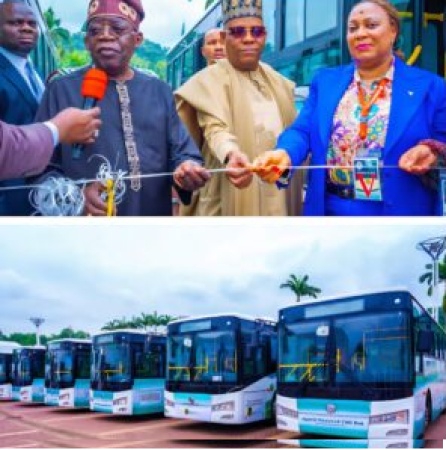
Furthermore, the federal administration has accelerated targeted interventions:
Nevertheless, the economic headwinds facing ordinary northern families remain severe. The removal of the petrol subsidy and the devaluation of the naira have sharply inflated transport costs for rural produce. Northern smallholders, responsible for the country’s staple grain and livestock production, face steep increases in the price of commercial agrochemicals and fuel for irrigation machinery. In major commercial centres like Kano, Zaria and Minna, household budgets have been stretched to their limits.
In a direct two-candidate contest, such widespread distress would put an incumbent administration under immense electoral jeopardy. The multi-polar nature of the opposition, however, changes the calculus. Because Atiku’s ADC and the Obi-Kwankwaso NDC are competing on separate tracks, they inevitably split the northern anti-incumbent vote. Strategists in the ruling party believe the APC does not require runaway majorities across the upper tier. With the opposition divided into distinct regional and ideological factions, a disciplined party machine can secure sufficient pluralities in individual northern states while clearing the constitutional threshold of 25 per cent in two-thirds of the states and the Federal Capital Territory.
Opposition leaders recognise this danger, yet deep personal rivalries have so far scuttled every serious attempt at coalition negotiations. Kwankwaso remains unwilling to subordinate his popular base to serve as a junior partner to Atiku. At the same time, Atiku’s loyalists insist that their candidate’s nationwide stature makes him the only viable challenger to the ruling party machine.
A fractured heartland
As Nigeria approaches the 2027 general election, the North confirms its place as the nation’s critical electoral arbiter, but under an entirely transformed dynamic. The era of the northern wave — the phenomenon that once allowed candidates like the late Muhammadu Buhari to bank 12 million monolithic votes before ballots were counted elsewhere — is firmly over.
The North in 2027 is a fragmented mosaic of regional calculations, localised survival pacts and fierce succession struggles. In the Northwest, Governor Yusuf’s defection pits the APC’s administrative machinery directly against Kwankwaso’s grassroots movement. In the Northeast, Atiku’s legacy push faces an isolated path following the departures of Governors Fintiri and Mohammed. At the same time, Kashim Shettima deploys the vice presidency to fortify the ruling party’s position. In the North-Central, Governor Mutfwang’s pivot completes the ruling party’s clean sweep of governorships, even as intra-party battles in Benue and Kwara expose vulnerabilities.
President Tinubu does not need to sweep northern votes to guarantee his re-election; he merely needs to hold his pluralities. By leaning on his expansive wall of state governors, benefiting from the divide between the ADC and the NDC, and keeping the opposition fractured across rival home bases, the incumbent’s path rests on targeted pluralities rather than a national consensus.
For the opposition, the northern heartland presents a cold, unforgiving equation. Unless its competing factions construct a unified operational strategy before election day, the multi-cornered battle for the North will only neutralise the region’s demographic power.
In a fragmented fight across 19 states, a divided hearth remains the ruling party’s most lethal asset. (The Nation)