Updating your news feed...
NEWS EXPRESS is Nigeria’s leading online newspaper. Published by Africa’s international award-winning journalist, Mr. Isaac Umunna, NEWS EXPRESS is Nigeria’s first truly professional online daily newspaper. It is published from Lagos, Nigeria’s economic and media hub, and has a provision for occasional special print editions. Thanks to our vast network of sources and dedicated team of professional journalists and contributors spread across Nigeria and overseas, NEWS EXPRESS has become synonymous with newsbreaks and exclusive stories from around the world.

.webp)









.webp)






Loading banners
Loading banners...

By SAMUEL HARRISON
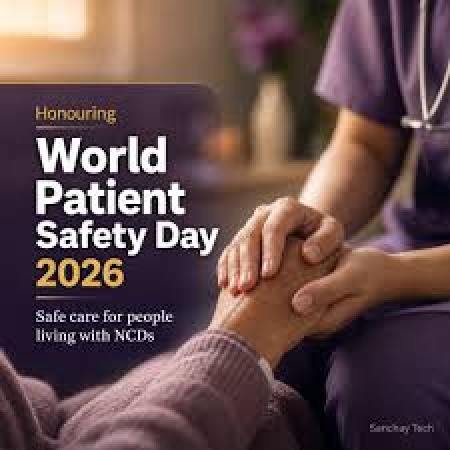
World Patient Safety Day is observed every year on 17 September. The theme for 2026 is “Safe care for noncommunicable diseases”, with the slogan “Safe care for life!” For people living with conditions such as hypertension and diabetes, healthcare is rarely a single visit. They may return repeatedly for monitoring, medicines, investigations and advice, sometimes over many years. Keeping that care safe depends not only on the decisions made at the consulting room, but also on whether health services are properly staffed, supported and coordinated, and whether patients are able to take an active part in their care. [1,2]
But what does patient safety look like on an ordinary day inside a hospital? It is not always a dramatic event or a major medical mistake. Sometimes it is the pressure of a crowded clinic, an emergency that changes the day's plans, a nurse trying to cover too many patients, a pharmacist working without enough support, a delayed laboratory result or a member of staff trying to respond to an emergency with limited resources.
Consider one such morning.
A Morning Under Pressure
At 7:45 am, Dr Faith was already in theatre.
She had been on call and was expected to join Dr Adekoya for the morning's work, but an emergency had changed the plan. A woman needed an urgent caesarean section. The team moved quickly. There was no time to wait for the morning handover to settle before beginning.
A little later that morning, Dr Adekoya walked into Clinic Room 3 and looked towards the patient waiting area. Patients were already arriving. By the time the morning clinic gathered pace, almost 50 patients were waiting to be seen.
The day was moving faster than the queue.
It was still morning.
By 9 am, the waiting area was already filling further.
He had about eight hours before he would need to prepare for his call shift. There was no fixed amount of time allocated to each patient. Dr Faith was supposed to join him in the clinic that morning, but she was already in theatre for the emergency caesarean section.
So, Dr Adekoya started alone.
The first patient came in.
Then another.
He listened, examined, reviewed medications and tried to make decisions that were appropriate for each person sitting in front of him.
One patient had hypertension and diabetes. Dr Adekoya knew that the consultation should involve more than adjusting medicines. He wanted to ask about diet, physical activity, medication adherence and the practical changes that might help the patient manage the conditions over time.
Before he could say much more, there was a knock on the door.
“Doctor, the next patient is waiting.”
He looked at the clock.
Another patient walked in.
In the ward, Nurse Chioma was responsible for 16 patients. Two were on oxygen, but the concentrator on Bed 12 had been broken for three weeks.
“Just rotate them to the other concentrator,” the maintenance officer had said.
But the other concentrator was also faulty, and the third was missing its tubing.
Chioma kept moving between the beds, trying to make the available equipment serve the patients who needed it.
At the pharmacy, the queue stretched out the door. Pharmacist Ibrahim had been dispensing since 8 am. His technician had called in sick, and there was no replacement.
Prescriptions kept arriving.
Some medicines required careful checking. The queue kept growing.
He worked as carefully as he could, but the pressure was obvious.
In the laboratory, Fatima was trying to locate a critical potassium result. The computer system had crashed again. It had happened several times that week.
She searched through paper requisitions while staff worked around the interruption.
By the time the result was found and communicated, the patient had already deteriorated and required transfer to the intensive care unit.
At the main entrance, Security Officer Jack watched a family carrying an unconscious adult rush into the hospital.
The triage nurse had been called to assist with another emergency in the treatment area and had not yet returned.
Jack wanted to help, but he was not a clinician. He needed to know where the patient should go, whom to alert and what to do while help was being summoned.
There was no emergency protocol immediately visible. He wondered whether the emergency button was known to everyone on duty, whether the defibrillator was accessible and whether staff nearby knew how to use it.
Different jobs.
Different pressures.
One patient journey.
These pressures do not mean that nothing is being done. Across the health system, efforts continue to strengthen services, support the health workforce and improve the quality and safety of care. The challenge is to build on that work, close the gaps that remain and ensure that improvements are felt where care is actually delivered.
This is not a story about individual failure. Dr Adekoya is skilled. Nurse Chioma is dedicated. Pharmacist Ibrahim is careful. Fatima is thorough. Jack is observant.
The difficulty is that good people can still struggle when the conditions around them make safe care harder.
Patient safety is not only about washing hands, completing checklists or following clinical guidelines. It is also about whether the doctor has enough time to think, whether the nurse can respond when several patients need attention, whether the pharmacist can check a medicine without being rushed, whether a laboratory result reaches the clinician in time and whether every member of the hospital team knows what to do when an emergency occurs. Patient harm can arise from failures in care processes, medicines, diagnosis, technology and wider health-system arrangements. [1]
This is particularly important for people living with conditions such as hypertension and diabetes, who may return to health facilities repeatedly for monitoring, medicines and advice. World Health Organisation (WHO) 2026 World Patient Safety Day campaign focuses on safe care for people living with noncommunicable diseases and highlights the need for strong, integrated health systems, supported health workers and active patient involvement. [2] The World Organization of Family Doctors (WONCA) has similarly emphasised strong primary health care, continuity, coordination and partnership with people living with noncommunicable diseases (NCDs). [3]
Staffing is therefore not simply a human-resources issue.
When there are too few health workers for the workload, time becomes harder to find. Evidence from longitudinal studies supports an association between nurse staffing levels and patient outcomes. [4]
Remuneration is part of the same conversation
Fair and sustainable remuneration, professional development and supportive working conditions can help health services retain experienced staff and reduce pressures that may compromise safe care. In Nigeria, strengthening the health workforce requires attention not only to numbers, but also to planning, retention and the conditions in which people practise. [5] Good remuneration without an adequate, appropriately distributed workforce cannot by itself provide safe care.
Equipment and Infrastructure Are Part of Patient Safety
An oxygen concentrator that is not working is not merely a maintenance problem. A computer system that repeatedly fails is not simply an information-technology inconvenience. A laboratory delay is not only an administrative problem. Any of these can eventually become a patient-safety problem.
Medication safety is another part of the picture. Preventable medication-related harm can arise from problems in the processes and systems surrounding the use of medicines, which is why safe prescribing, dispensing, monitoring and communication matter at every stage. [1,6]
The conditions in which health workers work matter too. Heat, noise, poor lighting, overcrowding and unreliable utilities may not appear in a patient's medical notes, but they shape the conditions in which healthcare workers have to concentrate, communicate and make decisions. Across African health facilities, staffing and the broader safety culture remain important areas for improvement. [6]
By later that morning, Dr Faith had completed the emergency caesarean section and joined Dr Adekoya in the clinic. Some of the waiting patients could now be seen by her.
The pressure eased, but only slightly.
Dr Adekoya continued seeing patients, knowing that he would remain on call later in the day.
The woman with hypertension and diabetes returned to his thoughts. He wanted to explain how everyday choices could support her treatment. He wanted to discuss food, physical activity, salt and medication adherence. He wanted to make sure she understood when to return and what warning signs should not be ignored.
Then came the knock on the door.
“Doctor, the next patient is waiting.”
He looked up.
The next patient walked in.
By the afternoon, Dr Adekoya had seen dozens of patients. Dr Faith had taken some of the waiting patients after finishing the emergency operation. Around them, the ward remained busy, the pharmacy continued to receive prescriptions, the laboratory continued processing results and the entrance remained a point of first contact for patients and families.
The day had not become less demanding.
It had simply moved forward.
That is the reality of patient safety in a busy hospital. It is not only about what a health worker knows. It is also about whether the system gives that person a fair chance to use that knowledge safely. This is why we must all RISE to make the system work better
RISE: Making Patient Safety Everyone’s Responsibility
What happened that day was not caused by one person or one isolated failure. It reflected the interaction between staffing, resources, working conditions, clinical systems and the involvement of patients and families. Improving safety therefore requires more than asking individuals to be more careful. It requires creating conditions in which safe decisions are possible and supported.
RISE brings these responsibilities together in four areas.
R, Resources and Remuneration
Safe care depends on having enough suitably trained staff to meet the demands of the service and on creating conditions that encourage them to remain.
Workforce planning should consider not only the number of health workers employed, but whether the right mix of skills is available where and when patients need care. Keeping experienced staff is equally important. Fair and sustainable remuneration, opportunities for professional development and supportive working conditions can help health services retain experienced staff and reduce pressures that may compromise safe care.
I, Instruments and Infrastructure
A functioning health service needs more than equipment; it needs equipment that is available, appropriate and maintained. The best-trained health worker can still be limited by the tools available.
A hospital therefore needs more than equipment on an inventory.
It needs equipment that works.
Reliable electricity and water, oxygen supplies, point-of-care testing such as blood glucose testing, laboratory and monitoring equipment, information systems, medicines and suitable clinical spaces all contribute to safe care. Essential emergency equipment, including defibrillators, should be readily available at designated points where they can be reached quickly in an emergency. A machine waiting months for repair cannot help the patient who needs it today.
S, Systems and Skills
Even good people with good equipment can struggle when the way care is organised is unclear.
Who responds when a patient suddenly deteriorates? Who should be contacted when a critical laboratory result is available? Where should an emergency arriving at the hospital entrance be taken? What happens when the usual member of staff is absent?
These questions are answered by systems, not goodwill alone.
Clear communication, practical emergency procedures, appropriate workloads, contingency arrangements, continuing professional development and the reporting of near misses all help people respond consistently when pressure rises. Staff also need the skills and confidence to recognise problems, ask for help and act when something does not look right.
The working environment also affects patient safety. Excessive heat, noise, overcrowding and poor lighting can make concentration more difficult during an already demanding shift.
E, Engagement
Patients, families and frontline workers are not passive observers of safety.
Patients should feel able to ask questions, clarify instructions and raise concerns. Families can provide information and identify changes that may otherwise be missed. Frontline workers can highlight hazards and suggest practical improvements, while leaders have a responsibility to listen and act on what they hear. Patient safety is strengthened when responsibility is shared rather than placed on one person.
Raising the question of patient safety is not about asking already stretched health services to do more with less. It is about recognising what happens when the people caring for patients do not have enough time, support or reliable resources to do their work safely.
A doctor needs the time and support to make sound decisions. A nurse needs the capacity to respond safely. A pharmacist needs the opportunity to check. A laboratory needs dependable systems. Patients need to be heard.
Everyone who enters a hospital, including the person at the front door, should know what to do when something goes wrong.
Patient safety is shaped by the people providing care, the resources available to them, the instruments and infrastructure around them, the systems that guide their work, the skills they bring and the willingness of patients, families and health workers to speak up.
Good staffing, fair remuneration, reliable equipment, appropriate infrastructure, clear systems and the involvement of patients and frontline workers all have a place in making care safer.
RISE for safer care.
Disclaimer: The clinical situations and characters described in this article are illustrative and are intended to highlight common patient-safety challenges. They do not describe a specific patient, health worker or healthcare facility. The article is for public education and does not replace professional medical advice or guidance from a healthcare professional.
References
1. World Health Organization. Patient safety [Internet]. WHO; 2024 [cited 2026 Sep 8]. Available from: https://www.who.int/health-topics/patient-safety#tab=tab_1
2. World Health Organization. World Patient Safety Day, 17 September 2026: "Safe care for noncommunicable diseases" [Internet]. WHO; 2026 [cited 2026 Sep 8]. Available from: [https://www.who.int/campaigns/world-patient-safety-day/2026](https://www.who.int/campaigns/world-patient-safety-day/2026)
3. von Pressentin KB, Osman M, Astier-Peña MP, Rochfort A, Martínez-Bianchi V, Valderas JM, et al. Safe Care for Life Through Strong Primary Health Care: Family Doctors, Primary Care Teams and Patients and Caregivers [Internet]. WONCA; September 2026 [cited 2026 Sep 13]. Available from: [https://www.globalfamilydoctor.com](https://www.globalfamilydoctor.com)
4. Dall'Ora C, Saville C, Rubbo B, Turner L, Jones J, Griffiths P. Nurse staffing levels and patient outcomes: A systematic review of longitudinal studies. Int J Nurs Stud. 2022;134:104311. doi: 10.1016/j.ijnurstu.2022.104311.
5. Alawode GB, Ajibola AA, Sanusi MS, Adewoyin AB, Alawode KA. Optimizing the health workforce for Universal Health Coverage: a framework for analysis and action. Hum Resour Health. 2025;23(1):27. doi: 10.1186/s12960-025-01000-8.
6. Muhammed OS, Fenta TG. Patient safety culture in African health facilities: a systematic review and meta-analysis. IJQHC Commun. 2024;4(1):lyae002. doi:10.1093/ijcoms/lyae002.
•Dr Samuel Harrison, Chief Medical Officer, is a member of the Association of Resident Doctors, Federal Capital Territory Administration (FCTA) Chapter.