Updating your news feed...
NEWS EXPRESS is Nigeria’s leading online newspaper. Published by Africa’s international award-winning journalist, Mr. Isaac Umunna, NEWS EXPRESS is Nigeria’s first truly professional online daily newspaper. It is published from Lagos, Nigeria’s economic and media hub, and has a provision for occasional special print editions. Thanks to our vast network of sources and dedicated team of professional journalists and contributors spread across Nigeria and overseas, NEWS EXPRESS has become synonymous with newsbreaks and exclusive stories from around the world.









Loading banners
Loading banners...

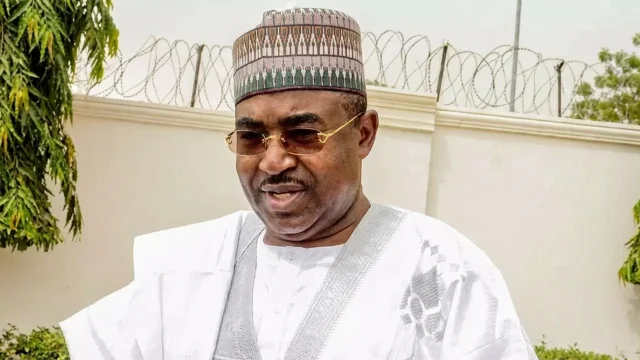
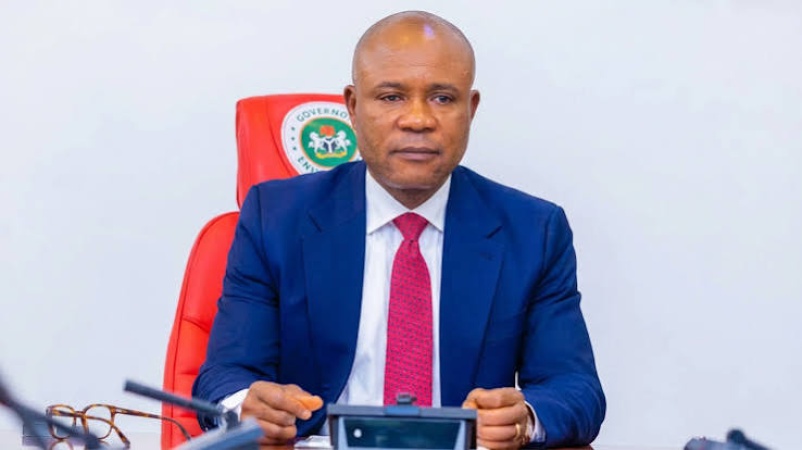
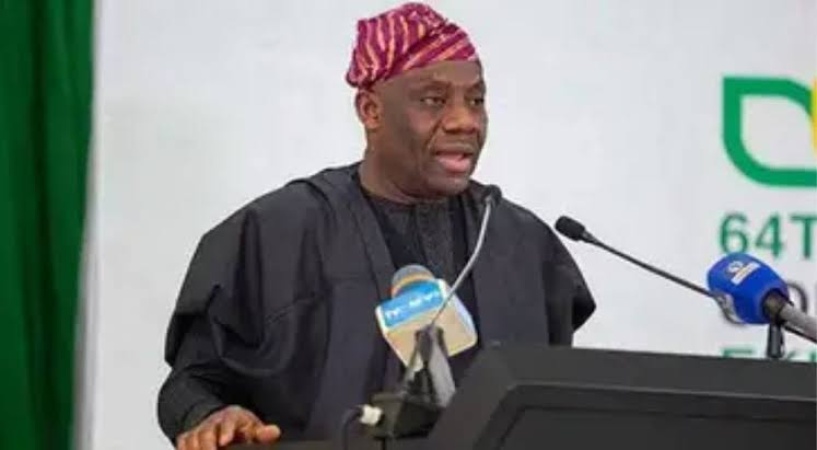
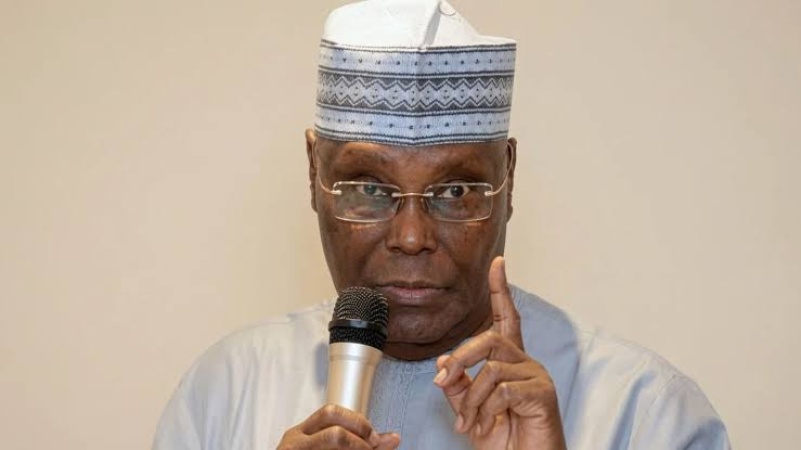
Embattled Minister of Education, Dr Tunji Alausa
The controversy trailing the proposed 35-year concession of King’s College, Lagos, has added to a hail of backlash against some policies introduced under the Minister of Education, Dr Tunji Alausa.
On Wednesday, protesting workers from the ministry blockaded the entrance to the ministry’s headquarters in Abuja, preventing the Minister from reaching his office.
After meeting with Alausa on Monday, the Trade Union Congress had asked its affiliates to suspend the industrial action, but some unions rejected the suspension and pressed on, culminating in Wednesday’s blockade of the ministry.
Chanting “Alausa must go,” the protesters oppose the handover of the 117-year-old school to the King’s College Old Boys’ Association (KCOBA), arguing that the arrangement threatens public ownership, workers’ welfare and the future of other Federal Unity Colleges.
The implementation of the concession, according to TheCable, was subsequently suspended for two weeks after an emergency meeting between the minister and labour unions in Abuja on Wednesday.
It was resolved at the meeting that no staff would be victimised for participating in any industrial action over the dispute.
The parties also agreed to the redeployment of policemen from the college premises, while a seven-man committee was set up to deliberate on the concession arrangement with the Kings College Old Students Association (KCOBA).
The minister had insisted that King’s College was neither sold nor privatized, saying the government would retain legal title while KCOBA finances, rehabilitates and operates the institution under a public-private partnership.
He, however, declared there was no going back on the concession despite mounting opposition from workers, parents and other stakeholders, stressing that the government had followed due process and remained committed to it as a way of addressing the school’s decaying infrastructure and management problems.
The concession, he insisted, was not an abandonment of the institution by the federal government but an intervention meant to fix long-standing deficiencies.
Alausa accused some directors in the ministry of fuelling the controversy by mobilising workers against the government’s decision, alleging that misinformation about the concession was being deliberately spread by union members and those he called “unscrupulous members of staff of the Federal Ministry of Education.”
He also accused the Parent-Teacher Association of King’s College of turning admission into the school into a lucrative enterprise and allegedly demanding as much as N20 million from prospective students.
“The PTA of King’s College has turned admission into King’s College into criminal enterprise,” he alleged.
According to him, the alumni body had already spent over N2 billion on the institution with nothing to show for it.
“We haven’t sold it to them. The property still remains federal government property,” Alausa said, insisting that the government retains 100 per cent ownership of the school.
He also reassured the ministry’s workers that the arrangement would not cost jobs or demotions. Affected staff, he said, would retain their appointments and existing levels within the public service, with their employment rights and benefits protected throughout the process.
Alausa promised that workers displaced by the concession would have the option of redeployment to other federal institutions within the education sector, including other Unity Colleges, with no one forced out of employment.
The Minister of State for Education, Prof. Suwaiba Ahmad, also moved to contain the fallout, explaining that there were no plans to extend the concession model to other Unity Colleges.
She said the concession was an intervention to restore standards, not a move to sell off federal government property.
Fallout of previous policies
Since the appointment of Alausa as Minister of Education in October 2024, the federal government has announced a series of measures aimed at restructuring the nation’s education system, improving access to tertiary institutions, expanding technical education and addressing infrastructure deficits.
But several of the policies have generated strong opposition from workers, parents, teachers, academics, school proprietors and education rights advocates.
Beyond the King’s College controversy, Alausa’s tenure has been marked by reforms and policies in basic education, tertiary admissions, technical education, examinations, teacher development, digital learning and education financing that sparked controversies.
The increase in secondary school examination fees generated is another policy that stirred major controversy.
The federal government had raised the registration fees for the West African Senior School Certificate Examination and the National Examinations Council Senior School Certificate Examination to N50,000. The proposed charge represented an 82 per cent increase over the previous N27,500 fee.
The decision drew strong reactions from school proprietors and education stakeholders, who warned that the additional financial burden could prevent some students from sitting for their examinations.
The President of the National Association of Proprietors of Private Schools, FCT chapter, Mrs Dorothy Okwuenu, described the increase as unfortunate.
She argued that the policy could undermine efforts to keep children in school, particularly at a time when many families were already struggling with the rising cost of living.
The fee hike was consequently suspended after widespread outcry.
In mid-October 2025, the Federal Ministry of Education announced that Mathematics would no longer be a compulsory subject for candidates seeking admission into Arts and Humanities programmes in Nigerian tertiary institutions.
The move, intended to “ease access” for students in non-science disciplines, immediately attracted criticism.
Teachers’ associations, parents and education experts warned that it could undermine numeracy and general competence in higher education.
The announcement triggered widespread discussion, with critics describing it as another sign of poor policy coordination within the ministry.
Within five days, following public protests and editorial criticism, the ministry clarified that Mathematics and English Language would remain compulsory at the O-Level for all students, including those in Arts and Humanities.
Officials attributed the uproar to “miscommunication” of the policy intent.
The ministry’s Director of Press and Public Relations, Boriowo Folasade, said the government had not performed a policy somersault.
“There has been no U-turn. This is a clarification on the streamlined admission requirements designed to expand access to tertiary education. To be clear, we did not expunge Mathematics but have clarified some misconceptions,” she said.
The federal government’s decision to cancel the 2022 National Language Policy also generated debate. The previous policy prescribed the use of the mother tongue or language of the immediate community as the medium of instruction at the foundational level.
The government reversed the policy and retained English as the principal medium of instruction. Alausa defended the decision by pointing to implementation difficulties and poor examination outcomes.
He argued that Nigeria’s linguistic diversity, shortage of appropriate instructional materials and inadequate numbers of teachers trained for multilingual instruction made the policy difficult to implement.
Supporters of the reversal point to the practical challenges of implementing a mother tongue policy across Nigeria’s diverse linguistic communities. Critics, however, raised concerns about the implications for early learning and the place of Nigerian languages in education.
Alausa also sparked controversy when he said the government was working with universities to phase out courses considered poorly aligned with labour market needs.
His remarks attracted attention because he warned students against investing in programmes he considered unlikely to lead to meaningful employment.
The Academic Staff Union of Universities warned the government against scrapping university courses it considered “irrelevant”.
ASUU’s Bauchi Zone described the proposal as “bizarre” and argued that academic disciplines cannot simply be judged by their immediate employment prospects.
New curriculum rollout
In August 2026, the federal government completed a comprehensive review of curricula across basic, senior secondary, and technical education, aimed at reducing overload and enhancing quality learning outcomes.
The Minister of State for Education, Professor Suwaiba Ahmad, announced this on behalf of the Minister of Education, Dr. Maruf Tunji Alausa, in a statement signed by the ministry’s Director of Press and Public Relations, Folasade Boriowo.
The minister explained that the review was conducted in collaboration with the Nigerian Educational Research and Development Council (NERDC), UBEC, NSSEC, NBTE, and other key stakeholders.
She added that the new framework, which will be adopted in the 2025/26 academic year, balances subject offerings with deeper, more practical learning.
“At the primary level, pupils in Primary 1–3 will offer 9–10 subjects, while those in Primary 4–6 will take 10–12. For junior secondary school, the range is 12–14 subjects; senior secondary students will take 8–9; and technical schools will offer 9–11 subjects,” the statement said.
But several teachers and parents criticised the federal government over the abrupt introduction of the new national curriculum, saying they were not consulted in the process. They warned that schools were ill-prepared for immediate implementation.
Child Protection and Education Advocate, Taiwo Akinlami, described the process as exclusionary, saying critical voices were sidelined.
“If you are rolling out a new curriculum, stakeholders such as private school associations, parents, teachers and even children who have the right to participate in education decisions must be part of the process.
“Instead, what we saw was a sudden announcement, leaving even those in the school system learning about it at the same time as the general public,” he said.
He warned that the decision appeared more political than educational.
He further noted that the infrastructure gap posed a major challenge to the new policy, especially for subjects like ICT and agriculture that require laboratories and facilities that many schools lack.
“Government schools already struggling with resources will not cope, while private schools will face rising costs without being allowed to adjust fees,” he said.
Transition to CBT
Last year, the minister announced transitioning of all national public examinations, especially the West African Examinations Council (WAEC) and National Examinations Council (NECO) from the traditional Paper-Pencil Test (PPT) to full Computer-Based Testing (CBT).
But the Nigeria Union of Teachers (NUT) declared that many Nigerian schools lack the infrastructure and digital literacy required to support the planned transition.
National President of the union, Audu Amba, said while the NUT supports digital reforms in education and recognises the need for Nigeria to align with global best practices, conditions in many rural communities showed that the country is not adequately prepared for a complete shift to CBT examinations within the proposed timeline.
“NUT is supporting anything digital, because we need to move with what is trending globally. We cannot isolate ourselves from universal best practices, but there must be a deliberate move to equip our schools, teachers, and learners,” he said.
Amba said many students in rural communities reach senior secondary school without ever having access to computers, tablets, or smartphones.
“If you go to some villages, you will discover that many graduating students have never seen an iPhone, not to mention using a tablet or laptop, yet they are in SS3. Then, tomorrow, you ask them to go and write a CBT examination. Automatically, you know such a child is already disadvantaged,” he said.
Why the reforms – Alausa
Alausa has repeatedly argued that Nigeria’s education system requires structural changes because existing institutions are not always making effective use of available resources, while many graduates leave school without the skills required by the economy.
Alausa has also framed the reforms as part of President Bola Tinubu’s broader education mandate, saying:
“Mr President believes fervently in education and has given us the mandate to ensure every Nigerian has access to the highest quality of education comparable to anywhere in the world.”
The Minister has described the changes as a kind of “reset button” for the education system, an effort to confront underutilised infrastructure, weak institutional capacity, declining academic standards and the mismatch between education and labour-market needs.
“We are not reinventing the wheel. We will take what works globally, adapt it to Nigeria and build institutions that can thrive for generations,” he said during a meeting with university heads at the Nigeria Higher Education Foundation (NHEF) National University Advancement Programme Forum held in Abuja on Tuesday.
‘Policies should address major problems’
Adaramoye Micheal Lenin, National Mobilisation Officer of the Education Rights Campaign (ERC), said the minister took office at a critical period when Nigeria’s public education system was already under severe strain, with problems cutting across basic, secondary and tertiary education deteriorating infrastructure, inadequate facilities and poor working conditions for staff.
“Since the inception of the Tinubu government and the coming of Tunji Alausa as the Minister of Education, it came at a critical point for public education, when many felt that a state of emergency had to be declared in the sector,” he said.
There were high expectations that the minister would reverse the decline. Nearly two years on, he argued those expectations had not been met.
“After almost two years, if you look at things and ask yourself if there has been any significant change, I think the honest answer would be that nothing has really fundamentally changed,” he said.
Adaramoye acknowledged the ministry had introduced policies but argued they had not meaningfully improved public education.
“Policies should address the major problems affecting public education. But there are always policies that do not have any direct impact on the problems that exist in public education today,” he said.
Adaramoye urged the government to prioritise infrastructure, funding, teacher welfare, affordable education and access to functional learning facilities over measures that fail to address the root causes of the crisis. (Daily Trust)