
Updating your news feed...
NEWS EXPRESS is Nigeria’s leading online newspaper. Published by Africa’s international award-winning journalist, Mr. Isaac Umunna, NEWS EXPRESS is Nigeria’s first truly professional online daily newspaper. It is published from Lagos, Nigeria’s economic and media hub, and has a provision for occasional special print editions. Thanks to our vast network of sources and dedicated team of professional journalists and contributors spread across Nigeria and overseas, NEWS EXPRESS has become synonymous with newsbreaks and exclusive stories from around the world.


























Loading banners
Loading banners...

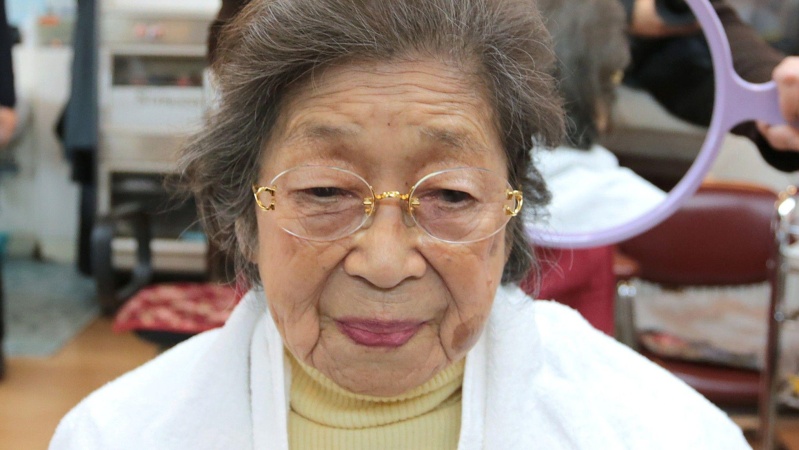
When records began in 1963 there were only 153 centenarians in Japan now there are 107,677
The number of people aged 100 and above in Japan has reached a record 107,677, taking the country’s centenarian population above 100,000 for the first time, according to the health ministry.
Women make up 88 per cent of Japan’s centenarians, with Kishimoto Fuyo, a 114-year-old from Kyoto City, recognised as the country’s oldest woman. Kato Hikaru, aged 112 and from Kumamoto, is the oldest man.
Health Minister Kenichiro Ueno said he was “delighted that so many people are living long, healthy and active lives”, citing progress in medicine and technology.
The rise in longevity is occurring alongside a major demographic challenge for Japan, where an ageing population is placing growing pressure on the country’s social security system. Kenichiri also warned about the difficulty of maintaining a sustainable system as the population continues to age.
Experts attribute Japan’s high life expectancy to several factors, including diet and an active lifestyle. The country’s traditional cuisine is largely centred on fish, vegetables and rice, with less saturated fat than many Western diets.
Older people in Japan also tend to remain physically active, with walking, cycling, using public transport and stretching among activities that remain part of daily life.
The people aged 100 in Japan has also contributed to a growing market for products designed for an ageing population. Sales of adult nappies have exceeded those for babies for more than a decade, while companies have developed technologies such as powered exoskeletons to assist movement and eyewear that automatically adjusts its focus.
At the same time, Japan is recording fewer births. A population needs an average fertility rate of 2.1 children per woman to replace itself, but the country’s total fertility rate fell to a record low of 1.14 last year.
The National Institute of Population and Social Security Research projects that Japan’s population will decline to 87 million by 2070, representing a 30 per cent fall from its peak of 128 million in 2008.
People aged 65 and above already account for around 30 per cent of the population. That share is expected to rise to nearly 40 per cent by 2070, underscoring the scale of Japan’s demographic shift. (BBC News)



