
Updating your news feed...
NEWS EXPRESS is Nigeria’s leading online newspaper. Published by Africa’s international award-winning journalist, Mr. Isaac Umunna, NEWS EXPRESS is Nigeria’s first truly professional online daily newspaper. It is published from Lagos, Nigeria’s economic and media hub, and has a provision for occasional special print editions. Thanks to our vast network of sources and dedicated team of professional journalists and contributors spread across Nigeria and overseas, NEWS EXPRESS has become synonymous with newsbreaks and exclusive stories from around the world.












Loading banners
Loading banners...

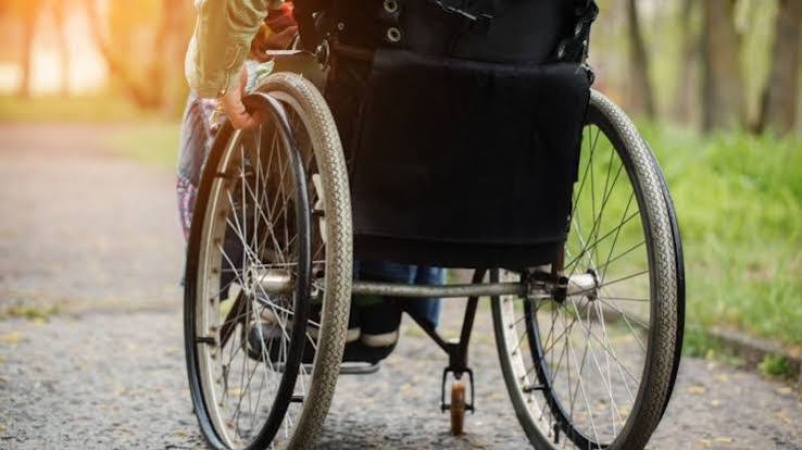
Persons with disabilities (PWDs) are facing higher transportation costs following the recent increase in petrol prices.
Petrol prices have risen to between N1,400 and N1,450 per litre in parts of Abuja and other major cities following a recent increase in the wholesale price of Premium Motor Spirit (PMS).
While the increase has pushed up transport fares for Nigerians generally, PWDs say the impact is particularly severe because many of them cannot easily resort to cheaper alternatives such as walking, taking longer routes or using overcrowded public transport.
Chris Agbo, Chairman of the National Association of Persons With Physical Disabilities, told Daily Trust that unlike able-bodied commuters who could decide to walk when a destination is relatively close, he has no such option.
“For a person who can use his legs normally, if a place is not that far, the person can decide to trek. But for me, I must pay to get there,” he said.
He said this means that even short journeys that would ordinarily require little or no transport cost for other commuters could become an additional financial burden for him.
Another person living with a physical disability, Musa Muazu Musa, said the cost of public transportation had become more difficult because he often needs to pay for additional space to accommodate his mobility needs.
According to him, a wheelchair or other mobility equipment can make it impossible for him to occupy only the conventional space allocated to one passenger.
“I have to pay for two spaces in public transport,” he said, explaining that the additional cost was not necessarily because he wanted to occupy more space but because of the practical requirements of travelling with his mobility aid.
For visually impaired commuters, the burden can be even greater when they require assistance to travel.
A visually impaired person, Mr. Agada, told Daily Trust that he usually has to pay for both himself and the person accompanying him whenever he travels.
“I have to pay for two people – myself and my aid – anywhere I am going,” he said.
Their experiences highlight the additional costs that can come with living with a disability, particularly in accessing transportation and other essential services.
The recent fuel price increase has added another layer to the challenges faced by PWDs, many of whom depend heavily on commercial transport to access workplaces, schools, hospitals, markets, government offices and other public facilities.
For many able-bodied commuters, higher transport fares may be partly mitigated by walking short distances, using bicycles or choosing cheaper transport options. However, such alternatives are often inaccessible or impractical for people with mobility and visual impairments.
The problem is further compounded by the limited accessibility of public transportation, including vehicles that are not designed to accommodate wheelchairs and other mobility devices.
As transport operators pass higher fuel costs to commuters through increased fares, PWDs say they have little room to adjust their transportation needs.
The development also raises questions about the implementation of Nigeria’s disability rights framework, particularly provisions aimed at ensuring equal participation and access for persons with disabilities.
Disability advocates have repeatedly called for accessible transportation and infrastructure to enable PWDs to participate fully in economic and social activities.
The latest fuel price increase, however, threatens to make mobility even more expensive for a group already facing barriers to employment, education, healthcare and other essential services.
For the affected commuters, the issue goes beyond the rising price of petrol.
They say it is about the additional cost of simply moving from one place to another because of a disability.
While other Nigerians may complain that a short journey has become too expensive, a person using a wheelchair or crutches may have no choice but to pay the fare.
For a visually impaired person, travelling may also mean paying for an accompanying aide.
As petrol prices continue to rise, PWDs are asking whether transport interventions being considered by the government are taking into account the additional costs faced by people with disabilities. (Daily Trust)



